Terror funding via charity, education fronts on rise, agencies warn
Synopsis
Indian agencies have uncovered a growing network of charity, education, and healthcare fronts being used to funnel terror money into India — with Pakistan-linked operatives exploiting Gulf remittance corridors and banking loopholes. The model mirrors the IRF playbook, but the threat now comes in smaller, harder-to-track units spread across the country.
Key Takeaways
Indian agencies have flagged a surge in front organisations in the charity, education, religion, and healthcare sectors used for terror financing .
Pakistan is identified as the primary orchestrator, using overseas agents to set up and fund these groups inside India.
Two main funding routes: formal banking (small transactions) and hawala , with the Gulf-Kerala corridor cited as a key hawala channel.
The NIA , ED , and Intelligence Bureau have acted against several such networks over the past 10 years , but new groups resurface after each crackdown.
Temporary 'pop-up' organisations exploiting natural calamities, riots, or protests represent a particularly difficult enforcement challenge.
The Islamic Research Foundation (IRF) , founded by Zakir Naik , is cited as the original blueprint that newer groups are replicating.
Indian intelligence and law enforcement agencies have flagged a sharp increase in front organisations operating under the guise of charity, education, religion, and healthcare, warning that a significant number are being used to channel illicit funds toward terror financing and domestic destabilisation. The trend, officials say, is part of a coordinated campaign targeting India from abroad, with Pakistan identified as the primary driver.
How the Network Operates
According to officials, the architecture of these networks is deliberately layered to avoid detection. Handlers based in Pakistan reportedly reach out to agents operating overseas, who in turn coordinate with counterparts inside India to establish ostensibly legitimate organisations. These entities present a clean public face — running schools, clinics, or relief drives — while their actual financial flows serve a different purpose.
An Intelligence Bureau (IB) official noted that the organisations 'do not look suspicious as they do not do anything in the open.' The real challenge, the official said, lies not in monitoring their activities but in tracing the money that funds them.
Two Key Funding Routes
Agencies have identified two primary channels through which illicit funds enter India. The first is the formal banking system. Money is transferred in smaller amounts — sized to pass routine bank scrutiny — before being withdrawn and redirected to front groups. The second, and reportedly more popular, route is hawala, which officials describe as the preferred method for its speed and opacity.
The hawala route has reportedly found particular traction in Kerala, where a large diaspora community in the Gulf regularly remits money to families back home. According to officials, agents exploit this corridor by persuading Gulf-based workers — many of whom already use informal channels for cheaper remittances — to carry additional funds. Back in India, local contacts collect and reroute the money before it reaches the front organisations.
The Scale of the Challenge
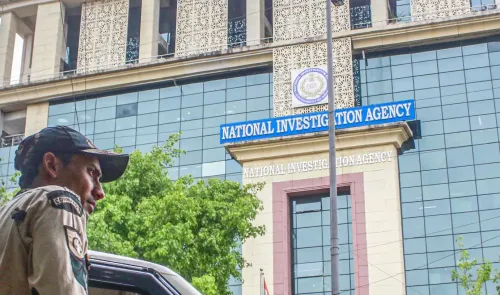
Over the past decade, the National Investigation Agency (NIA), the Enforcement Directorate (ED), and the Intelligence Bureau have collectively dismantled several such networks. However, officials acknowledge a recurring pattern: after a cooling-off period, newer organisations surface to replace those that were shut down.
The ED has found the funding trail to be the most difficult element to prosecute. The sheer volume of transactions — combined with the geographic spread of these groups across multiple states — compounds the investigative burden. Officials stress that no single region dominates; the footprint is national.
The IRF Blueprint
Investigators say many of these newer outfits have drawn directly from the model pioneered by the Islamic Research Foundation (IRF), founded by Zakir Naik. The IRF was among the first organisations to use charity collection in the name of education and healthcare as a funding vehicle, with a significant portion of inflows allegedly directed toward propagating extremist ideology. Though the IRF operated at a scale that newer groups have not matched, officials warn that the multiplier effect of dozens of smaller organisations can be equally consequential.
Pop-Up Groups Around Crises
A particularly difficult subset involves temporary organisations that emerge during natural calamities, communal riots, or mass protests. These groups collect domestic donations under the banner of relief work, then dissolve once the triggering event subsides — moving accumulated funds to terror outfits or other disruptive elements. Their brief operational window makes them especially hard to intercept before the money moves.
Agencies are expected to intensify scrutiny of newly registered NGOs and charitable trusts, particularly those receiving foreign contributions or operating in conflict-sensitive districts, as the campaign against such networks continues.
Point of View
Shorter-lived fronts is a deliberate counter-enforcement strategy, and it is working: the ED's own officials admit the money trail is the hardest part. What is missing from the public response is a credible, transparent framework for NGO financial audits that does not sweep legitimate civil society into the dragnet — a balance Indian regulators have historically struggled to strike. The Gulf-Kerala hawala corridor also points to a structural gap: informal remittances remain largely outside the regulatory perimeter, and no serious policy push to formalise them is currently visible.
NationPress
22 Sept 2026
Frequently Asked Questions
How are charity and education organisations being used for terror funding in India?
According to Indian intelligence officials, front organisations are set up under the guise of charity, education, religion, or healthcare to receive illicit money, which is then redirected to terror groups or elements tasked with causing domestic unrest. These groups are reportedly established by Pakistan-linked agents coordinating with counterparts inside India.
What are the main routes used to bring terror funds into India?
Agencies have identified two primary channels: the formal banking system, where smaller amounts are transferred to avoid scrutiny and then withdrawn for redistribution; and hawala networks, which remain the preferred route for their speed and opacity. The Gulf-Kerala corridor is specifically cited as a heavily exploited hawala channel.
What role does the IRF and Zakir Naik play in this context?
The Islamic Research Foundation (IRF), founded by Zakir Naik, is described by investigators as the original model that newer front organisations are replicating. The IRF reportedly used charity collection in the name of education and healthcare to funnel money toward extremist ideology. Newer groups operate at a smaller scale but in far greater numbers.
Which Indian agencies are investigating these front organisations?
The National Investigation Agency (NIA), the Enforcement Directorate (ED), and the Intelligence Bureau have been working to dismantle such networks for over a decade. The ED has specifically flagged the difficulty of tracing funding trails as the most significant investigative challenge.
Why are temporary organisations set up during crises particularly hard to track?
Pop-up organisations that emerge during natural calamities, riots, or protests collect domestic donations under a relief-work banner and then shut down once the triggering event ends, moving funds to terror groups before agencies can act. Their brief operational window and domestic funding sources make them harder to intercept than organisations receiving foreign transfers.