Chennai GCC to relay 753 roads under CMIUDM, seeks quality consultants
Synopsis
Chennai's civic body is gearing up to relay or upgrade 753 roads — 66 major bus corridors and 687 interior streets — under the Chief Minister's urban development mission, with dedicated quality consultants mandated to enforce standards and hold contractors accountable. The ₹55.74 crore bus-route component alone signals one of the larger road-infrastructure pushes in the city in recent years.
Key Takeaways
The Greater Chennai Corporation (GCC) is set to relay or improve 753 roads under the Chief Minister's Integrated Urban Development Mission (CMIUDM) .
The programme covers 66 bus route roads across 15 zones at an estimated ₹55.74 crore and 687 interior roads across three regions.
Central Region has the highest share with 287 interior roads worth ₹39.99 crore ; North Region covers 185 roads at ₹16.37 crore ; South Region covers 215 roads at ₹18.75 crore .
Project management consultants will supervise works from survey to final measurement, with authority to approve contractor plans and enforce compliance.
Contractors failing quality standards face security deposit forfeiture and blacklisting , officials confirmed.
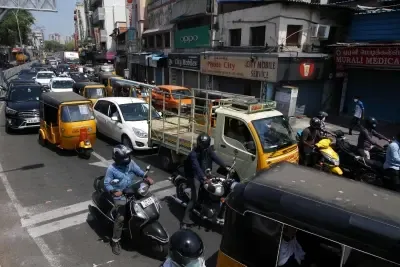
The Greater Chennai Corporation (GCC) has launched the process of appointing project management consultants to oversee the improvement of 753 roads across the city under the Chief Minister's Integrated Urban Development Mission (CMIUDM). The programme covers both major bus route corridors and interior neighbourhood streets, with work expected to commence in the coming days.
Scale and Scope of the Programme
The road improvement package is divided into two broad categories: 66 bus route roads spanning all 15 zones of the corporation, and 687 interior roads distributed across the GCC's three administrative regions. The interior stretches include both bitumen and concrete surfaces, reflecting the varied road infrastructure across Chennai's neighbourhoods.
The Municipal Administration and Water Supply Department has issued a government order for the programme, lending it formal administrative backing. Bids have been invited for consultancy services to support the exercise from preliminary surveys through to final measurements.
Zone-wise Cost Allocation
According to the proposed budget breakdown, the 66 bus route roads across all 15 zones will be improved at an estimated cost of ₹55.74 crore. Among the three regions, the Central Region accounts for the highest number of interior roads — 287 stretches — at a cost of ₹39.99 crore.
The South Region will see 215 roads improved at ₹18.75 crore, while the North Region has 185 interior roads earmarked for upgrades costing ₹16.37 crore.
Role and Responsibilities of Consultants
The selected consultancy team will carry significant supervisory weight across the programme's lifecycle. Their mandate includes scrutinising and approving contractors' project execution plans before construction begins, reviewing technical drawings, and ensuring compliance with quality standards at every stage.
Coordination with utility agencies will also form a key part of the assignment. Consultants will be required to assist the GCC in obtaining cost estimates from electricity authorities, Metro Water, and revenue department officials, and to follow up on associated clearances.
Post-execution site measurements will be another critical responsibility, providing an independent check on work completed by contractors.
Accountability Measures for Contractors
Corporation officials have underscored strict enforcement provisions. Contractors will be required to re-lay any road stretch where the finished surface height does not meet prescribed levels. Failure to comply with construction standards could result in forfeiture of security deposits and blacklisting, according to officials.
This signals a more structured quality-assurance approach than previous road-laying cycles in the city, where contractor accountability was often cited as a weak link. With consultants now mandated to enforce standards from planning to completion, the GCC is attempting to close a gap that has led to rapid road deterioration in past programmes.
What Comes Next
Once consultants are appointed and contractors mobilised, work is expected to begin shortly. The phased execution across 15 zones and three regions suggests the programme will unfold over several months. Residents on targeted bus routes and interior streets can expect visible improvement activity, subject to the timelines set under the CMIUDM framework.
Point of View
Often owing to poor surface-level compliance and inadequate post-execution measurement. Whether the blacklisting and deposit-forfeiture provisions are actually invoked will be the real test of this programme's credibility. Past urban road schemes in Tamil Nadu have announced similar accountability mechanisms; the difference this time, if any, will show up in enforcement data, not in the tender document.
NationPress
17 Nov 2026
Frequently Asked Questions
How many roads will be improved under the Chennai GCC road programme?
A total of 753 roads will be relaid or improved — 66 bus route roads across 15 zones and 687 interior roads across the corporation's three regions. The programme is being implemented under the Chief Minister's Integrated Urban Development Mission (CMIUDM).
What is the total cost of the Chennai road improvement programme?
The bus route component alone is estimated at ₹55.74 crore. Interior road costs add ₹16.37 crore for the North Region, ₹39.99 crore for the Central Region, and ₹18.75 crore for the South Region, bringing the combined outlay to over ₹130 crore across all components.
What will the project management consultants do in the Chennai road programme?
The consultants will supervise the entire lifecycle — from preliminary surveys and planning to execution and final site measurements. They will approve contractor execution plans, review drawings, coordinate with utility agencies, and enforce quality compliance at every stage.
What happens if contractors fail to meet quality standards?
Corporation officials have stated that contractors must re-lay any road stretch that does not meet prescribed surface-height standards. Non-compliance can result in forfeiture of security deposits and blacklisting of the contractor.
When will work on the 753 Chennai roads begin?
Corporation officials have indicated that work is expected to begin in the coming days, following the appointment of consultants and mobilisation of contractors under the CMIUDM framework.