Chennai GCC cracks down on bulk waste generators, 15-day registration deadline
Synopsis
The Greater Chennai Corporation has given bulk waste generators — hotels, hospitals, IT parks, housing societies and more — just 15 days to register on government portals or face fines up to ₹25,000. Backed by a Supreme Court order and a June enforcement round that netted ₹5.95 lakh in penalties from 120 defaulters, this is Chennai's sharpest waste-compliance push yet.
Key Takeaways
The Greater Chennai Corporation (GCC) has mandated all Bulk Waste Generators to register on the Corporation and CPCB portals within 15 days of 5 July 2026 .
Non-compliance attracts penalties between ₹5,000 and ₹25,000 under the SWM Rules, 2026 .
The drive follows a Supreme Court order of 25 May empowering urban local bodies to enforce waste management rules strictly.
Between 1–30 June , GCC collected ₹5.95 lakh in fines from 120 defaulting bulk waste generators.
Establishments qualify as BWGs if they have a built-up area of 20,000 sq m+ , use 40,000 litres+ of water daily, or generate 100 kg+ of solid waste per day.
GCC has deployed Swachh Bharat Mission animators and engineers across all 15 zones to assist with compliance.
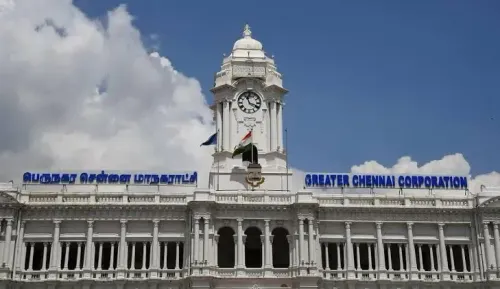
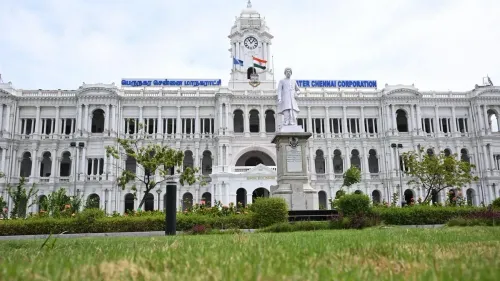
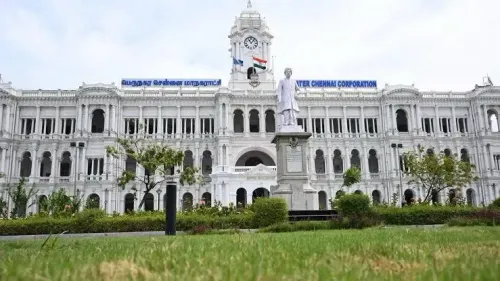
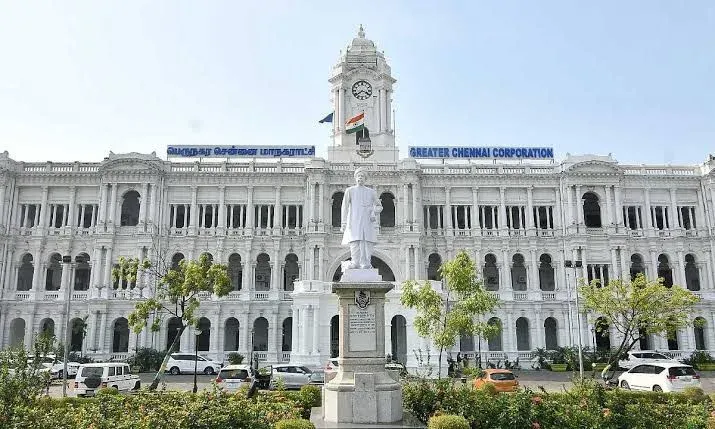
The Greater Chennai Corporation (GCC) has launched a stringent enforcement drive against Bulk Waste Generators (BWGs) across Chennai, directing all eligible establishments to register on both the Corporation and Central Pollution Control Board (CPCB) online portals within 15 days or face penalties under the Solid Waste Management (SWM) Rules, 2026. The directive was issued on 5 July following a review meeting chaired by Corporation Commissioner G.S. Sameeran at the Ripon Building.
What Triggered the Drive
The enforcement push follows a Supreme Court order dated 25 May empowering urban local bodies to take stringent action against establishments violating the SWM Rules, 2026. Officials described the latest phase as a shift toward stricter, science-backed waste management compliance across the city's large-scale generators.
Between 1 June and 30 June, the civic body collected ₹5.95 lakh in fines from 120 defaulting bulk waste generators during inspections — a figure that underscores the scale of non-compliance the GCC is now moving to address more aggressively.
Who Qualifies as a Bulk Waste Generator
Under the SWM Rules, an establishment is classified as a Bulk Waste Generator if it meets any one of three thresholds: a built-up area of at least 20,000 square metres, daily water consumption of 40,000 litres or more, or generation of a minimum of 100 kg of solid waste per day.
The category covers a wide range of entities — residential welfare associations, commercial complexes, hotels, hospitals, educational institutions, IT parks, markets, industries, and large institutional offices. All such establishments are required to install colour-coded bins at their own cost and ensure source segregation of biodegradable and non-biodegradable waste.
Key Compliance Requirements
Biodegradable waste must be scientifically processed on-premises through methods such as composting or biomethanation. Dry, sanitary, and other special-category waste must be handed over to the Corporation or its authorised concessionaires for further processing.
BWGs are also mandated to maintain records of waste generation, processing, and disposal, and submit quarterly reports through the designated online portal. Establishments failing to register within the stipulated period or violating mandatory source segregation norms face penalties ranging from ₹5,000 to ₹25,000, with persistent violations attracting more stringent enforcement measures.
Support Mechanism for Establishments
To ease the compliance burden, the GCC has deployed Swachh Bharat Mission animators and independent engineers across all 15 Corporation zones to assist eligible establishments with the registration process and implementation of the waste management norms. The move signals that the Corporation is pairing enforcement with outreach — at least in this initial phase.
With the 15-day window now in effect, the GCC's next set of inspections will be closely watched as a measure of how seriously Chennai's bulk waste generators are taking the Supreme Court-backed mandate.
Point of View
Which, if enforced, would shift accountability from the Corporation to the generator. Whether the 15 Corporation zones have the inspection bandwidth to follow through on persistent violators is the question mainstream coverage has not yet asked.
NationPress
5 Oct 2026
Frequently Asked Questions
What is the GCC's 15-day deadline for bulk waste generators in Chennai?
The Greater Chennai Corporation has directed all eligible Bulk Waste Generators to register on the Corporation and CPCB online portals within 15 days of 5 July 2026. Establishments that miss the deadline or violate source segregation norms face fines ranging from ₹5,000 to ₹25,000 under the SWM Rules, 2026.
Who is classified as a Bulk Waste Generator under the SWM Rules, 2026?
An establishment qualifies as a Bulk Waste Generator if it has a built-up area of at least 20,000 square metres, consumes 40,000 litres or more of water daily, or generates a minimum of 100 kg of solid waste per day. The category includes hotels, hospitals, IT parks, residential welfare associations, educational institutions, markets, and large offices.
Why has the GCC launched this enforcement drive now?
The drive follows a Supreme Court order dated 25 May empowering urban local bodies to take stringent action against SWM Rules violators. A review meeting chaired by Corporation Commissioner G.S. Sameeran on 5 July also assessed compliance gaps, prompting the stricter enforcement phase.
What are the penalties for non-compliance?
Establishments that fail to register within 15 days or violate mandatory source segregation norms face penalties between ₹5,000 and ₹25,000. Persistent violations can attract more stringent enforcement measures under the SWM Rules, 2026.
What support is the GCC offering to help establishments comply?
The GCC has deployed Swachh Bharat Mission animators and independent engineers across all 15 Corporation zones to guide eligible establishments through the registration process and help them implement the required waste management norms.