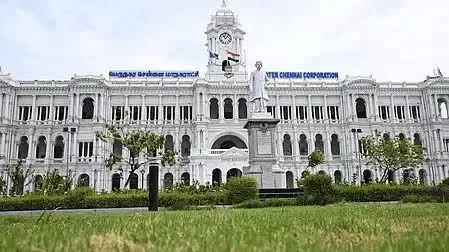
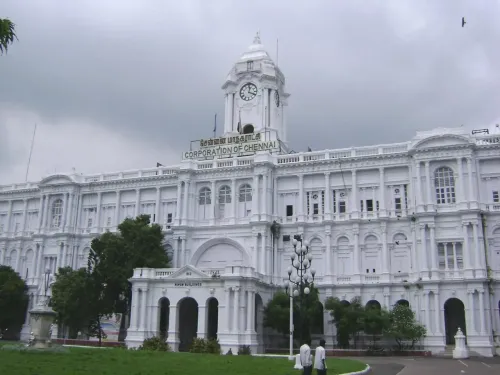
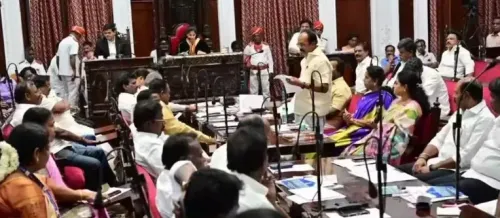
Chennai Corporation clarifies property tax revision: 3.5 lakh properties reassessed
Synopsis
Nearly 3.5 lakh Chennai property owners are receiving revised tax notices — not because of a new hike, but because GIS mapping exposed years of under-assessment. The corporation expects ₹170 crore in additional annual revenue, while elected councillors allege they were kept in the dark and are pushing for a ₹2,000 crore state grant instead.
Key Takeaways
The Greater Chennai Corporation clarified that revised property tax notices are a reassessment, not a general tax increase.
Nearly 3.5 lakh property owners were found to have been paying tax on a built-up area smaller than their actual property size.
Discrepancies were identified using GIS mapping , satellite data, and self-declarations collected since 2018 .
The reassessment is expected to yield approximately ₹170 crore in additional annual revenue.
Property owners can appeal within 15 days of receiving the notice; objections will be resolved within 30 days .
Deputy Mayor Magesh Kumar alleged the exercise was conducted without informing the elected council and sought a ₹2,000 crore special allocation from the Tamil Nadu government.
The Greater Chennai Corporation has clarified that revised property tax notices sent to thousands of residents and businesses across the city do not constitute a blanket tax hike, amid mounting complaints over steep new assessments. Corporation Commissioner G.S. Sameeran confirmed on 13 August that the revision targets only those properties found to have been incorrectly assessed — specifically, those taxed on a built-up area smaller than their actual size.
Why the Reassessment Was Triggered
The Corporation initiated a Geographic Information System (GIS) survey after collecting self-declaration data from property owners in 2018. That data was cross-verified against satellite imagery, government databases, and existing corporation records. The comparison revealed that nearly 3.5 lakh property owners had not been paying tax on their full built-up area — a discrepancy the civic body says has long created inequity between owners of similarly sized properties.
Officials stressed that the exercise was not a new levy but a correction of longstanding under-assessment. Properties of comparable dimensions, they argued, should bear comparable tax burdens. The reassessment is expected to generate approximately ₹170 crore in additional annual revenue for the corporation.
How Property Owners Can Appeal
Residents and businesses who dispute their revised assessment have 15 days from receipt of the notice to file an objection. Appeals can be submitted to the Regional Deputy Commissioner concerned or dropped off at zonal offices. Assessors have been directed to collect objection forms and route them to the appropriate regional authority.
The corporation has committed to resolving all objections within 30 days. Should the volume of appeals be high, special camps will be organised to process them. Residents seeking clarification can also contact the corporation's 1913 helpline, whose operators have been instructed to provide accurate and clear guidance.
Political Row Over Transparency
The reassessment has drawn political scrutiny. Deputy Mayor Magesh Kumar alleged that the exercise was conducted without informing the elected council — a charge corporation officials have not directly addressed. Kumar said the DMK-led council had separately decided to defer the scheduled annual property tax increase to avoid adding to residents' financial burden.
He added that the council had formally requested Commissioner Sameeran at its previous meeting to seek a special allocation of ₹2,000 crore from the Tamil Nadu government as an alternative to implementing the annual hike. The dual pressure — from residents over steep bills and from elected representatives over process — has placed the corporation in an uncomfortable spotlight.
What the Corporation Says
Corporation officials maintained that complaints about significant disparities in tax paid by owners of properties with comparable dimensions had been received frequently, making the reassessment both necessary and overdue. They emphasised that no property is being taxed on area it did not already possess — only on portions that were previously left out of the assessment.
With the appeals window now open and special grievance camps on standby, the corporation's handling of objections over the coming weeks will determine whether the reassessment is seen as a course-correction or a controversy.
Point of View
Affecting 3.5 lakh households, was apparently executed without looping in the elected council. That process failure is as significant as the policy itself. The ₹170 crore revenue estimate also raises a question mainstream coverage has glossed over — if the under-assessment was detectable by satellite as far back as 2018, why did it take until now to act, and who bore the cost of that delay?
NationPress
27 Sept 2026
Frequently Asked Questions
What is the Chennai Corporation property tax revision about?
The Greater Chennai Corporation has issued revised property tax notices to properties found to have been assessed on a built-up area smaller than their actual size. It is a correction of under-assessment, not a new citywide tax hike, according to Corporation Commissioner G.S. Sameeran.
How many property owners are affected by the Chennai reassessment?
Nearly 3.5 lakh property owners across Chennai were found to have been paying tax on less than their full built-up area. These owners are receiving revised notices reflecting their actual property dimensions.
How can Chennai residents appeal against the revised property tax notice?
Property owners can file an objection within 15 days of receiving the revised notice. Appeals can be submitted to the Regional Deputy Commissioner or dropped off at zonal offices. The corporation has committed to resolving objections within 30 days, and special camps will be organised if the volume is high.
How much additional revenue does the Chennai Corporation expect from the reassessment?
The corporation expects to generate approximately ₹170 crore in additional annual revenue by bringing previously under-assessed property portions into the tax net.
What is the political controversy surrounding the Chennai property tax reassessment?
Deputy Mayor Magesh Kumar alleged that the reassessment was carried out without informing the elected council. The DMK-led council has also decided to defer the scheduled annual property tax increase and has asked the Commissioner to seek a ₹2,000 crore special allocation from the Tamil Nadu government instead.