CM Sai: Chhattisgarh buying paddy at ₹3,100/quintal, highest in India
Synopsis
Chhattisgarh CM Vishnu Deo Sai announced paddy procurement at ₹3,100 per quintal — India's highest — plus ₹13,839 per acre under Krishak Unnati Yojana, backed by online tokens, electronic weighing, and micro-ATM payments for the 2026 kharif season.
Key Takeaways
Chhattisgarh is procuring paddy at ₹3,100 per quintal , claimed to be the highest rate in India for the 2026 kharif season.
The state will purchase up to 21 quintals per acre at this rate from registered farmers.
Under Krishak Unnati Yojana , farmers receive an additional ₹13,839 per acre as direct input assistance.
New digital tools — at-home online token booking , electronic weighing , and micro-ATM disbursement — have been introduced to streamline the procurement process.
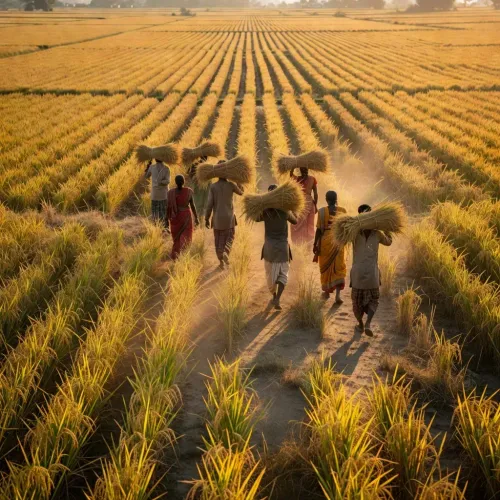
Chhattisgarh, known as India's 'rice bowl', has historically maintained paddy procurement above the central MSP across successive governments.
The combined per-acre return from procurement plus input subsidy can exceed ₹78,000 for a full-acre paddy farmer.
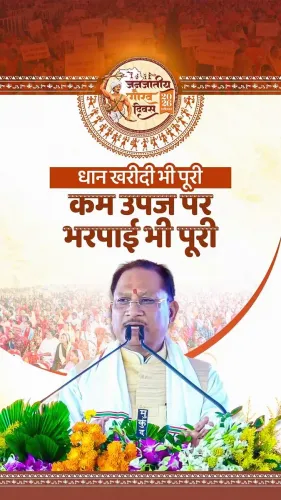
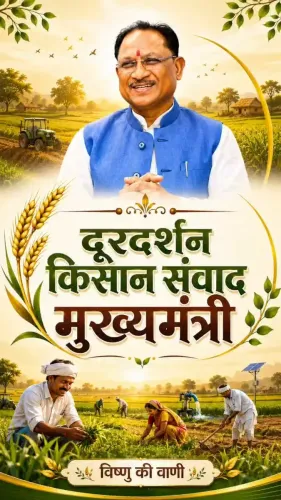
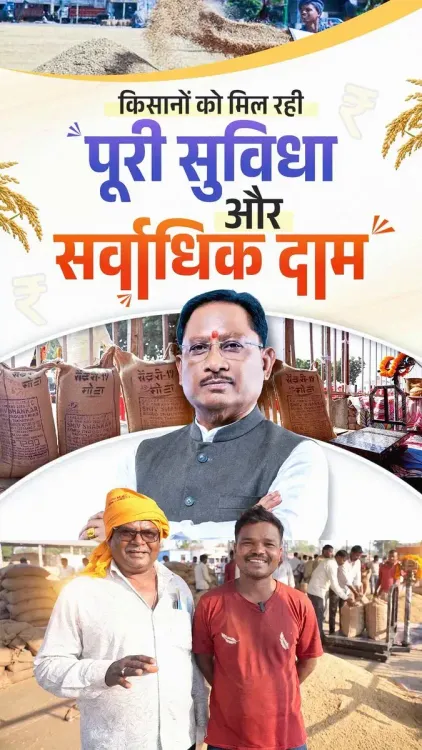
India's self-proclaimed 'rice bowl' is putting its money where its harvest is. Chhattisgarh Chief Minister Vishnu Deo Sai announced on Wednesday, 18 November 2026 that his government is procuring paddy at ₹3,100 per quintal — the highest rate in the country — with an additional per-acre input subsidy under a dedicated farmer welfare scheme.
Posting in Hindi on X under the hashtag #धान_खरीदी_2026 (DhanKharidi2026), CM Sai wrote: 'Chhattisgarh, the rice bowl of paddy, is enriched by the hard work and dedication of our farmers. Honouring their labour fully, our government is purchasing paddy at the highest rate in the country — ₹3,100 per quintal — up to 21 quintals per acre.'
Krishak Unnati Yojana: the second cheque for farmers
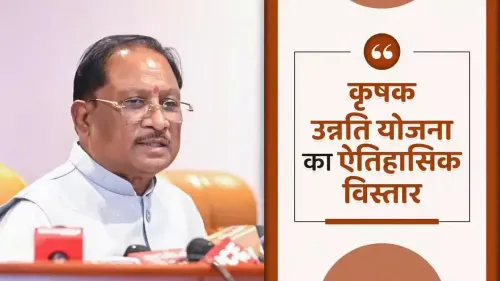
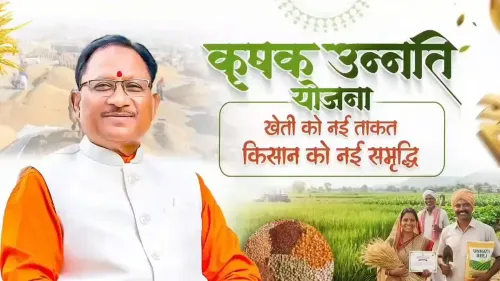
Beyond the procurement price, the state is layering on a direct-benefit transfer. Under the Krishak Unnati Yojana, each farmer receives ₹13,839 per acre as input assistance — essentially a second payment on top of the sale price. The scheme is designed to bridge the gap between what paddy fetches at the mandi and what it actually costs to grow it, covering seeds, fertilisers, and labour.
Chhattisgarh has long maintained procurement prices above the central government's Minimum Support Price, extending a practice that successive state governments have used to signal solidarity with the farming community. The current BJP administration, which took office in late 2023, has pushed that logic further, adding digital infrastructure to the traditional cash-transfer playbook.
Online tokens, electronic weighing, micro-ATMs: the tech layer
What is new this season is the visible bet on frictionless technology. CM Sai highlighted three specific tools: at-home online token booking, so farmers no longer queue at procurement centres to secure a slot; electronic weighing to eliminate disputes at the weighbridge; and micro-ATM disbursement, which routes payment directly to a farmer's account and allows withdrawal at the village level without a bank branch visit.
The push mirrors a wider pattern across India's rice-producing states, where digital procurement has become a competitive differentiator — both a governance marker and a promise of reduced leakage. For a state where paddy farming defines the livelihoods of millions of smallholders, the promise of a transparent, same-day payment cycle is not a minor administrative update. It is the difference between a farmer who plans the next sowing and one who waits on a middleman.
What the numbers mean on the ground
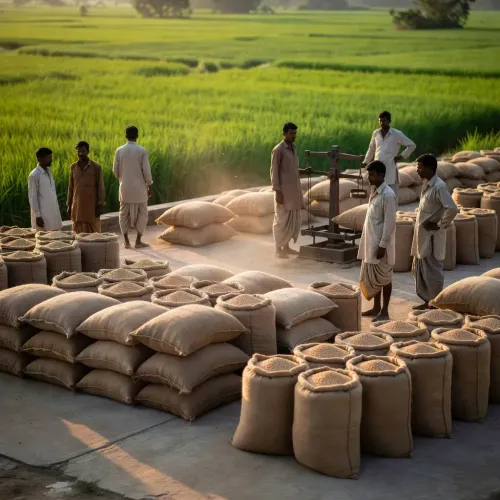
At ₹3,100 per quintal and a cap of 21 quintals per acre, a farmer selling a full acre's produce earns up to ₹65,100 from procurement alone — before the ₹13,839 input subsidy is added, pushing the gross per-acre return above ₹78,000. For marginal farmers holding one or two acres, that is a material shift in household income and a direct argument for staying in paddy cultivation rather than distress-migrating to cities.
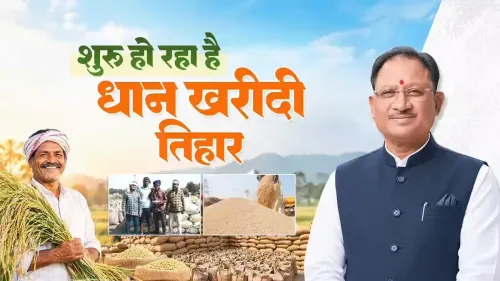
The kharif procurement window is now open, and the state's ability to lift paddy at scale — and to process the digital token and payment pipeline without bottlenecks — will be the real test of the promise CM Sai has staked his government's agricultural credibility on.
Point of View
Which is harder for rivals to match without matching expenditure. The digital layer — online tokens, micro-ATMs — is equally political: it creates a verifiable, traceable trail that the government can cite as proof of transparency, directly countering allegations of mandi corruption that have dogged paddy procurement for decades. The real gauge of success, however, will be procurement volumes and payment turnaround times when the season peaks.
NationPress
18 Nov 2026
Frequently Asked Questions
What is the paddy procurement rate in Chhattisgarh in 2026?
Chhattisgarh is procuring paddy at ₹3,100 per quintal for the 2026 kharif season, which CM Vishnu Deo Sai says is the highest in India. Each farmer can sell up to 21 quintals per acre at this rate.
What is Krishak Unnati Yojana and how much do farmers get?
Krishak Unnati Yojana is a Chhattisgarh state scheme that provides direct input assistance to paddy farmers at ₹13,839 per acre , paid in addition to the procurement price to help cover cultivation costs.
How can farmers book a token for paddy procurement in Chhattisgarh?
Farmers in Chhattisgarh can now book their procurement slot from home using an online token system , eliminating the need to visit procurement centres in person. Electronic weighing and micro-ATM payment are also available.
Is Chhattisgarh's paddy rate higher than the central MSP?
Yes. Chhattisgarh's announced procurement rate of ₹3,100 per quintal is above the central government's Minimum Support Price. The state has historically offered bonuses above the central MSP for paddy across multiple seasons.
Who is Vishnu Deo Sai and when did he become CM of Chhattisgarh?
Vishnu Deo Sai is a senior BJP leader who became Chief Minister of Chhattisgarh in late 2023 after the BJP won the state assembly elections. He has positioned farmer welfare and paddy procurement at the centre of his government's agenda.