Chhattisgarh CMO warns of dust storms across 18 districts
Synopsis
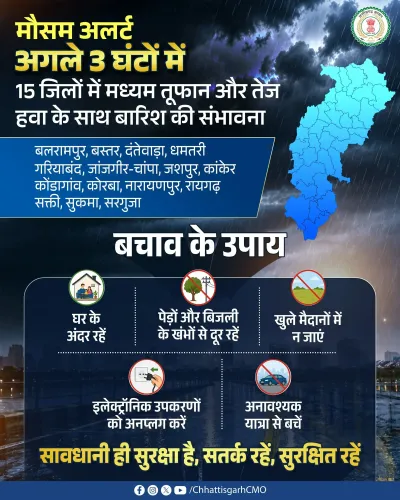
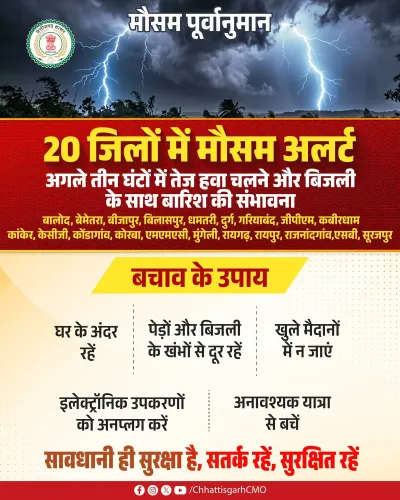
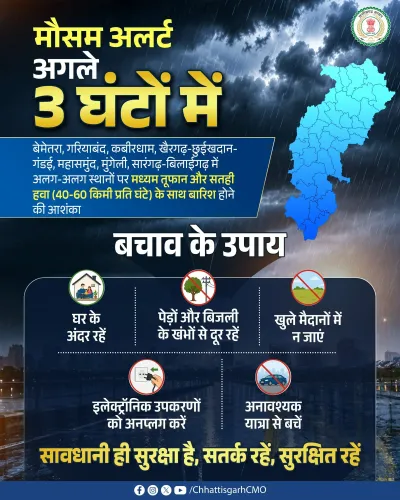
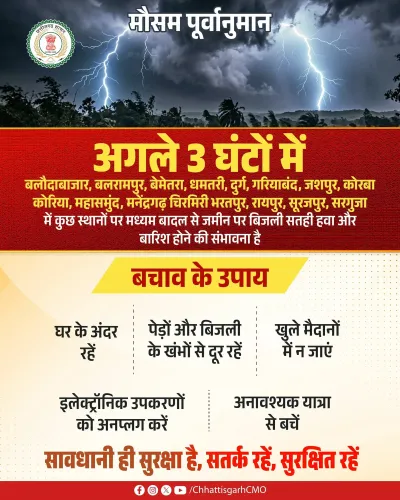
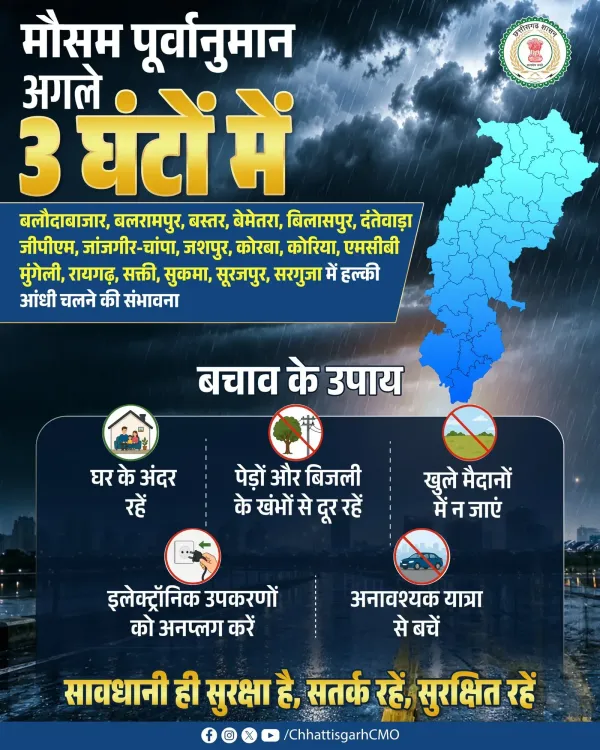
The Chhattisgarh Chief Minister's Office issued a dust-storm safety advisory on 11 June 2026 covering 18 districts, warning residents to stay indoors and avoid unnecessary travel amid likely squall activity within three hours.
Key Takeaways
18 districts in Chhattisgarh were placed under a dust-storm alert by the CMO on 11 June 2026 .
Residents were advised to stay indoors, avoid unnecessary travel, and move to a safe location.
Affected districts include Bilaspur, Korba, Bastar, Dantewada, Sukma, Surguja and 12 others spread across the state.
The advisory aligns with obligations under the Disaster Management Act, 2005 for timely public warnings.
The alert reflects a broader pattern of Indian state governments using official social media for real-time, district-specific weather communication.
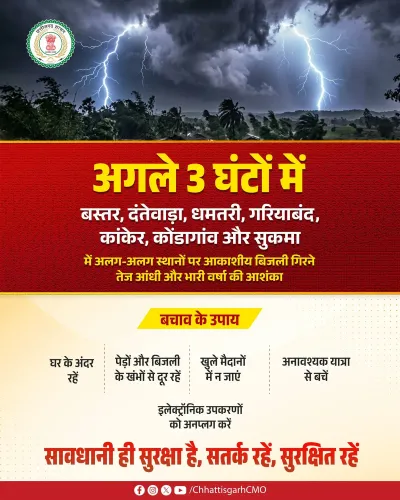
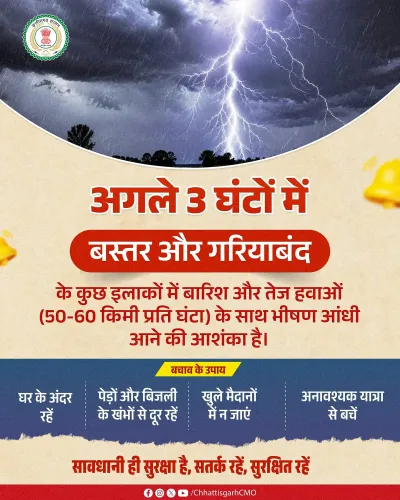
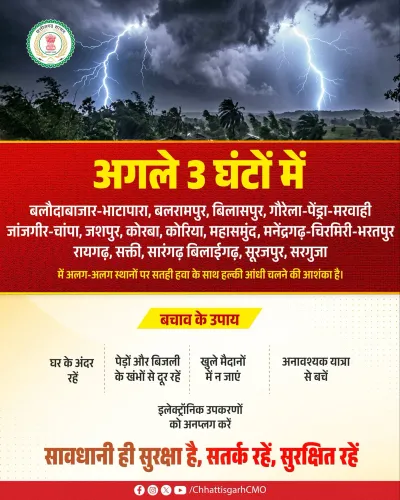
The Chief Minister's Office of Chhattisgarh issued a public safety advisory on Thursday, 11 June 2026, warning residents of 18 districts across the state of a likely dust storm within the next three hours and urging them to stay indoors and avoid unnecessary travel.
Context
The advisory, posted on the official CMO handle, named the following districts under alert: Balodabazar, Balrampur, Bastar, Bemetara, Bilaspur, Dantewada, Gariaband-Patan-Mahasamund (GPM), Janjgir-Champa, Jashpur, Korba, Korea, Manendragarh-Chirmiri-Bharatpur (MCB), Mungeli, Raigarh, Sakti, Sukma, Surguja and Surajpur. The post advised citizens to remain inside, avoid unnecessary journeys, and stay in a safe location. Its closing lines read: 'Savdhani hi suraksha hai. Satark rahein, surakshit rahein.' ('Caution is safety. Stay alert, stay safe.')
The alert spans districts spread across central, northern, and southern Chhattisgarh, indicating a broad weather system moving through the state.
Policy Backdrop
Under the Disaster Management Act, 2005, state governments are mandated to issue timely public warnings for weather-related risks through their State Disaster Management Authorities. The Chhattisgarh government's use of its official social media handle to relay district-specific alerts is consistent with that statutory framework.
Indian state governments have increasingly used official accounts to push real-time, hyper-local weather advisories, supplementing bulletins from the India Meteorological Department (IMD) — the national agency responsible for forecasting. Such advisories are particularly common ahead of and during the monsoon season, when pre-monsoon thunderstorm and squall activity intensifies across central and eastern India.
Stakeholders and Impact
The advisory directly concerns residents of the 18 named districts, which together account for a substantial share of Chhattisgarh's population and include both urban centres such as Bilaspur and Korba and forested, tribal-majority regions like Bastar, Dantewada and Sukma. Dust storms and squalls in these areas can disrupt road transport, damage crops, and pose risks to outdoor workers, making timely public communication especially important.
District-level disaster response teams and local administration are expected to remain on standby during such alert windows to respond to any storm-related incidents.
What's Next
Authorities are likely to issue follow-up advisories as the weather system evolves. Closer coordination between the state government and the IMD on monsoon progression will determine whether similar district-level alerts are extended or expanded in the coming days. Citizens in the affected districts are advised to monitor official state channels for updated guidance.
Point of View
The advisory moves beyond generic state-level warnings and targets the communities most likely to be affected. This hyper-local approach, increasingly standard ahead of monsoon season, signals that state disaster communication machinery is maturing. The advisory also underscores the complementary role state governments now play alongside the IMD in last-mile weather risk communication.
NationPress
26 Oct 2026
Frequently Asked Questions
Which districts are under storm alert in Chhattisgarh today?
The Chhattisgarh CMO issued alerts for 18 districts on 11 June 2026: Balodabazar, Balrampur, Bastar, Bemetara, Bilaspur, Dantewada, GPM, Janjgir-Champa, Jashpur, Korba, Korea, MCB, Mungeli, Raigarh, Sakti, Sukma, Surajpur and Surguja.
What should residents do during a dust storm in Chhattisgarh?
The CMO advisory instructs residents to stay indoors, avoid unnecessary travel, and remain in a safe location until the storm passes.
Who issues weather advisories in Chhattisgarh?
The India Meteorological Department (IMD) is the national forecasting agency, but state bodies including the Chhattisgarh CMO and State Disaster Management Authority also issue localised public safety advisories based on IMD data.
What law governs disaster warnings in Indian states?
The Disaster Management Act, 2005 mandates state governments to issue timely public warnings for weather and other disaster risks through their State Disaster Management Authorities.
Why is Chhattisgarh prone to dust storms in June?
June marks the pre-monsoon and early monsoon period in central India, when squalls, thunderstorms and dust storms are common as weather systems build ahead of the full monsoon onset.