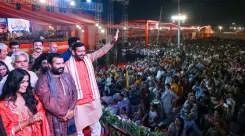
CM Office Chhattisgarh holds Jan Chaupal in Sakti district
Synopsis
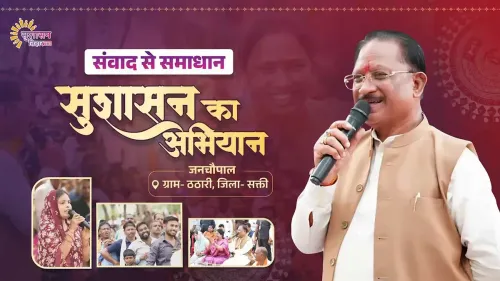
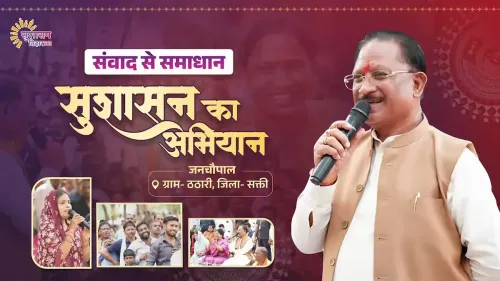
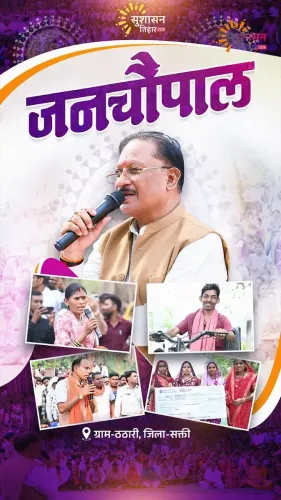
The Chhattisgarh Chief Minister's Office shared video highlights from a Jan Chaupal held at Gram Thathari in Sakti district under the Sushasan Tihar programme, showcasing the BJP government's rural governance outreach on 6 June 2026.
Key Takeaways
The Chhattisgarh CMO posted highlights from a Jan Chaupal at Gram Thathari, Sakti district on 6 June 2026 .
The event is part of Sushasan Tihar , a state-level good-governance outreach programme launched after the BJP's December 2023 election victory.
Sakti district was formed in 2022 from Janjgir-Champa, making it one of Chhattisgarh's newer administrative units.
Jan Chaupals serve as direct grievance-redressal and public-dialogue forums for rural and tribal communities .
Chief Minister Vishnu Deo Sai has prioritised grassroots outreach as a key pillar of his administration's governance agenda.
The programme is expected to expand to additional districts with follow-up on grievances recorded at each session.
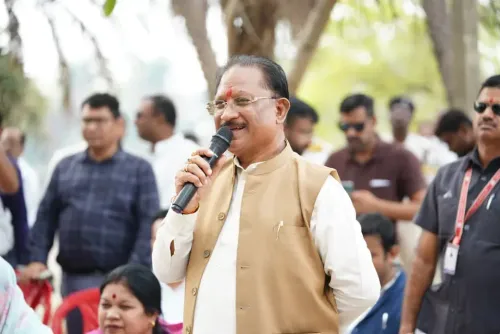
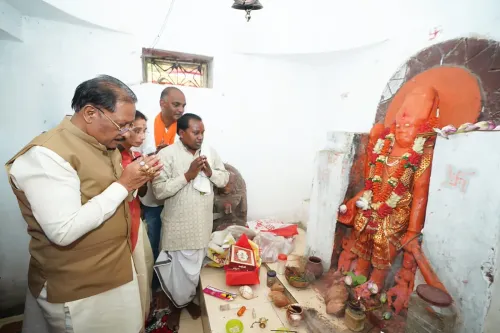
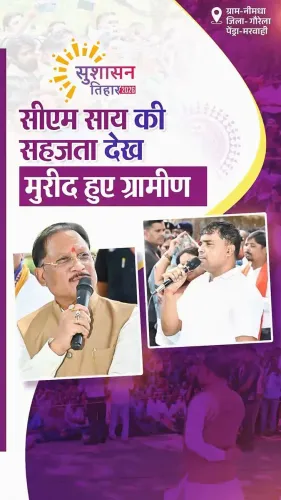
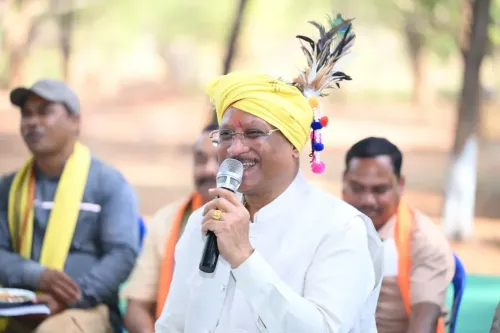
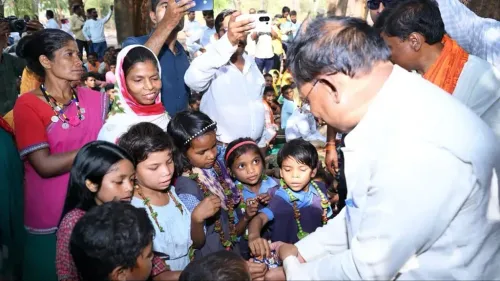
The Chief Minister's Office of Chhattisgarh on Saturday, 6 June 2026, shared highlights from a Jan Chaupal (village public meeting) held at Gram Thathari, Sakti district, as part of the ongoing Sushasan Tihar good-governance outreach programme. The post described the gathering as a story of villages, chaupals, and public trust — where dialogue and confidence are visible on residents' faces.
Context
The CMO's post, shared in Hindi, read: 'Gaon, chaupal aur janvishwas ki kahani' ('A story of villages, chaupals, and people's trust'), adding that Sushasan Tihar is 'where dialogue and trust exist, where faces glow with hope and confidence.' The accompanying video showed scenes from the chaupal at Thathari village in Sakti district, one of the newer districts in eastern Chhattisgarh.
Sakti district was carved out in 2022 from the erstwhile Janjgir-Champa district, covering largely rural and semi-urban populations. Holding a Sushasan Tihar event there signals the programme's reach into recently reorganised administrative units.
Policy Backdrop
Sushasan Tihar is a state-level public outreach initiative launched by the BJP government in Chhattisgarh following its assembly election victory in December 2023. Chief Minister Vishnu Deo Sai, who took office that month, has prioritised direct administrative contact with rural communities as a cornerstone of the government's governance agenda.
The Jan Chaupal format — open village-level public hearings — has deep roots in Indian administrative tradition and is aligned with the panchayati raj framework that Chhattisgarh extended to tribal areas after the state's formation in 2000. The current government has revived and branded these meetings under the 'Sushasan' (good governance) banner to reinforce administrative trust, particularly in rural and tribal belts.
Chhattisgarh's large Scheduled Tribe population and the historical presence of Naxal-affected districts have made grassroots governance outreach a recurring policy priority across successive state administrations. The post-2023 government has framed such events as a direct channel between the administration and citizens who may otherwise have limited access to official redressal mechanisms.
Stakeholders and Impact
The primary beneficiaries of Jan Chaupal sessions are rural villagers and tribal communities who attend to raise local grievances, seek information on government schemes, and interact directly with district officials. For residents of a relatively new district like Sakti, such events can be a first point of structured contact with the reorganised administration.
State officials and district collectors use the feedback gathered at these chaupals to identify service-delivery gaps and generate follow-up administrative orders. The video documentation and social media amplification by the CMO's office also serve to communicate the government's field presence to a wider audience.
What's Next
The Sushasan Tihar programme is expected to expand to additional districts across Chhattisgarh, with each Jan Chaupal potentially generating a record of grievances and commitments for district administrations to act upon. Observers will watch whether the events produce measurable follow-through — such as compiled grievance-resolution data or formal administrative orders — that validate the programme's governance claims beyond its visible outreach function.
Point of View
Direct-contact governance. Branding village chaupals under a 'good governance festival' framework is a well-tested political communication strategy that merges administrative function with image-building. For a state with Chhattisgarh's demographic complexity — large tribal populations, a history of insurgency-affected districts, and newly reorganised administrative units like Sakti — such ground-level outreach carries both genuine policy value and electoral signalling. The programme's credibility will ultimately rest on whether grievances logged at these chaupals translate into documented, time-bound resolutions.
NationPress
21 Oct 2026
Frequently Asked Questions
What is Sushasan Tihar in Chhattisgarh?
Sushasan Tihar is a good-governance outreach programme run by the Chhattisgarh state government, featuring Jan Chaupals — open village-level public meetings — where residents can raise grievances and interact directly with officials. It was prioritised by the BJP government that came to power in December 2023.
What is a Jan Chaupal?
A Jan Chaupal is a village-level public meeting rooted in Indian administrative tradition, where citizens gather to discuss local issues, seek information on government schemes, and present grievances to officials. The format is aligned with India's panchayati raj framework.
Where is Sakti district in Chhattisgarh?
Sakti district is located in eastern Chhattisgarh. It was created in 2022 by carving it out of the former Janjgir-Champa district and covers largely rural and semi-urban areas.
Who is the Chief Minister of Chhattisgarh?
Vishnu Deo Sai is the Chief Minister of Chhattisgarh, having taken office in December 2023 following the BJP's victory in the state assembly elections.
What is the purpose of Sushasan Tihar Jan Chaupals?
The Jan Chaupals under Sushasan Tihar aim to improve grievance redressal, strengthen trust between the administration and rural communities, and provide citizens — especially in tribal and remote areas — with direct access to officials and information on government schemes.