CM Office holds Sushasan Tihar outreach in Sakti district
Synopsis
The Chhattisgarh Chief Minister's Office reported a Sushasan Tihar 2026 event at village Thathari, Sakti district, where officials gathered direct citizen feedback on welfare scheme delivery — part of an annual good-governance outreach cycle running since 2024.
Key Takeaways
The Chief Minister's Office of Chhattisgarh posted about a Sushasan Tihar 2026 event on 6 June 2026 .
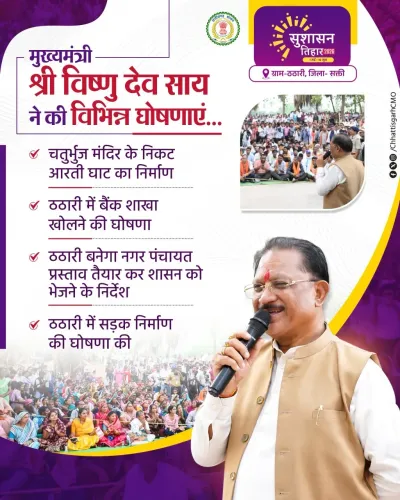
The event was held at village Thathari in Sakti district , a newly created district carved out of Janjgir-Champa.
Sushasan Tihar is an annual programme that has been running since 2024 , institutionalising village-level public hearings on scheme performance.
The programme's stated purpose is to collect direct citizen feedback on government welfare scheme delivery.
District-wise compilation reports from the 2026 edition and any follow-up orders modifying scheme guidelines are the key outputs to watch.
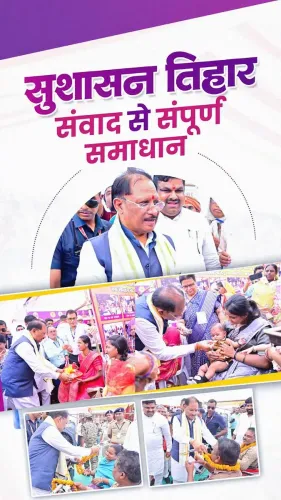
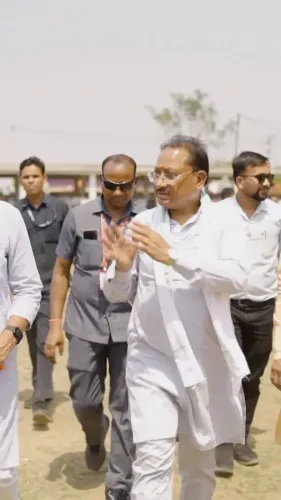
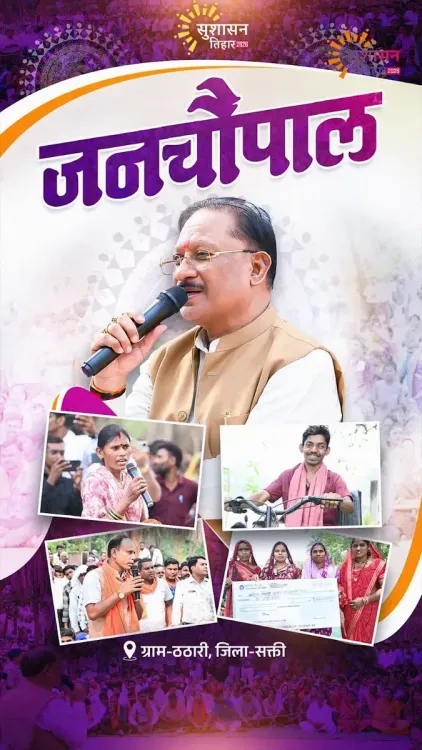
The Chief Minister's Office of Chhattisgarh on Saturday, 6 June 2026 shared updates from a Sushasan Tihar 2026 event held at village Thathari, Sakti district, where government representatives sat among residents to collect direct feedback on the delivery of state welfare schemes.
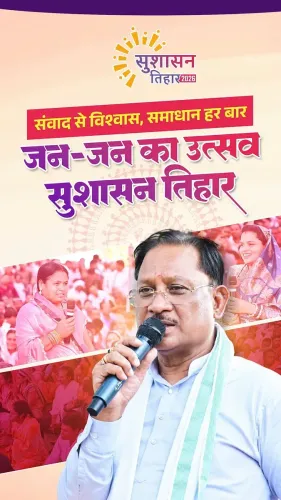
The post, shared in Hindi, stated: 'Aamjan ke beech baithkar shasan ki yojanaon par seedhe feedback lena hi sushasan ki asli pehchaan hai' — 'Sitting among ordinary people and taking direct feedback on government schemes is the true hallmark of good governance' — and described Sushasan Tihar as a 'powerful medium to realise this vision.'
Context
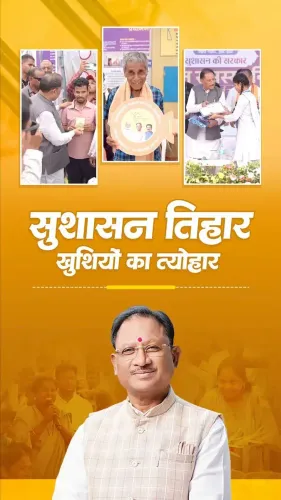
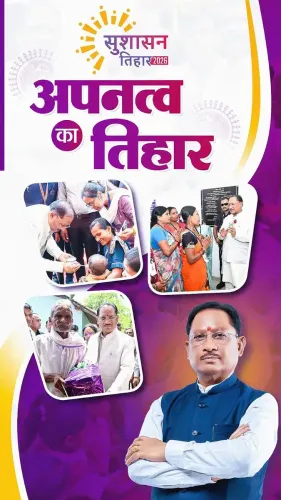
Sushasan Tihar — loosely translated as the 'Festival of Good Governance' — is an annual outreach programme run by the Chhattisgarh government. It organises district-level public interaction camps where officials and elected representatives meet residents face-to-face to hear grievances and assess how welfare schemes are functioning on the ground.
The 2026 edition continues a cycle that began in 2024, when the state first institutionalised these public hearings as a recurring mechanism for participatory monitoring of scheme performance.
Policy Backdrop
Sakti district, carved out of the older Janjgir-Champa district, is among the newer administrative units in Chhattisgarh. Holding a Sushasan Tihar camp in a village like Thathari within this district signals an intent to extend the outreach to recently reorganised administrative territories where institutional delivery channels are still consolidating.
Across Indian states, village-level jan-sunwai (public hearing) programmes have emerged as a tool for participatory monitoring, aimed at reducing leakage in welfare delivery and improving last-mile access to centrally and state-sponsored schemes. Chhattisgarh's Sushasan Tihar fits within this broader national pattern of structured citizen-government dialogue.
Stakeholders and Impact
The primary beneficiaries of these camps are rural households and scheme beneficiaries who may otherwise lack direct channels to flag implementation gaps to district or state authorities. By physically relocating officials to village settings, the programme lowers the access barrier for residents in areas with limited connectivity or administrative reach.
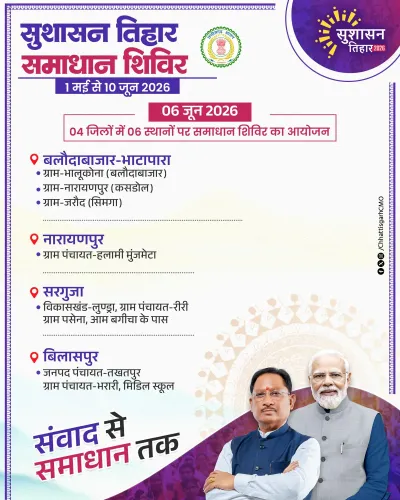
Feedback collected at such camps is intended to inform district-level compliance reviews and, where warranted, modifications to scheme guidelines. The interaction at Thathari is one of multiple stops across Chhattisgarh's districts in the 2026 edition of the programme.
What's Next
Observers and policy watchers will look for district-wise compilation reports from the Sushasan Tihar 2026 cycle, which could surface patterns in scheme delivery gaps across Chhattisgarh's rural belt. Any subsequent executive orders or scheme guideline revisions traceable to feedback gathered during these camps would be a concrete indicator of the programme's administrative impact.
If the state government formalises a feedback-to-action pipeline from the 2026 camps, it could strengthen the case for institutionalising similar models in other states seeking to improve welfare delivery accountability at the village level.
Point of View
Embedding it as an annual accountability cycle. By extending the 2026 edition to newer districts like Sakti, the state signals an intent to stress-test welfare delivery in administrative units that are still building institutional capacity. The real measure of the programme's value, however, lies not in the camps themselves but in whether the feedback gathered translates into verifiable scheme corrections. Until a transparent feedback-to-action pipeline is published, Sushasan Tihar risks being characterised as symbolic outreach rather than structural reform.
NationPress
19 Sept 2026
Frequently Asked Questions
What is Sushasan Tihar in Chhattisgarh?
Sushasan Tihar is an annual good-governance outreach programme run by the Chhattisgarh government since 2024, in which officials hold village-level public hearings to collect direct citizen feedback on the delivery of state welfare schemes.
Where was the Sushasan Tihar 2026 event held on 6 June?
The event on 6 June 2026 was held at village Thathari in Sakti district, Chhattisgarh.
What is the purpose of Sushasan Tihar camps?
The camps aim to reduce leakage in welfare delivery and improve last-mile access by allowing residents to directly flag implementation gaps to district and state authorities without travelling to administrative offices.
What is Sakti district in Chhattisgarh?
Sakti is a newly created district in Chhattisgarh, carved out of the older Janjgir-Champa district as part of the state's administrative reorganisation.
What outcomes are expected from Sushasan Tihar 2026?
District-wise feedback compilation reports and any subsequent executive orders or scheme guideline revisions based on citizen inputs gathered during the 2026 camps are the key expected outcomes.