CM Office: Sushasan Tihar Samadhan Shivirs Across Chhattisgarh
Synopsis
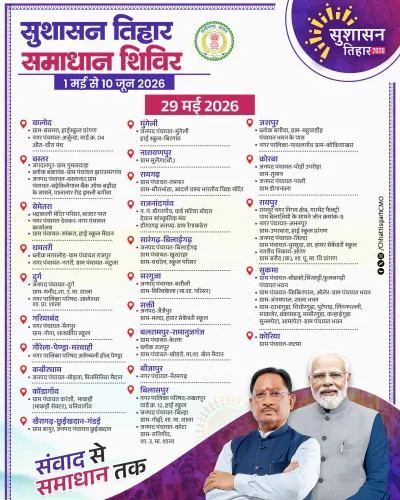
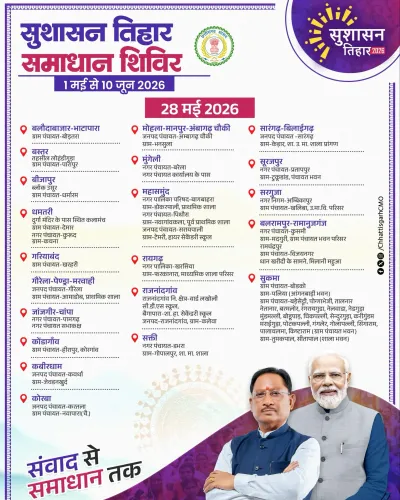
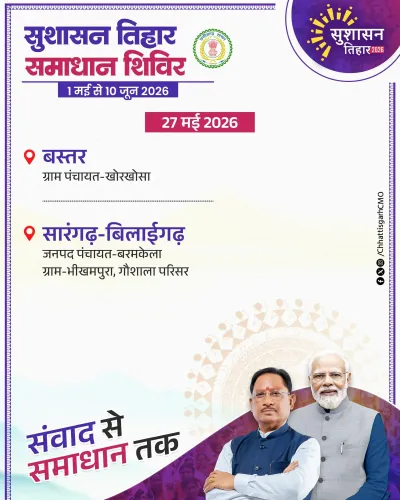
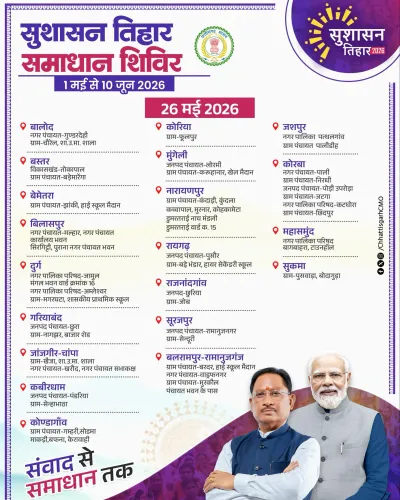
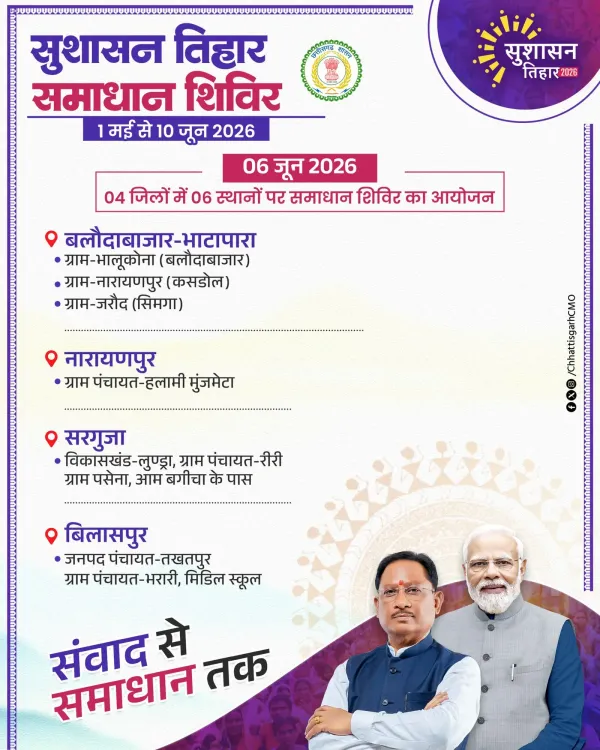
The Chhattisgarh Chief Minister's Office announced Samadhan Shivirs — on-the-spot grievance redressal camps — across the state on June 6, 2026, under the Sushasan Tihar 2026 good-governance campaign. The initiative aims to resolve citizen complaints related to welfare schemes and government services at the district and block level.
Key Takeaways
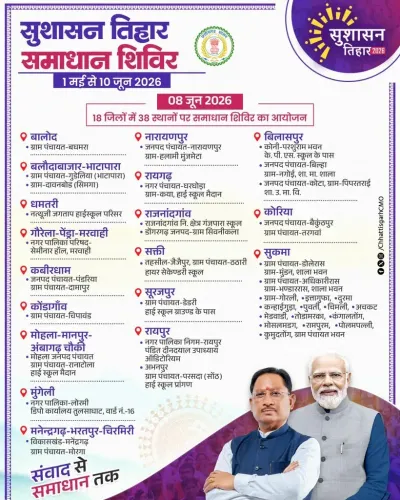
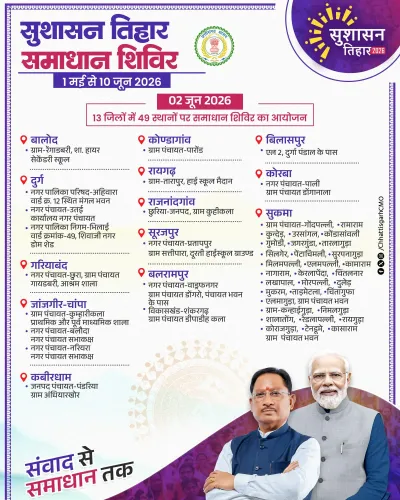
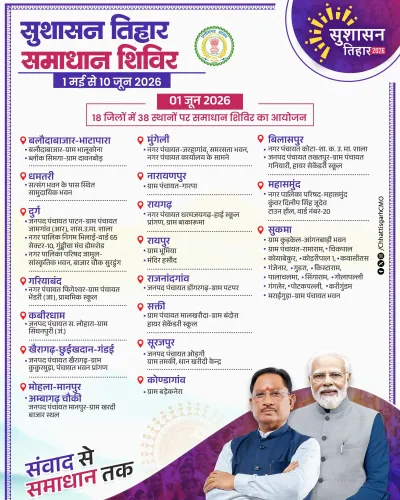
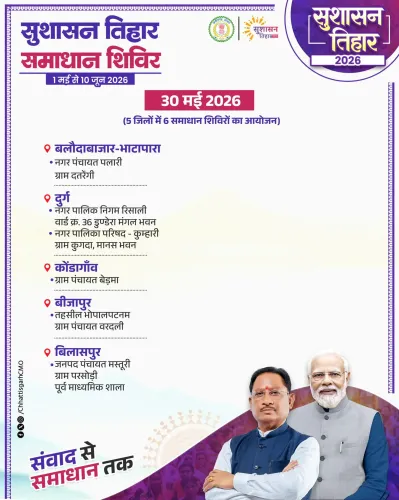
The Chhattisgarh CMO announced Samadhan Shivirs across multiple state locations for June 6, 2026 .
The camps are organised under Sushasan Tihar 2026 , a recurring state good-governance festival.
Samadhan Shivirs provide on-the-spot resolution of citizen complaints related to government schemes and services.
Chhattisgarh has conducted similar district-level grievance camps since at least the mid-2010s.
Tribal communities and rural residents are among the key target beneficiaries of the initiative.
District-wise disposal figures and post-camp directives will be key indicators of the programme's impact.
The Chief Minister's Office of Chhattisgarh announced on Friday, June 5, 2026, that grievance redressal camps — known as Samadhan Shivirs — will be held at multiple locations across the state on June 6, 2026, as part of the ongoing Sushasan Tihar good-governance programme.
Context
The official post, shared under the hashtag #SushasanTihar2026, states: 'Sushasan Tihar ke tahat kal pradesh ke vibhinn sthanon par samadhan shiviro ka aayojan hoga' — meaning 'Under Sushasan Tihar, Samadhan Shivirs will be organised at various locations across the state tomorrow.' The announcement signals a fresh round of on-the-ground public outreach by the state administration.
Sushasan Tihar — loosely translated as the 'Festival of Good Governance' — is a recurring state-level programme in Chhattisgarh that bundles public outreach, grievance redressal, and scheme delivery reviews into a time-bound campaign. Samadhan Shivirs are temporary camps set up at district and block levels to enable on-the-spot resolution of citizen complaints related to government schemes and services.
Policy Backdrop
Chhattisgarh, a central Indian state with a large tribal population, has run multiple administrative reform drives since its formation in 2000. Successive governments have periodically conducted district-level jan sunwai (public hearing) and samadhan camps since at least the mid-2010s to improve last-mile delivery of welfare schemes.
The Sushasan Tihar model fits into a broader national pattern in which state administrations stage time-bound grievance camps to reduce pendency and demonstrate administrative responsiveness. Such exercises are seen as a complement to digital grievance portals, particularly for rural and tribal communities that may have limited access to online platforms.
Stakeholders and Impact
The primary beneficiaries of the Samadhan Shivirs are ordinary residents of Chhattisgarh — especially those seeking resolution of pending complaints related to welfare entitlements, land records, ration cards, pension disbursements, and other state-administered services. Tribal communities, who constitute a significant share of the state's population, are among the key target groups for such outreach initiatives.
For district and block-level officials, these camps serve as structured accountability exercises, requiring them to address grievances in a public setting and generate disposal records. The camps also provide the state government with ground-level data on scheme penetration and administrative bottlenecks.
What's Next
Observers will watch for district-wise grievance disposal figures and any new administrative directives issued once the June 6 camps conclude. The scale of participation and the categories of complaints addressed will indicate how effectively the Sushasan Tihar 2026 campaign is reaching citizens at the grassroots. Continued rounds of shivirs under the programme could further shape the state's governance agenda in the months ahead.
Point of View
Visible governance events to signal administrative responsiveness. Such campaigns serve a dual purpose: they generate measurable grievance disposal data while also creating a public-facing narrative of proactive governance. Across India, state governments have increasingly leaned on these periodic accountability mechanisms as a complement to digital portals, recognising that last-mile delivery failures often require physical, face-to-face intervention. The success of the June 6 camps will ultimately be measured not by the number of shivirs held, but by the quality and durability of the resolutions delivered to citizens.
NationPress
29 Jul 2026
Frequently Asked Questions
What is Sushasan Tihar in Chhattisgarh?
Sushasan Tihar, meaning 'Festival of Good Governance,' is a recurring state-level programme in Chhattisgarh that combines public outreach, grievance redressal camps, and scheme delivery reviews into a structured, time-bound campaign.
What are Samadhan Shivirs?
Samadhan Shivirs are temporary grievance redressal camps set up at district and block levels in Chhattisgarh, where citizens can seek on-the-spot resolution of complaints related to government schemes and services.
When are the Samadhan Shivirs being held under Sushasan Tihar 2026?
The Chhattisgarh CMO announced that Samadhan Shivirs will be held on June 6, 2026 , at various locations across the state.
Who benefits from Sushasan Tihar Samadhan Shivirs?
Chhattisgarh residents — particularly those with pending complaints about welfare entitlements, ration cards, pensions, and land records — benefit from these camps. Tribal and rural communities are among the primary target groups.
How long has Chhattisgarh been running grievance camps?
Chhattisgarh governments have conducted district-level grievance and public hearing camps since at least the mid-2010s as part of broader administrative reform efforts to improve last-mile welfare delivery.