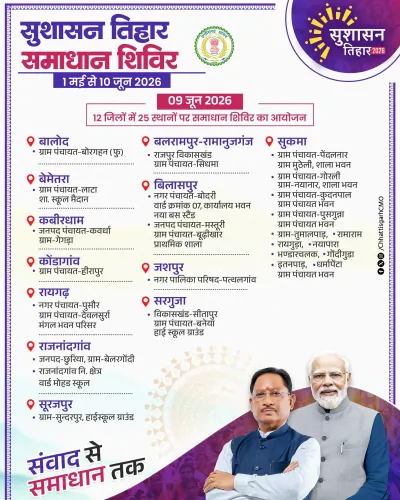
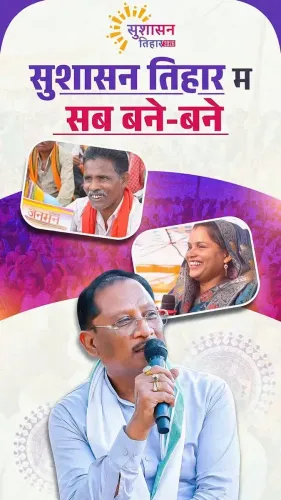
CM Office Chhattisgarh Launches Sushasan Tihar 2026
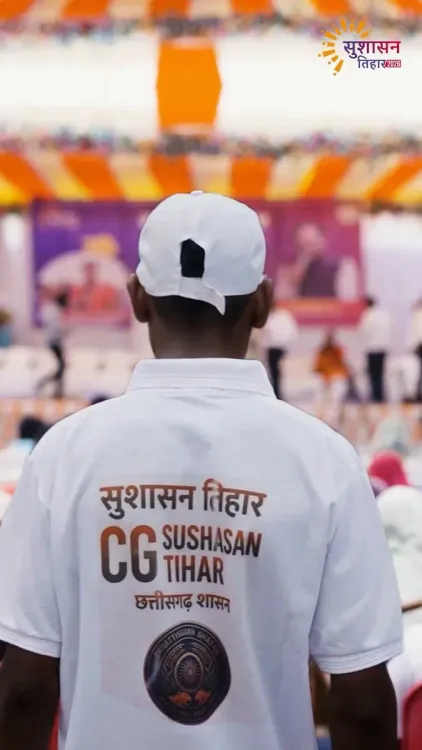
Synopsis
The Chief Minister's Office of Chhattisgarh has launched Sushasan Tihar 2026, a recurring good-governance festival in which state officials travel to citizens across the state to resolve grievances on the spot, framing the drive as a new dawn of trust between government and people.
Key Takeaways
The Chief Minister's Office of Chhattisgarh announced Sushasan Tihar 2026 on 23 May 2026 .
The programme deploys state and district officials directly to citizens for on-the-spot grievance redressal , reversing the conventional model of citizens travelling to offices.
The word tihar means 'festival' in Chhattisgarhi, framing the administrative exercise as a community event to encourage participation.
Chhattisgarh's large rural and tribal population stands to benefit most, given the distances many citizens must travel to reach administrative centres.
District-level schedules, grievance categories, and participation targets for the 2026 edition are yet to be publicly detailed.
The programme's credibility will hinge on the share of complaints resolved on the day and the follow-up mechanism for complex cases.
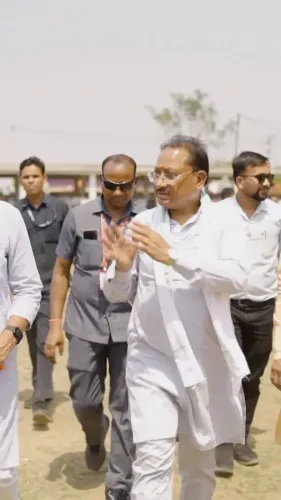
The Chief Minister's Office of Chhattisgarh announced the launch of Sushasan Tihar 2026 on Saturday, 23 May 2026, describing the annual good-governance outreach drive as a 'new dawn of hope and a new beginning of trust' — a programme under which government officials travel directly to citizens to deliver on-the-spot solutions.
Context
The CMO's post, shared in Hindi, frames the initiative with the lines 'विश्वास की नई शुरुआत, जहां सरकार खुद चलकर पहुंचती है जनता के पास' ('A new beginning of trust, where the government itself walks up to the people'). The phrase captures the central premise of Sushasan Tihar: reversing the conventional model in which citizens must travel to administrative offices to seek redressal.
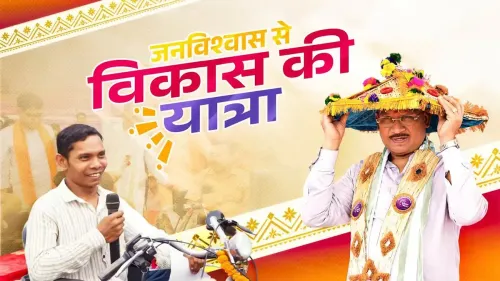
The word tihar means 'festival' in Chhattisgarhi, deliberately framing a bureaucratic exercise as a community celebration — a rhetorical choice designed to encourage mass participation and lower the threshold for citizens to engage with the state.
Policy Backdrop
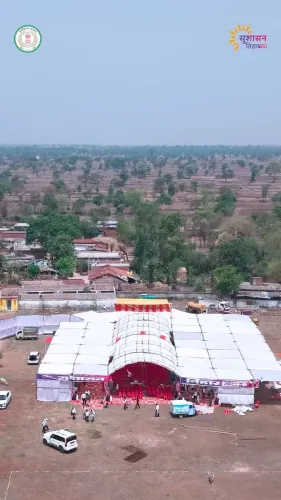
Sushasan Tihar is a recurring good-governance programme run by the Government of Chhattisgarh, in which state and district officials set up camps across the state to hear grievances and resolve them on the spot, rather than routing complaints through slow administrative channels. The approach targets the persistent gap between policy intent and last-mile service delivery — a challenge especially acute in Chhattisgarh, which has a large tribal and rural population spread across difficult terrain.
Mobile governance camps of this kind have become a recognisable feature of state administration across India, with governments using them to reduce the pendency of public complaints, build institutional trust, and signal administrative responsiveness ahead of and between electoral cycles. Chhattisgarh's iteration positions the exercise as a recurring festival rather than a one-off drive, giving it a degree of institutional continuity.
Stakeholders and Impact
The primary beneficiaries are Chhattisgarh's citizens — particularly those in rural and tribal districts where access to district headquarters or tehsil offices involves significant travel time and cost. For these communities, an official camp arriving in or near their village can mean the difference between a grievance being heard within days and it languishing for months.
District-level officials are the key operational stakeholders: they are responsible for staffing the camps, maintaining records of complaints received, and ensuring that resolutions announced on the day are actually implemented. The credibility of the programme rests on whether commitments made at camp sites translate into verifiable outcomes for applicants.
What's Next
The 2026 edition of Sushasan Tihar has been formally signalled by the CMO, but district-level schedules, the range of grievance categories to be addressed, and participation targets are yet to be publicly detailed. Observers will watch whether the scale and coverage of this year's camps expand on previous editions, and whether any new service categories — such as land records, pension disbursements, or health entitlements — are added to the on-the-spot resolution mandate.
The broader test for Sushasan Tihar 2026 will be its measurable outcomes: the number of grievances registered, the share resolved on the day, and the follow-up mechanism for complaints that require inter-departmental action. Those figures, when released, will determine whether the festival of good governance lives up to its name.
Point of View
The Chhattisgarh government is making a deliberate cultural argument: that engagement with the state should feel accessible rather than adversarial. The recurring nature of the programme is significant — it signals an intent to institutionalise proximity governance rather than treat it as a one-off publicity exercise. Whether the 2026 edition deepens that institutionalisation, particularly in the state's more remote tribal districts, will be the real measure of its policy ambition.
NationPress
19 Sept 2026
Frequently Asked Questions
What is Sushasan Tihar in Chhattisgarh?
Sushasan Tihar is a recurring good-governance outreach programme run by the Government of Chhattisgarh in which state and district officials set up camps to hear and resolve citizen grievances on the spot, rather than requiring people to travel to administrative offices.
When was Sushasan Tihar 2026 announced?
The Chief Minister's Office of Chhattisgarh announced Sushasan Tihar 2026 on 23 May 2026 via its official account on X.
Who benefits from Sushasan Tihar?
All Chhattisgarh citizens can participate, but the programme is especially beneficial for rural and tribal communities in remote districts where reaching a district headquarters or tehsil office involves significant travel.
What does 'tihar' mean in the context of this programme?
'Tihar' means 'festival' in Chhattisgarhi, and the name is a deliberate choice to frame the administrative grievance-redressal exercise as an inclusive community celebration, lowering barriers to citizen participation.
What grievances can be resolved at Sushasan Tihar camps?
The specific categories of grievances addressed at Sushasan Tihar 2026 camps have not yet been publicly detailed, but previous editions have focused on on-the-spot resolution of common public complaints handled by district-level officials.