Chhattisgarh CMO Marks Sushasan Tihar as Proof of Accountable Governance
Synopsis
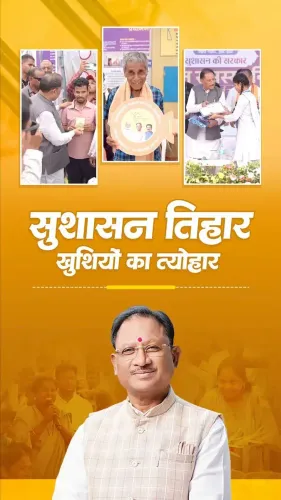
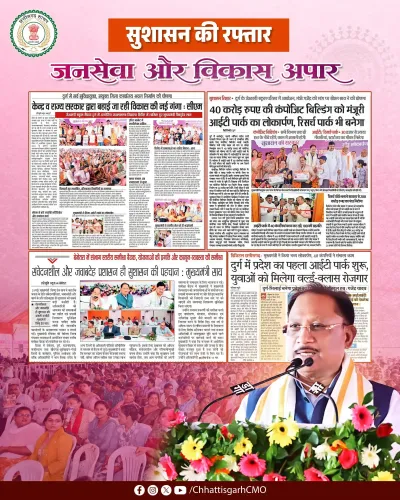
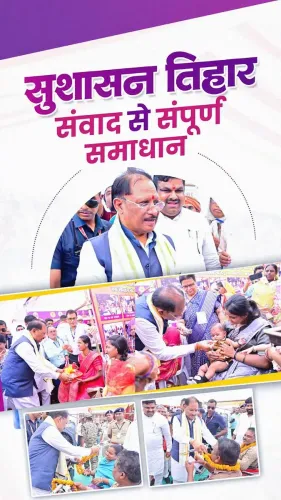
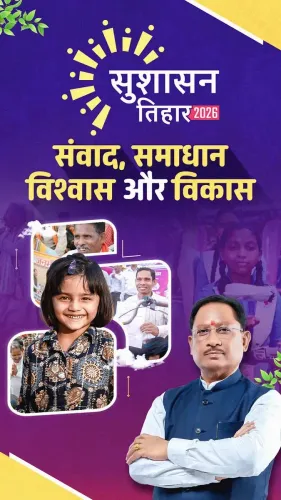
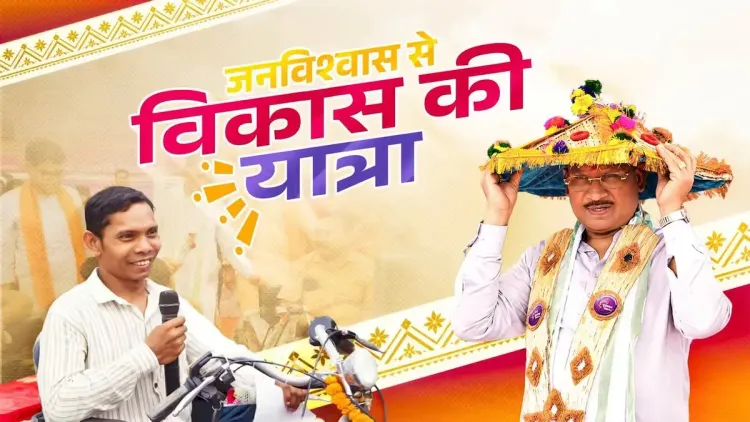
The Chief Minister's Office of Chhattisgarh has proclaimed Sushasan Tihar 2026 a proof of public trust, accountability, and sensitive governance, positioning the annual good-governance festival as a measurable commitment to citizen-centric administration across the state.
Key Takeaways
The Chief Minister's Office of Chhattisgarh posted on 23 May 2026 declaring Sushasan Tihar 2026 a proof of public trust, accountability, and sensitive governance.
Sushasan Tihar translates to 'Good Governance Festival' and is a state government initiative to bring administration closer to citizens through direct outreach and grievance redressal.
Chhattisgarh has run public outreach programmes on governance since its formation as a state in 2000 , with Sushasan Tihar representing the structured, campaign-style evolution of those efforts.
The 2026 edition is framed around three pillars: jan vishwas (public trust), jawabdahi (accountability), and samvedansheel shasan (sensitive governance).
Specific dates, activities, and outcomes of the 2026 edition are yet to be officially detailed by the state government.
The event aligns with a broader national trend of Indian states using governance festivals to demonstrate scheme implementation and strengthen public engagement.
The Chief Minister's Office of Chhattisgarh on Saturday, 23 May 2026 declared Sushasan Tihar 2026 a testament to public trust, accountability, and sensitive governance, sharing the message across its official social media channels.
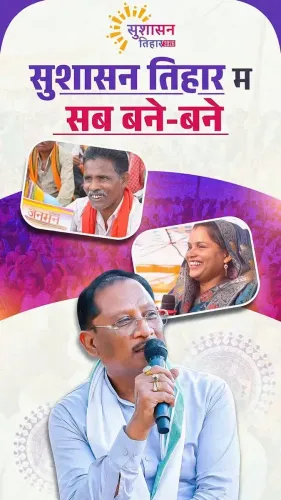
The post, written in Hindi, states: 'Jan vishwas, jawabdahi aur samvedansheel shasan ka praman hai Sushasan Tihar' — ('Sushasan Tihar is proof of public trust, accountability, and sensitive governance'). The declaration frames the annual event not merely as a ceremonial occasion but as a living demonstration of the state government's administrative philosophy.
Context
Sushasan Tihar — translating broadly to 'Good Governance Festival' — is an initiative of the Government of Chhattisgarh designed to bring the machinery of the state closer to its citizens. The event is built around themes of transparent administration, grievance redressal, and the delivery of welfare schemes at the grassroots level. By branding it a 'tihar' (festival), the government signals an intent to make civic participation a celebratory, community-wide exercise rather than a bureaucratic formality. Chhattisgarh, formed as a separate state in 2000, has since its early years run periodic public outreach programmes on governance. Sushasan Tihar represents the more structured, campaign-style evolution of those efforts, bringing together multiple departments under a unified public-engagement umbrella.Policy Backdrop
The 2026 edition of Sushasan Tihar arrives against a national backdrop in which state governments across India have increasingly turned to governance festivals and jan-sampark (public-contact) drives to demonstrate scheme implementation and administrative responsiveness. Since the 2010s, the emphasis on digital service delivery, real-time grievance tracking, and citizen-centric administration has intensified at both the central and state levels. For Chhattisgarh, the event serves as a platform for officials at every tier — from the secretariat down to the panchayat — to engage directly with residents, resolve pending complaints, and showcase the reach of flagship welfare programmes. The framing of the 2026 edition around 'jan vishwas' (public trust) and 'jawabdahi' (accountability) suggests the state government is positioning the festival as a measurable commitment rather than a symbolic gesture.Stakeholders and Impact
The primary beneficiaries of Sushasan Tihar are Chhattisgarh's residents, particularly those in rural and semi-urban areas who may otherwise have limited direct access to state services and officials. For the state administration, the event provides an opportunity to collect on-ground feedback, accelerate pending welfare disbursements, and reinforce the credibility of its governance record. Participating departments — expected to span sectors including revenue, health, education, and social welfare — use the occasion to set up camps, process applications, and address long-pending grievances in a single, time-bound window. Civil society observers and local elected representatives also play a role in amplifying outreach and ensuring that marginalised communities are included in the exercise.What's Next
The specific schedule, participating departments, and activities planned for the 2026 edition of Sushasan Tihar are expected to be detailed in subsequent official communications from the Chief Minister's Office. Participation figures and outcomes — including the number of grievances resolved and beneficiaries reached — will be key metrics by which the festival's success is likely to be assessed. If the 2026 edition follows the pattern of previous years, it will serve as a template for how Chhattisgarh continues to institutionalise public accountability as a recurring, visible feature of its governance calendar.Point of View
Particularly those with relatively recent formation histories, of institutionalising public-contact drives as both a welfare mechanism and a reputational asset. The choice of the word 'tihar' (festival) is deliberate: it democratises the idea of good governance, making it something citizens are invited to celebrate rather than petition for. How the 2026 edition is executed and what measurable outcomes it produces will determine whether the framing holds up to scrutiny.
NationPress
7 Oct 2026
Frequently Asked Questions
What is Sushasan Tihar in Chhattisgarh?
Sushasan Tihar is a 'Good Governance Festival' organised by the Government of Chhattisgarh to promote public trust, accountability, and citizen-centric administration through direct outreach, grievance redressal camps, and welfare scheme delivery.
When is Sushasan Tihar 2026?
The Chief Minister's Office of Chhattisgarh announced Sushasan Tihar 2026 on 23 May 2026, but specific dates and the full schedule for the 2026 edition have not yet been officially detailed.
What does 'jan vishwas jawabdahi' mean in the context of Sushasan Tihar?
'Jan vishwas' means public trust and 'jawabdahi' means accountability — the two core principles the Chhattisgarh government says Sushasan Tihar is designed to demonstrate through direct engagement with citizens.
Which departments participate in Sushasan Tihar Chhattisgarh?
Multiple state departments spanning revenue, health, education, and social welfare typically participate, setting up camps to process applications and resolve pending grievances during the festival window.
Why does Chhattisgarh hold a good governance festival?
Chhattisgarh uses Sushasan Tihar to bring state administration closer to residents — particularly in rural areas — and to showcase scheme implementation, collect citizen feedback, and reinforce the government's accountability record.