CM Office Highlights Sushasan Tihar 2026 in Balodabazar
Synopsis
The Chief Minister's Office of Chhattisgarh highlighted Sushasan Tihar 2026, a village-level governance outreach programme, through an event at Gram Karhibazar in Balodabazar district on 23 May 2026. The initiative aims to bring trust, sensitivity, and citizen-first decision-making to every village in the state.
Key Takeaways
The Chief Minister's Office of Chhattisgarh posted highlights of Sushasan Tihar 2026 on 23 May 2026 .
The event spotlighted was held at Gram Karhibazar in Balodabazar district .
The programme's stated pillars are trust in every chaupal, sensitivity in every dialogue, and public welfare in every decision.
Sushasan Tihar 2026 continues Chhattisgarh's tradition of periodic jan chaupal and governance outreach drives dating to the mid-2010s.
The initiative follows a broader national pattern of time-bound governance festivals combining grievance redressal, scheme awareness, and citizen feedback.
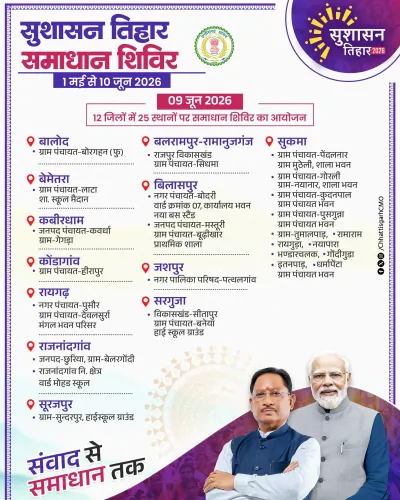
Further district-level events are expected as the programme rolls out across Chhattisgarh through 2026 .
The Chief Minister's Office of Chhattisgarh on Saturday, 23 May 2026 shared highlights from Sushasan Tihar 2026, the state's village-level governance outreach programme, spotlighting an event held at Gram Karhibazar in Balodabazar district. The post underscored the administration's stated commitment to trust, sensitivity, and public welfare as guiding principles of a new chapter in good governance in the state.
Context
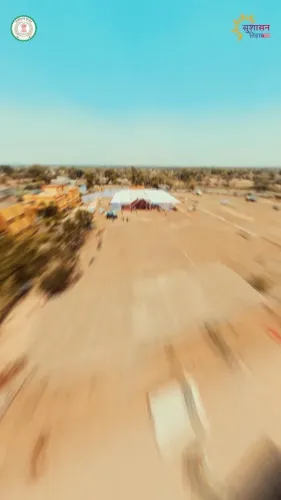
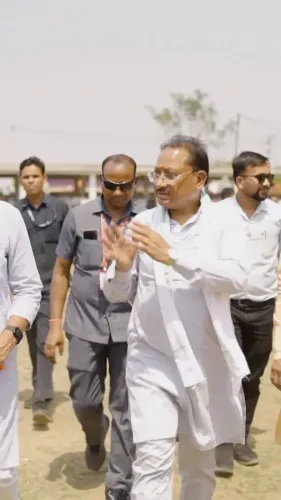
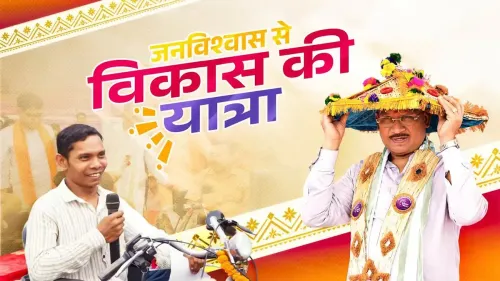
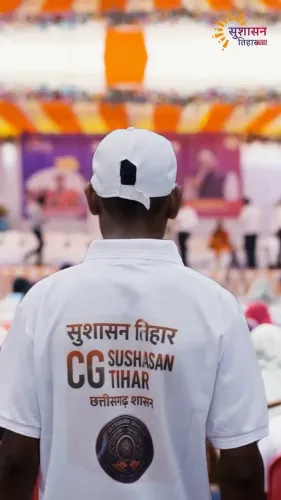
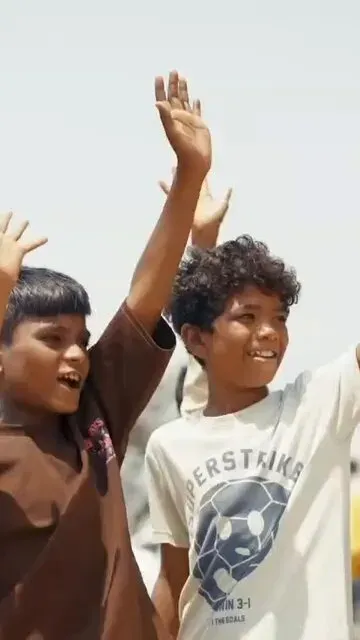
The CMO's post, written in Hindi, declared: 'Har chaupal mein vishwas, har samvaad mein samvedanshilta, aur har nirnay mein janta ka hit' — 'Trust in every chaupal, sensitivity in every dialogue, and the public's interest in every decision.' It framed Sushasan Tihar 2026 as the vehicle through which this vision is being carried to Chhattisgarh's villages. The accompanying video offered glimpses from the ground-level proceedings at Gram Karhibazar.
The word 'tihar' means festival in the local idiom, and the branding of a governance drive as a festival reflects a deliberate effort to make administrative outreach feel participatory rather than bureaucratic. The event at Balodabazar is one node in what the state government is positioning as a wider, district-by-district rollout across Chhattisgarh.
Policy Backdrop
Chhattisgarh has a history of organising jan chaupals — open public assemblies — and governance outreach weeks dating back to at least the mid-2010s. These initiatives are designed to reduce the distance between citizens and district officials, surface unresolved grievances, and build awareness of government schemes at the grassroots level.
Sushasan Tihar 2026 continues this lineage. Across Indian states, time-bound governance festivals have become a recurring administrative tool: they typically combine grievance redressal camps, scheme-awareness sessions, and direct citizen feedback mechanisms. Chhattisgarh's iteration follows this broader national pattern while adapting it to the state's predominantly rural demographic and administrative geography.
Stakeholders and Impact
The primary beneficiaries of Sushasan Tihar 2026 are rural citizens in Chhattisgarh's villages, who gain a structured forum to interact directly with district and block-level administrators. For residents of Gram Karhibazar and surrounding areas in Balodabazar district, the event represents an opportunity to raise local concerns without navigating the full bureaucratic chain.
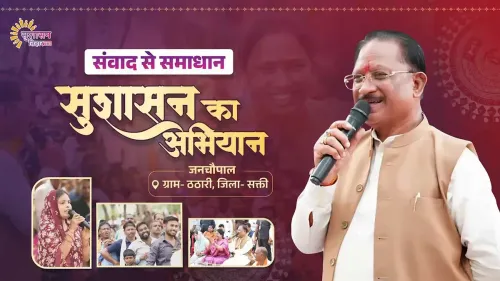
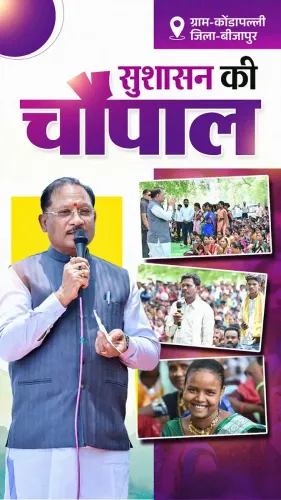
District administration officials are simultaneously stakeholders and implementers, as the programme places them in direct public-facing roles. The chaupal format — an informal open-air assembly rooted in village tradition — lowers the barrier to participation for ordinary citizens, particularly those from marginalised communities who may be less comfortable in formal government offices.
What's Next
The hashtag #SushasanTihar2026 and the location-specific tagging in the CMO's post suggest that similar events are being documented and amplified across multiple districts as the programme progresses through 2026. The key indicators to watch will be the geographic spread of subsequent events and whether the village-level interactions result in any concrete policy adjustments or administrative orders.
If the programme follows the pattern of earlier Chhattisgarh governance outreach drives, district collectors and senior officials are likely to compile citizen feedback for review at the state level — making the quality and diversity of participation at events like the one in Balodabazar directly consequential for future administrative decisions.
Point of View
Non-intimidating space that signals accessibility rather than authority. By amplifying individual village events through the CMO's official social media, the state government is simultaneously conducting a governance exercise and a communications campaign. The broader pattern across Indian states suggests these drives are most consequential when the feedback loop from village interactions to actual policy change is short and transparent — a test Chhattisgarh's 2026 edition has yet to face publicly.
NationPress
7 Oct 2026
Frequently Asked Questions
What is Sushasan Tihar 2026 in Chhattisgarh?
Sushasan Tihar 2026 is a Chhattisgarh state government initiative that brings governance outreach — including grievance redressal, scheme awareness, and direct citizen-official dialogue — to villages across the state through a series of chaupal-style public assemblies.
Where was the Sushasan Tihar 2026 event held on 23 May 2026?
The event highlighted by the Chief Minister's Office on 23 May 2026 was held at Gram Karhibazar in Balodabazar district, Chhattisgarh.
What does 'Sushasan Tihar' mean?
'Sushasan' means good governance in Hindi, and 'tihar' is a local word for festival. The name frames the administrative outreach drive as a public celebration of governance rather than a routine official exercise.
What is the purpose of jan chaupals in Chhattisgarh's governance drives?
Jan chaupals are open public assemblies held in village settings that allow citizens to raise grievances and interact directly with district and block-level officials, reducing bureaucratic barriers to redressal.
Will Sushasan Tihar 2026 be held in other districts of Chhattisgarh?
Based on the CMO's location-specific tagging and the use of a dedicated hashtag, Sushasan Tihar 2026 appears to be a multi-district rollout, with Balodabazar being one of the participating districts. Further events across Chhattisgarh are expected through 2026.