Chhattisgarh CMO launches Helmet Bank at Jashpur Police Lines
Synopsis
The Chief Minister's Office of Chhattisgarh launched a Helmet Bank at Jashpur Police Lines on 4 November 2026, providing accessible helmets to two-wheeler riders in the state's northern tribal district to improve road-safety compliance.
Key Takeaways
Helmet Bank formally launched at Jashpur Police Lines on 4 November 2026 .
Initiative led by the Chhattisgarh Chief Minister's Office with Chhattisgarh Police as the implementing agency.
Jashpur borders Jharkhand and Odisha , making its roads a cross-state traffic corridor with elevated safety stakes.
The facility targets cost and availability barriers that prevent helmet use among rural and semi-urban two-wheeler riders.
The model aligns with Motor Vehicles Act compliance goals and could be extended to other Chhattisgarh districts.
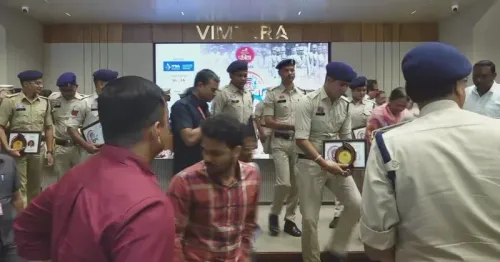
A road-safety initiative with real stakes hit the ground in Jashpur district on Wednesday, 4 November 2026, as the Chief Minister's Office of Chhattisgarh announced the launch of a Helmet Bank at the district's Police Lines — a facility designed to put certified headgear within reach of two-wheeler riders who lack one.
What a Helmet Bank means for Jashpur's riders
The concept is straightforward but its implications are significant: a dedicated stock of helmets housed at the Jashpur Police Lines, accessible to two-wheeler riders in a district that sits at the confluence of Chhattisgarh, Jharkhand, and Odisha — a geography that sees substantial cross-state traffic on often undivided roads. For many riders in rural and semi-urban stretches, the barrier to helmet use is not unwillingness but cost or availability. A bank-style facility addresses exactly that gap.
The initiative falls squarely within the Chhattisgarh Police's broader mandate to improve traffic safety compliance under the Motor Vehicles Act. Helmet non-compliance remains one of the leading correlates of fatality in two-wheeler crashes across India — the Helmet Bank model converts an enforcement problem into a service-delivery opportunity.
Jashpur: a district where outreach travels far
Jashpur, tucked in the northern tip of Chhattisgarh, is predominantly tribal and forested, with road connectivity still developing across several blocks. That context makes Police Lines-based safety infrastructure meaningful — it anchors the facility in a trusted, accessible public institution. Riders passing through or reporting to the district headquarters have an immediate point of access.
Across India, several states have experimented with localised helmet-lending or distribution schemes, but state-level rollouts have been uneven. Chhattisgarh's move to formalise such a facility through an official CMO announcement signals institutional backing rather than a one-off drive. Whether the model is replicated across other districts will be the real measure of ambition.
The road-safety arithmetic behind the gesture
India records among the highest two-wheeler fatality rates in the world, and a substantial share of those deaths involve riders without helmets. District-level interventions — small in footprint, close to the user — have shown promise precisely because they sidestep the enforcement cycle and build habit. A Helmet Bank at a Police Lines does both: it offers supply and embeds the expectation of use in a law-enforcement setting, normalising compliance rather than punishing its absence.
The launch event at Jashpur Police Lines marks the formal start of the facility. Its operational longevity and uptake will determine whether the idea travels further north through Chhattisgarh's most remote terrain — and whether other districts line up to follow.
Point of View
A state with vast tribal hinterland and uneven road safety metrics, anchoring such a facility in a border district is a strategic choice: Jashpur's cross-state traffic makes it a high-exposure test case. If uptake is documented and publicised, it creates a replicable template at minimal cost — the kind of low-budget, high-visibility governance act that the CM's office can scale district by district ahead of any review of state road-fatality data.
NationPress
4 Nov 2026
Frequently Asked Questions
What is a Helmet Bank in Chhattisgarh?
A Helmet Bank is a facility — in this case at Jashpur Police Lines — that provides helmets to two-wheeler riders who do not have one, lowering the cost and availability barrier to road-safety compliance under the Motor Vehicles Act .
Where was the Helmet Bank launched in Chhattisgarh?
The Helmet Bank was launched at the Police Lines in Jashpur district , in northern Chhattisgarh, on 4 November 2026 .
Who launched the Helmet Bank in Jashpur?
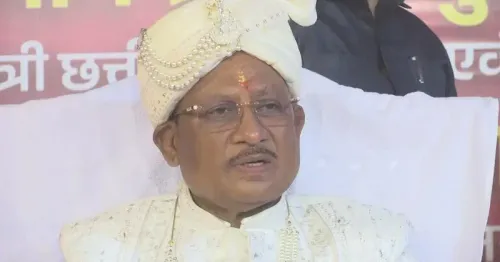
The launch was announced by the Chief Minister's Office of Chhattisgarh ; the Chhattisgarh Police is the implementing agency at the district level.
Will the Helmet Bank be expanded to other Chhattisgarh districts?
No official announcement of a wider rollout has been made yet, but the CMO's formal backing suggests the model could be replicated in other districts depending on uptake in Jashpur.
Why is Jashpur important for road safety initiatives in Chhattisgarh?
Jashpur sits at the border of Jharkhand and Odisha , making it a significant cross-state traffic corridor. Its predominantly rural, tribal terrain and developing road network make helmet access particularly relevant for local two-wheeler riders.