Chhattisgarh CMO pays tribute to Maharishi Valmiki on Jayanti
Synopsis
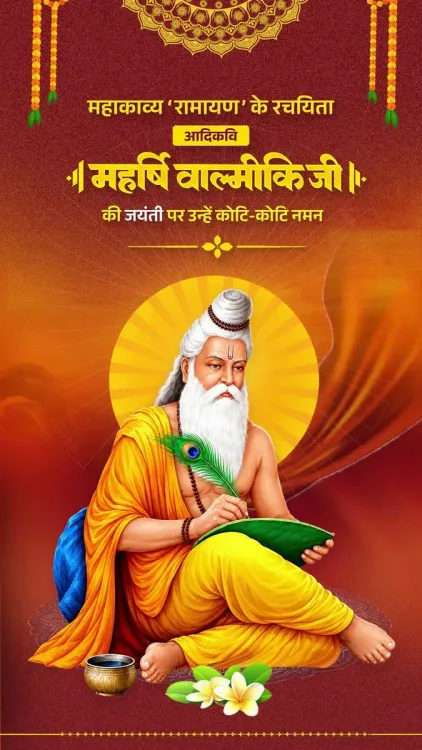
The Chief Minister's Office of Chhattisgarh paid tribute to Maharishi Valmiki on his Jayanti, quoting a Sanskrit shloka and invoking the Ramayana's teachings of service, compassion, and social harmony.
Key Takeaways
The Chhattisgarh CMO posted a Valmiki Jayanti tribute on 26 October 2026 .
The message opened with a classical Sanskrit shloka saluting Valmiki as the Adikavi — the first poet of Sanskrit literature.
Maharishi Valmiki is revered as the author of the Ramayana , one of India's foundational Sanskrit epics.
The CMO invoked four values from the Ramayana: service, compassion, social harmony, and perseverance .
Valmiki Jayanti is observed annually by devotees across India, with particular significance for the Valmiki community , a scheduled caste group.
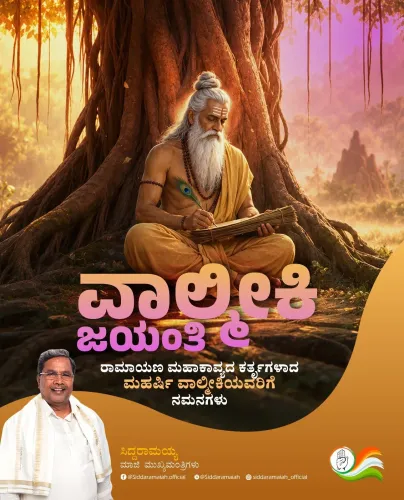
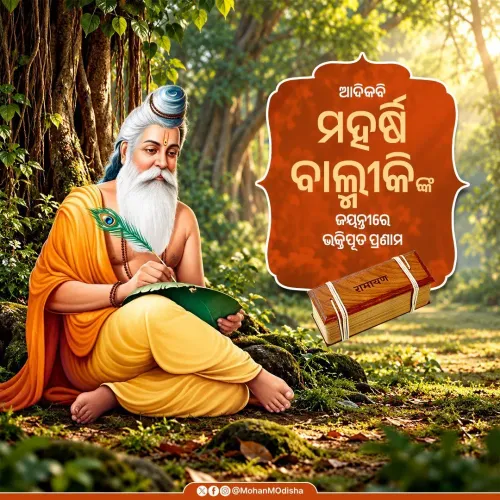
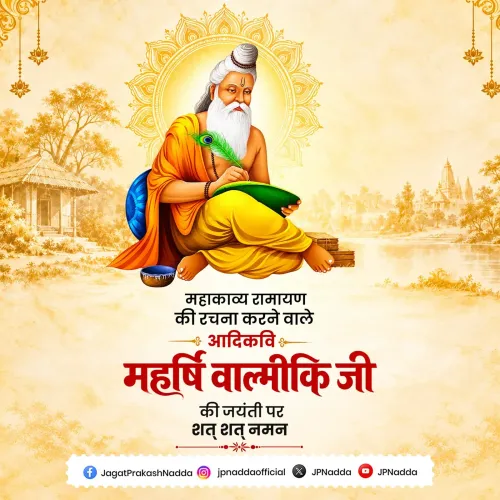
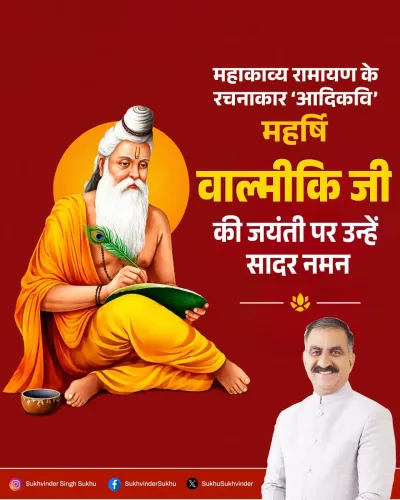
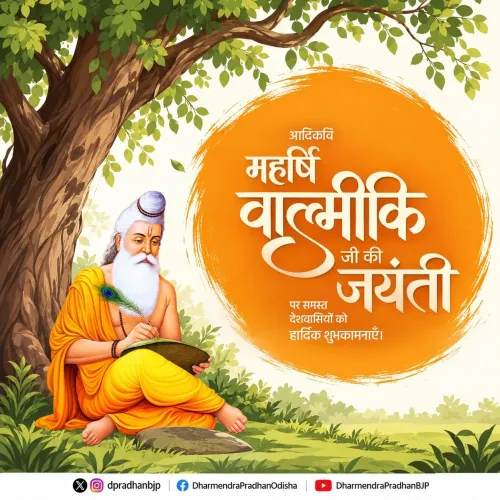
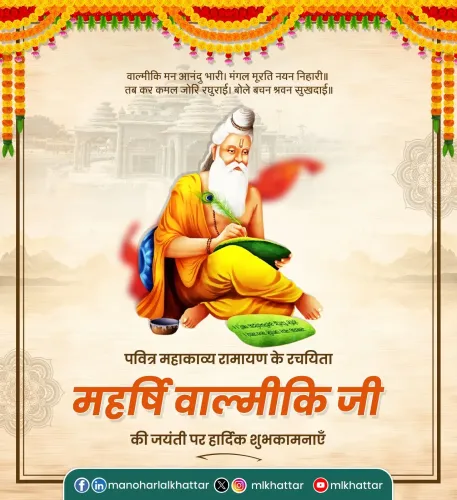
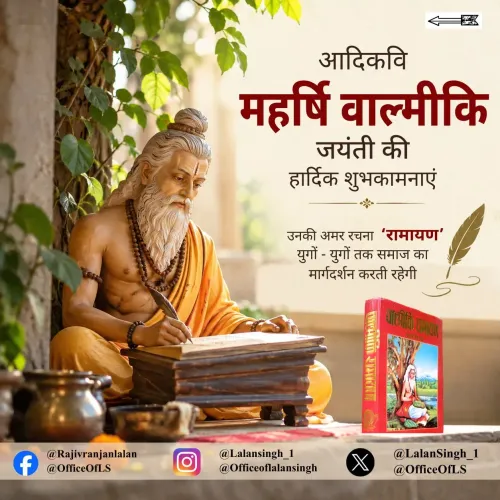
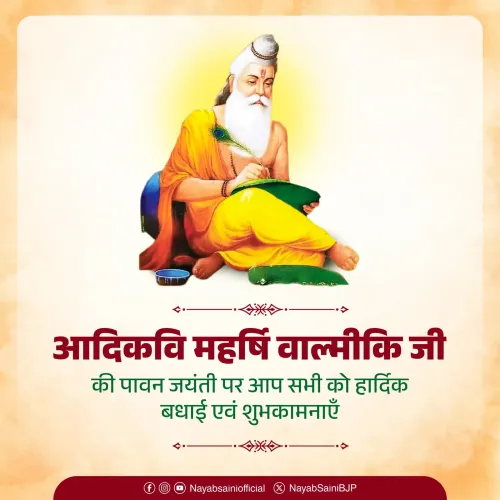
On the birth anniversary of Maharishi Valmiki — the sage-poet who gave the world the Ramayana — the Chief Minister's Office of Chhattisgarh offered a Sanskrit salutation and a reminder of what the epic still means to millions.
The CMO's post opened with a classical Sanskrit shloka: 'Kūjantaṃ Rāma Rāmeti madhuraṃ madhurākṣaram, āruhya kavitāśākhāṃ vande Vālmīkikokilam' — loosely translated, 'I salute the cuckoo-poet Valmiki, who, perching on the branch of poetry, sings the sweet syllables of Rama, Rama.' The verse captures Valmiki not merely as a composer but as a songbird of devotion, his every syllable a note of the divine name.
Adikavi Valmiki: the first poet and his enduring epic
Maharishi Valmiki is venerated across India as the Adikavi — the first poet — credited with composing the Ramayana, one of Hinduism's two great Sanskrit epics. Tradition holds that the grief (shoka) he felt watching a hunter strike down a bird transformed spontaneously into verse (shloka), marking the birth of Sanskrit poetry itself. Valmiki Jayanti falls on the full moon of the Ashwin or Kartik month of the Hindu calendar, celebrated by devotees across the country with processions, readings, and community gatherings.
Service, compassion, and social harmony — the values the CMO invoked
Beyond the ceremonial salutation, the office drew a direct line from the epic to lived values: 'seva, karuṇā, sāmājik samarasatā aur nirañtar prayās' — service, compassion, social harmony, and perseverance. The choice of sāmājik samarasatā (social harmony) is pointed: Valmiki's own life story — his transformation from a wayward figure to an enlightened sage — has long been invoked in Indian public discourse as a symbol of redemption and social inclusion. The Valmiki community, a scheduled caste group that reveres him as a divine ancestor, observes the Jayanti as a major cultural and spiritual occasion.
Indian state governments marking such Jayantis is an established tradition, using the occasion to align governance messaging with classical literary values and to reach audiences for whom these figures carry deep religious significance.
The epic's call to embody ideals — even under pressure, even across a lifetime — is one that resonates far beyond any one state government's post. Valmiki wrote it once. India keeps reading it back to itself.
Point of View
Given Valmiki's centrality to scheduled caste identity and the BJP-led Chhattisgarh government's outreach to OBC and SC voter blocs. The Sanskrit shloka, meanwhile, positions the tribute within a broader civilisational register. Such observances have become a standard instrument of cultural governance across the Hindi belt.
NationPress
26 Oct 2026
Frequently Asked Questions
When is Valmiki Jayanti celebrated in 2026?
Valmiki Jayanti in 2026 falls on 26 October , coinciding with the full moon of the Kartik month in the Hindu calendar.
Who was Maharishi Valmiki?
Maharishi Valmiki is revered as the Adikavi — the first poet of Sanskrit literature — and is credited with composing the Ramayana , one of India's two great Sanskrit epics.
What is the significance of the Ramayana according to the Chhattisgarh CMO?
The CMO stated that the Ramayana inspires values of service, compassion, social harmony, and perseverance in daily life.
Why do Indian state governments mark Valmiki Jayanti?
State governments observe Valmiki Jayanti to honour a foundational literary figure, align governance messaging with classical values, and connect with the Valmiki community , a scheduled caste group that reveres him as a divine ancestor.
What does the Sanskrit shloka in the Chhattisgarh CMO's post mean?
The shloka salutes Valmiki as 'the cuckoo-poet who, perching on the branch of poetry, sweetly sings the syllables of Rama' — portraying him as both a devotee and the originator of Sanskrit verse.