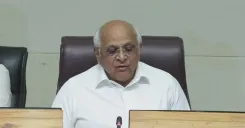
CM Bhajan Lal Invokes Chanakya's Ethics for Social Reform
Synopsis
Rajasthan CM Bhajan Lal Sharma invoked Acharya Chanakya's ethics — truth, knowledge, righteousness, compassion, peace and forgiveness — in a message to Nitin Nabin, urging sustained dedication to eliminating social evils and advancing public welfare.
Key Takeaways
Rajasthan CM Bhajan Lal Sharma posted the message on 26 October 2026 .
He quoted Acharya Chanakya : truth, knowledge, righteousness, compassion, peace and forgiveness constitute a 'true family'.
The message was addressed to Nitin Nabin , referred to as national president.
Sharma urged continuous, dedicated work toward eliminating social evils ( kureetiyan ) and giving new momentum to public welfare.
The post reflects a consistent BJP communication style of anchoring governance messaging in classical Indian philosophical tradition.
Rajasthan Chief Minister Bhajan Lal Sharma reached back two millennia for moral authority on Monday, 26 October 2026, quoting Acharya Chanakya to frame a call for social reform and public welfare — directing his message at Nitin Nabin, national president of the organisation being addressed.
Sharma quoted the ancient strategist directly: 'Satya, gyan, dharm, daya, shanti aur kshama hi sachcha parivaar hain' — 'Truth, knowledge, righteousness, compassion, peace and forgiveness alone constitute a true family.' He urged Nabin and the organisation to hold fast to these values while working to eliminate social ills and give fresh momentum to public welfare.
Chanakya as a political touchstone
Acharya Chanakya, the fourth-century BCE philosopher and author of the Arthashastra, has long occupied a special place in Indian political discourse. His writings on statecraft, ethics, and social order are invoked across the ideological spectrum, but BJP leaders have made him a particularly consistent reference point — linking classical Indian wisdom directly to contemporary governance goals. Sharma's post follows that well-worn path, rooting a message about eliminating kureetiyan (social evils) in an authority no one argues with.The weight behind 'true family'
The choice of the 'family' metaphor is deliberate. By defining a 'true family' not as blood ties but as shared virtues — truth, knowledge, dharma, compassion, peace, forgiveness — the message repositions any civic or political organisation as a values-bound community with a social contract. It is a rhetorical move that elevates routine administrative or social work into something with moral stakes. Sharma signed off the message crediting it as a quote from the 'honourable national president Shri Nitin Nabin ji', suggesting this functions as an endorsement or motivational address rather than a policy announcement. The research notes that the exact organisational context of Nabin's role in October 2026 is unverified, so the article does not assert one. What the post does confirm is a pattern: Rajasthan's chief minister using classical Indian philosophy as the grammar of public communication, tying cultural heritage to the everyday work of welfare delivery. The kicker writes itself — when a politician quotes a 2,400-year-old strategist to talk about tomorrow's governance, they are betting that ancient authority still moves modern audiences. In Indian politics, that bet rarely loses.Point of View
Making dissent from the underlying values — truth, compassion, public service — rhetorically difficult. The move also signals that the party's ideological framing extends beyond electoral cycles into organisational culture-building. Addressing Nitin Nabin publicly gives the message an institutional weight beyond a personal reflection. Whether it translates into specific Rajasthan government initiatives targeting social evils remains the test of substance behind the symbolism.
NationPress
26 Oct 2026
Frequently Asked Questions
What did CM Bhajan Lal Sharma say about Acharya Chanakya?
CM Bhajan Lal Sharma quoted Chanakya's teaching that truth, knowledge, righteousness, compassion, peace and forgiveness constitute a true family, using it to inspire work toward social reform and public welfare.
Who is Nitin Nabin and why did Bhajan Lal Sharma address him?
Sharma addressed Nitin Nabin as the national president of the organisation concerned, directing the Chanakya-inspired message at him as a motivational call to action for welfare and social reform work.
Why do BJP leaders frequently quote Acharya Chanakya?
BJP leaders invoke Chanakya to connect classical Indian statecraft and ethics with modern governance goals, reinforcing a cultural-nationalist identity that links ancient wisdom to contemporary public policy.
What social evils did Bhajan Lal Sharma refer to?
Sharma used the general Hindi term 'kureetiyan' — meaning social evils or regressive practices — without specifying particular issues, framing the call broadly as a mission rooted in Chanakya's virtues.
What is Acharya Chanakya's relevance to Indian politics today?
Chanakya, the fourth-century BCE author of the Arthashastra, is widely cited across Indian politics for his writings on statecraft, ethics and social order, making him a nonpartisan but frequently invoked moral authority.