CM Bhupendra Patel Addresses Press on Gujarat's Delayed, Deficient Monsoon
Synopsis
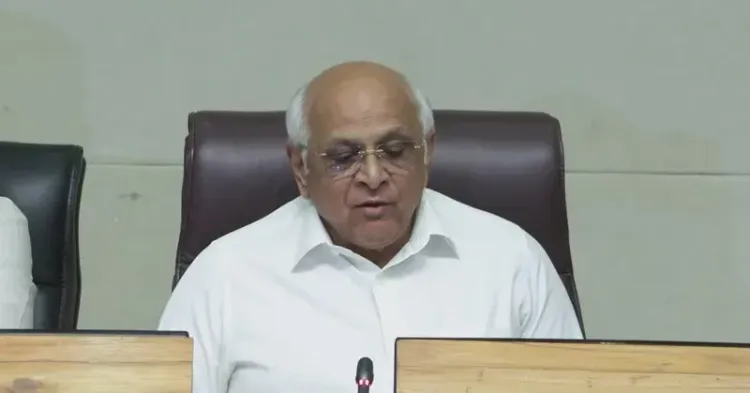
Gujarat Chief Minister Bhupendra Patel convened a live press conference on October 26, 2026, to publicly address the state's delayed and deficient monsoon — signalling a shift to active government response as farmers face crop stress across groundnut and cotton belts.
Key Takeaways
Gujarat CM Bhupendra Patel held a live press conference on October 26, 2026 on the state's delayed and deficient rainfall.
Gujarat's farm economy depends heavily on the southwest monsoon for crops like groundnut and cotton .
The state has previously navigated major monsoon deficits in 2015 and 2018 , both triggering formal relief measures.
The Pradhan Mantri Krishi Sinchayee Yojana (launched 2015) provides partial buffer via irrigation expansion, but dryland farmers remain exposed.
Key expected announcements include potential drought declarations, input subsidies, crop loss compensation, and drinking water contingency plans.
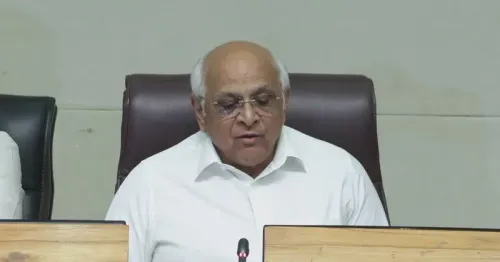
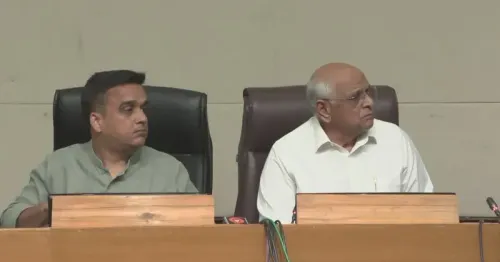
With farmers across Gujarat watching dry skies and parched fields, Gujarat Chief Minister Bhupendra Patel called a live press conference on Monday, October 26, 2026, to address the state's delayed and deficient monsoon situation — a moment that signals the government is shifting from watch mode to action mode.
The Chief Minister announced the press conference in Gujarati: 'રાજ્યમાં વિલંબિત અને ઓછા વરસાદ સંદર્ભે પ્રેસ કોન્ફરન્સ' — ('Press conference regarding delayed and deficient rainfall in the state'). The live broadcast signalled urgency, pulling the issue squarely into the public domain ahead of any formal administrative announcements.
Why Gujarat's Monsoon Failures Cut Deep
Gujarat is a state where the southwest monsoon is not just weather — it is economics. Crops like groundnut and cotton, both mainstays of the state's farm economy, depend almost entirely on seasonal rainfall. A delayed or deficient monsoon compresses the sowing window, drives down yields, and pushes vulnerable farm households toward financial stress almost immediately.
This is not the first time Gujarat has faced this reckoning. The state navigated significant rainfall deficits in 2015 and 2018, both of which triggered government-level drought monitoring and district-level relief packages. Each episode sharpened the state administration's contingency playbook — and today's press conference suggests that playbook may be opening again.
The Policy Architecture Already in Place
The central government's Pradhan Mantri Krishi Sinchayee Yojana, launched in 2015, was designed precisely to reduce states like Gujarat's dependence on an unpredictable monsoon by expanding irrigation infrastructure. Progress under that scheme gives the state some buffer — but irrigation coverage is uneven, and dryland farmers in rain-shadow districts remain the most exposed.
Chief Minister Patel's decision to hold a public press conference — rather than issue a quiet administrative circular — matters. It frames the rainfall shortfall as a governance priority, not a bureaucratic footnote, and sets public expectations for what relief or preparedness measures may follow.
What Farmers and Districts Are Watching For
The immediate questions on the ground are concrete: Which districts will be formally declared drought-affected? Will input subsidies or crop loss compensation be triggered? Are water supply contingencies in place for both agriculture and drinking water in deficit talukas? Any announcements from the press conference addressing these specifics will determine whether government response matches the scale of concern.
Gujarat's farmers cannot afford a wait-and-watch answer. The harvest calendar moves whether the monsoon does or not.
Point of View
And it creates accountability around the response that follows. For Bhupendra Patel, whose BJP base in Gujarat includes a large rural constituency, visibly owning the monsoon narrative ahead of any formal drought declaration is smart statecraft. The move also mirrors the BJP's broader governance style of high-visibility communication during agrarian stress. The real test, however, will be whether the announcements from this press conference match the urgency the live format implies.
NationPress
26 Oct 2026
Frequently Asked Questions
Why did Gujarat CM Bhupendra Patel hold a press conference about the monsoon?
Chief Minister Bhupendra Patel called the press conference to publicly address delayed and deficient rainfall in Gujarat in 2026, signalling active government concern for farmers and the state's agriculture-dependent economy.
Which crops are most affected by a deficient monsoon in Gujarat?
Gujarat's key rain-dependent crops are groundnut and cotton, both of which rely heavily on southwest monsoon rainfall and face yield losses when the season is delayed or deficient.
Has Gujarat faced monsoon deficits before and how did the government respond?
Yes. Gujarat experienced significant rainfall deficits in 2015 and 2018, both of which prompted state-level drought monitoring, district-level relief packages, and water supply contingency measures.
What is the Pradhan Mantri Krishi Sinchayee Yojana and does it help Gujarat farmers?
The Pradhan Mantri Krishi Sinchayee Yojana, launched in 2015, aims to expand irrigation infrastructure to reduce states' dependence on monsoon rainfall. While it provides some buffer for Gujarat farmers, coverage remains uneven and dryland farmers stay vulnerable.
What relief measures could Gujarat announce after the monsoon press conference?
Possible government actions include formal drought declarations in affected districts, input subsidies, crop loss compensation for farmers, and contingency plans for drinking water supply in deficit talukas.