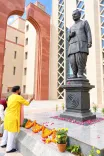
CM Bhajan Lal Sharma Pays Tribute to Deendayal Upadhyay on Birth Anniversary
Synopsis
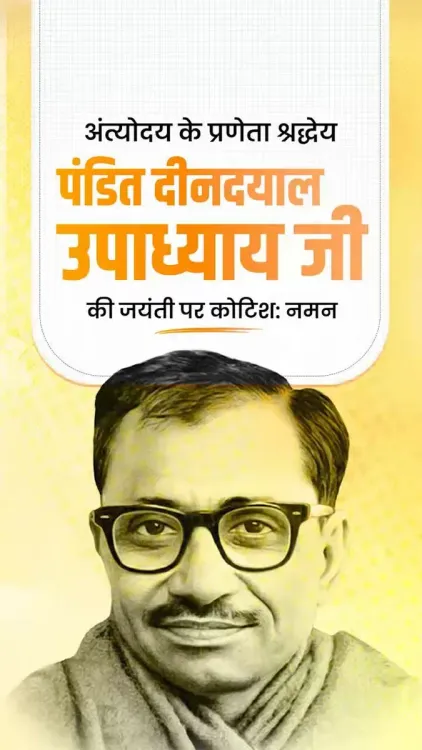
Rajasthan CM Bhajan Lal Sharma marked Pandit Deendayal Upadhyay's birth anniversary on 25 September 2026, invoking his Antyodaya principle and Integral Humanism as enduring inspirations for public and national service.
Key Takeaways
Rajasthan CM Bhajan Lal Sharma posted a tribute to Pandit Deendayal Upadhyay on his birth anniversary, 25 September 2026 .
He cited Upadhyay's concept of Ekatma Manavavad (Integral Humanism) as a lasting inspiration for governance.
The Antyodaya principle — uplifting the last and most marginalised person in society — was specifically highlighted as a guiding ideal.
Upadhyay was the president of the Bharatiya Jana Sangh and developed his political philosophy in the 1950s–1960s as an alternative to capitalism and socialism.
BJP leaders mark 25 September annually as a moment to reaffirm commitment to Upadhyay's ideological framework, with welfare policy often framed around his principles.
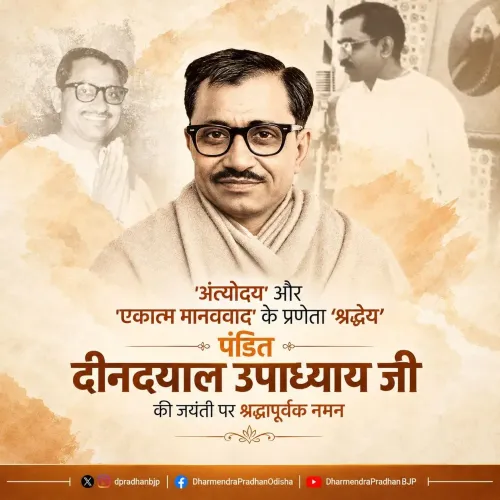
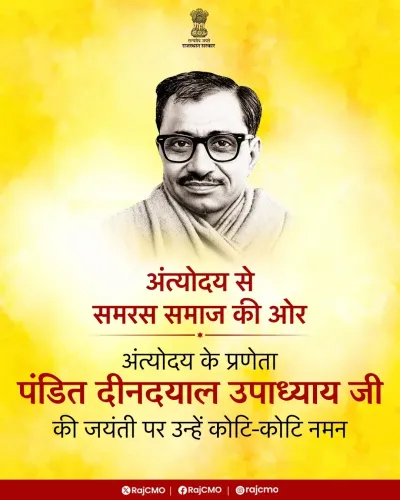
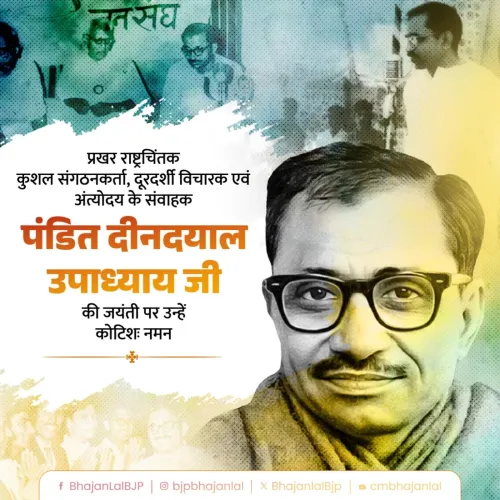
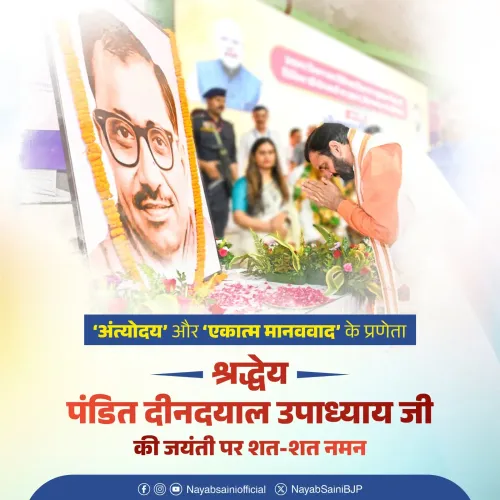
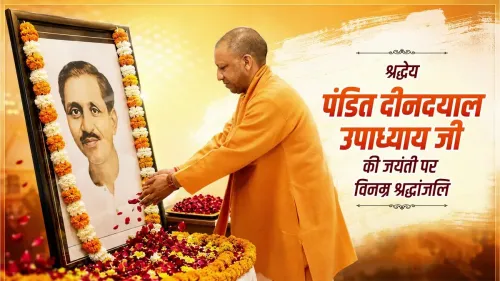
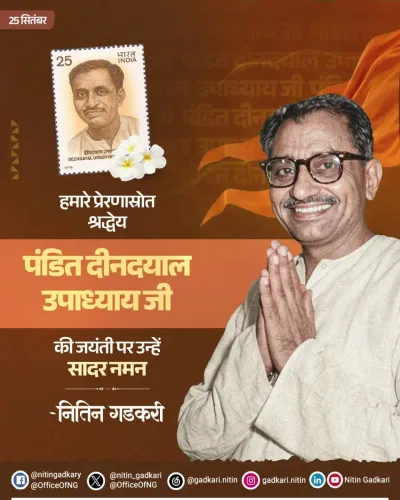
On the birth anniversary of one of modern India's most consequential political thinkers, Rajasthan Chief Minister Bhajan Lal Sharma on Friday, 25 September 2026, offered his tributes to Pandit Deendayal Upadhyay, reaffirming that Upadhyay's vision of Antyodaya — the upliftment of the last person in society — and his philosophy of Ekatma Manavavad (Integral Humanism) remain a guiding light for public and national service.
Posting in Hindi, CM Sharma wrote: 'Antyodaya ke praneta evam mahan vicharak' — calling Upadhyay the 'pioneer of Antyodaya and a great thinker' — and offered 'countless salutations' (kotishaḥ naman) on the occasion of his birth anniversary. He stated that Upadhyay's concept of Integral Humanism and his resolve to uplift the individual standing at the lowest rung of society 'will always inspire us on the path of public service and national service.'
Who Was Pandit Deendayal Upadhyay — and Why He Still Shapes BJP Governance
Pandit Deendayal Upadhyay served as president of the Bharatiya Jana Sangh — the forerunner of the BJP — and in the 1950s and 1960s articulated a political philosophy deliberately positioned as an alternative to both Western capitalism and Soviet-style socialism. His framework, Ekatma Manavavad or Integral Humanism, placed the holistic well-being of the individual at the centre of statecraft, rejecting class-based conflict models in favour of an organic, culture-rooted vision of society.
The Antyodaya principle — that the true measure of any welfare programme is what it does for the most marginalised person — has since been embedded in BJP policy language at both the central and state levels, lending Upadhyay's name and ideas a living policy relevance decades after his death.
A Ritual of Reaffirmation — and What Rajasthan's Welfare Agenda Says Next
25 September functions as a near-mandatory moment of ideological restatement for BJP leaders across the country. CM Sharma's tribute follows that pattern, but it also sets a rhetorical benchmark: any Rajasthan government welfare initiative in the months ahead — especially those targeting rural poor, scheduled communities, or last-mile beneficiaries — is likely to be framed explicitly through the lens of Antyodaya, turning today's tribute into tomorrow's policy vocabulary.
That is the real weight of Upadhyay's anniversary. Not ceremony alone — but the renewal of a governing promise that the last person in line still counts.
Point of View
A state with large marginalised and rural populations where the government needs a coherent moral frame for its social spending. By naming Upadhyay as the 'pioneer' of this idea, Sharma is also asserting ideological continuity with the Jana Sangh lineage — important signalling both to the party's ideological core and to voters who respond to welfare-first messaging. Watch whether Rajasthan's next budget or scheme launch explicitly brands itself around Antyodaya goals.
NationPress
25 Sept 2026
Frequently Asked Questions
Who was Pandit Deendayal Upadhyay?
Pandit Deendayal Upadhyay was a key ideologue and president of the Bharatiya Jana Sangh, the predecessor of the BJP. He developed the philosophy of Integral Humanism (Ekatma Manavavad) and the Antyodaya principle — focused on uplifting the last and poorest person in society — in the 1950s and 1960s.
What is Antyodaya and why is it important in Indian politics?
Antyodaya means 'rise of the last person' and represents the principle that governance must prioritise the most marginalised. It has been invoked as a guiding framework for welfare policies by BJP-led governments at the central and state levels.
What is Ekatma Manavavad or Integral Humanism?
Integral Humanism is a political philosophy articulated by Deendayal Upadhyay that places the holistic well-being of the individual — physical, mental, intellectual, and spiritual — at the centre of statecraft, rejecting both capitalism and socialism as inadequate.
Why do BJP leaders tribute Deendayal Upadhyay on 25 September?
25 September is Deendayal Upadhyay's birth anniversary. BJP leaders mark it annually as an occasion to reaffirm ideological commitment to his framework of Integral Humanism and Antyodaya, linking their governance agenda to his legacy.
What did Rajasthan CM Bhajan Lal Sharma say about Deendayal Upadhyay?
CM Bhajan Lal Sharma called Upadhyay the 'pioneer of Antyodaya and a great thinker,' stating that his Integral Humanism and resolve to uplift the most marginalised will always inspire the path of public and national service.