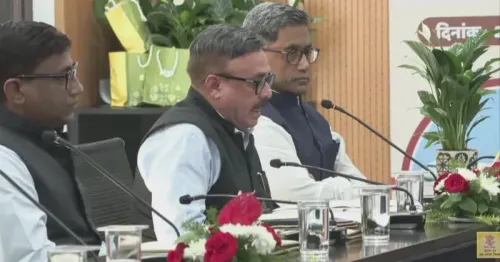
CM Samrat Choudhary launches Gaya–Bangkok IndiGo flight

Synopsis
Bihar Chief Minister Samrat Choudhary launched IndiGo's first non-stop Gaya–Bangkok international flight on 26 October 2026, strengthening Bihar's air connectivity with Southeast Asia and opening new doors for Buddhist pilgrimage tourism and ASEAN trade.
Key Takeaways
IndiGo Airlines launched its first non-stop international flight between Gaya and Bangkok on 26 October 2026 .
Bihar CM Samrat Choudhary inaugurated the service from his official residence, Lok Sevak Aawas .
The route directly serves Buddhist pilgrims travelling from Thailand to Bodh Gaya, eliminating layovers through Delhi or Kolkata.
The launch aligns with India's Act East Policy and the UDAN scheme 's goal of expanding international connectivity from tier-2 airports.
The CM cited boosts to tourism , cultural exchange, and economic activity as the key expected outcomes.
Bangkok's role as a major ASEAN hub gives the route transit potential for travellers across Southeast Asia.
Bihar just punched through a new ceiling in its international aviation map. Bihar Chief Minister Samrat Choudhary on Monday, 26 October 2026, flagged off IndiGo Airlines' first-ever non-stop international flight connecting Gaya with Bangkok, launching the service from his official residence, Lok Sevak Aawas.
Posting on X, the Chief Minister said the new air service would 'strengthen Bihar's international air connectivity' and give a boost to tourism, cultural exchange, and economic activity. The symbolism of the venue — the CM's own residence as the launch point — underscores how personally the Bihar government has invested in projecting this as a state-level milestone.
Why Gaya–Bangkok is more than a flight route
The Gaya International Airport is no ordinary regional aerodrome. It sits as the primary gateway to Bodh Gaya, the UNESCO-listed site where the Buddha attained enlightenment — one of the most revered destinations in the Buddhist world. Thailand, with its deeply rooted Theravada Buddhist heritage and millions of practicing Buddhist citizens, has maintained a natural cultural kinship with this corner of Bihar for decades. A non-stop connection collapses that kinship into a direct flight, with no layover in Delhi or Mumbai.
That matters enormously for Buddhist pilgrims, the single largest international traveller segment flying into Gaya. Until now, most Thai pilgrims routed through the capital or connected via Kolkata. A direct IndiGo service changes that calculus entirely, opening the door to higher footfall at Bodh Gaya, Rajgir, Nalanda, and the broader Buddhist circuit Bihar has spent years developing.
IndiGo's eastward push and Bihar's Act East opportunity
IndiGo, India's largest carrier by market share, has steadily expanded its international network beyond metro hubs — a trend that aligns neatly with New Delhi's Act East Policy, which targets deeper economic and people-to-people integration with ASEAN nations. Tier-2 airports getting direct international routes is no longer an exception; it is fast becoming the template.
Bihar has been a deliberate beneficiary of that template. The state's airports — Gaya in particular — have received successive infrastructure upgrades calibrated to religious tourism demand. The UDAN scheme, launched in 2016 to democratise air travel from smaller cities, built the regulatory and financial scaffolding that makes such routes commercially viable. The Gaya–Bangkok corridor is in many ways the culmination of that decade-long investment in connectivity.
The economic multiplier Bihar is betting on
Tourism in Bihar is no longer a soft talking point — it is a hard revenue line the state is chasing aggressively. International air access directly feeds hotel occupancy, local transport, handicrafts, and hospitality employment in the districts surrounding Bodh Gaya. Bangkok is also a major ASEAN aviation hub, meaning the route carries transit potential: travellers from across Southeast Asia can now connect through Bangkok to reach Gaya with a single additional hop.
The Chief Minister's framing — tourism, cultural exchange, and economic momentum in the same breath — signals that Bihar sees this not as a single route but as a proof of concept for further international services from Gaya and, potentially, Patna. The route's passenger load factor in its first months will be the real test of that ambition.
A state long defined by its outward migration is now building runways that bring the world in. Watch for the next international destination Bihar pitches from Gaya.
Point of View
Bihar is monetising cultural soft power that previously had no dedicated air corridor. For CM Samrat Choudhary, the launch is also a governance signal — international connectivity from a non-metro airport tests the BJP's development narrative in a state that goes to the polls with infrastructure optics firmly in frame. The route's commercial performance will determine whether Gaya becomes a genuine regional aviation hub or remains a seasonal pilgrimage spike.
NationPress
26 Oct 2026
Frequently Asked Questions
Which airline launched the Gaya to Bangkok flight?
IndiGo Airlines launched the first non-stop international flight between Gaya and Bangkok , inaugurated by Bihar CM Samrat Choudhary on 26 October 2026 .
Why is a direct Gaya–Bangkok flight significant?
Gaya is the gateway to Bodh Gaya , one of Buddhism's holiest sites. A direct link to Bangkok eliminates layovers for Thai Buddhist pilgrims and opens Bihar to broader Southeast Asian tourism and trade.
What is the UDAN scheme and how does it relate to this flight?
The UDAN scheme , launched in 2016 , was designed to improve air connectivity from smaller Indian cities. It built the policy and financial framework that makes international routes from tier-2 airports like Gaya commercially viable.
Who is Samrat Choudhary?
Samrat Choudhary is the Chief Minister of Bihar and a senior leader of the BJP. He has overseen several infrastructure and connectivity initiatives in the state.
Will there be more international flights from Gaya airport?
The Bihar government has signalled that this launch is part of a broader push to expand international routes from Gaya and potentially Patna , with passenger load on the new route expected to drive future decisions.