CM Samrat Choudhary Pitches Helicopter Tourism for Bihar Heritage
Synopsis
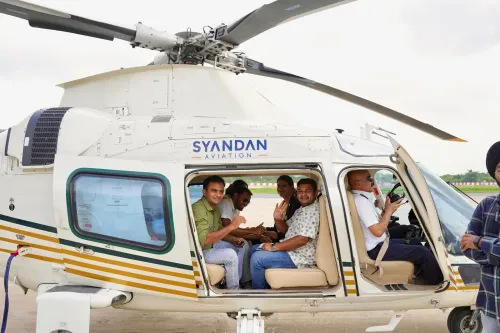
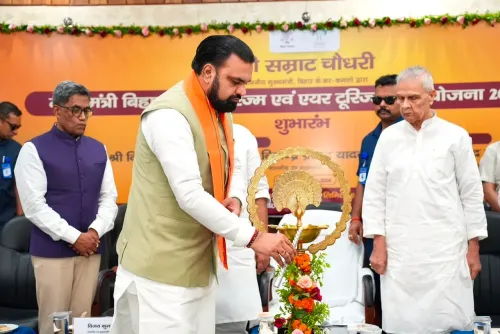
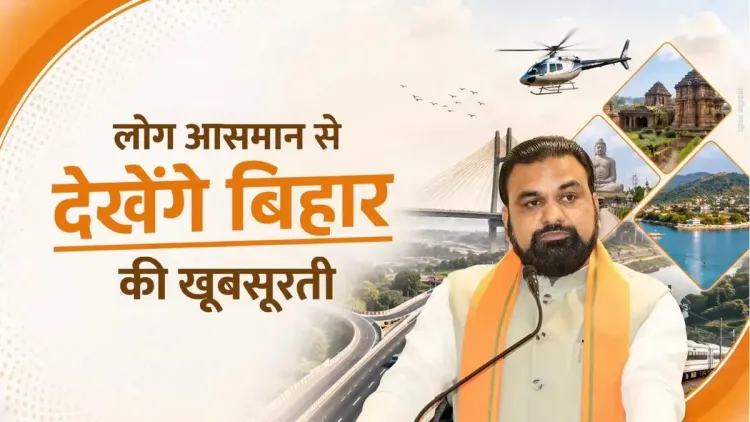
Bihar Chief Minister Samrat Choudhary on 13 July 2026 announced a helicopter tourism initiative to give Bihar's rich heritage sites a new identity and open fresh economic opportunities for the state under the #NewBihar vision.
Key Takeaways
Bihar CM Samrat Choudhary announced on 13 July 2026 that helicopter tourism will be introduced to promote the state's heritage destinations.
The initiative aims to give Bihar's cultural heritage a new national and international identity.
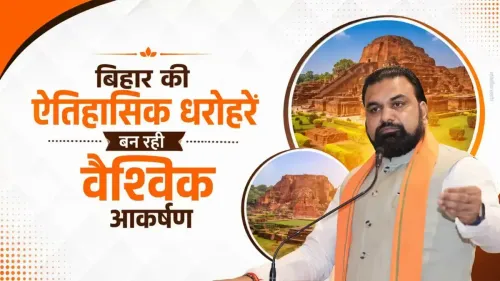
Key sites likely to benefit include Bodh Gaya , a UNESCO World Heritage Site , along with Rajgir and Nalanda .
The move aligns with a broader Indian state-level trend of using helicopter services to boost pilgrimage and heritage tourism.
Specific routes, operators, and timelines are yet to be formally announced by the Bihar government .
The announcement reinforces the #NewBihar brand positioning the state as a modern, development-oriented destination.
Bihar Chief Minister Samrat Choudhary on Monday, 13 July 2026, signalled a push to elevate the state's heritage profile through helicopter tourism, declaring that Bihar's cultural legacy would gain a new identity and that aerial tourism would open a fresh gateway to prosperity.
Posting on X with the hashtag #NewBihar, the Chief Minister wrote: 'बिहार की धरोहर को मिलेगी नई पहचान, हेलीकॉप्टर पर्यटन से खुलेगा समृद्धि का नया द्वार' — 'Bihar's heritage will get a new identity, helicopter tourism will open a new gateway to prosperity.'
Context
Bihar is home to some of India's most significant heritage and pilgrimage destinations, including Bodh Gaya, a UNESCO World Heritage Site and one of the most visited Buddhist pilgrimage centres in the world. Despite its historical wealth, the state has historically struggled with tourism infrastructure that matches the scale of its cultural assets. Chief Minister Samrat Choudhary's post signals a political intent to bridge that gap through modern aerial connectivity.
Policy Backdrop
Bihar has been pursuing tourism development since the 2010s, focusing on heritage circuits that link Buddhist, Jain, and Hindu pilgrimage sites across the state. Across India, several state governments have introduced helicopter services to improve access to remote or high-footfall heritage destinations, using the model both to stimulate local economies and to attract higher-spending visitors. The approach fits within a broader national pattern of positioning niche tourism products as engines of regional development.
Helicopter tourism, where operational, has demonstrated an ability to reduce travel time to sites with limited road or rail access, increase visitor throughput during peak pilgrimage seasons, and generate ancillary employment in hospitality and logistics. For a state like Bihar — with dense heritage clusters spread across varied terrain — such connectivity could meaningfully alter visitor numbers and spending patterns.
Stakeholders and Impact
The primary beneficiaries of a helicopter tourism push would be the Bihar tourism industry, including hotels, guides, and local artisans concentrated around heritage towns such as Bodh Gaya, Rajgir, and Nalanda. Domestic and international Buddhist pilgrims, who already form a significant share of Bihar's inbound visitors, stand to gain faster, more comfortable access to key sites. Local economies along proposed routes could see increased footfall and commercial activity.
For the state government, a successful helicopter tourism rollout would strengthen the #NewBihar narrative — a branding effort to reposition the state as a destination for investment and modern infrastructure, not merely a region associated with governance challenges. The announcement, delivered via social media, also signals an intent to communicate development milestones directly to a digital-first electorate.
What's Next
Specific details — including helicopter routes, operator partnerships, ticket pricing, and a phased rollout calendar — are yet to be formally announced by the Bihar government. Observers will watch for a structured policy document or cabinet decision that translates the Chief Minister's social-media signal into operational commitments. The success of the initiative will ultimately depend on coordination between state aviation authorities, the Airports Authority of India, and private helicopter operators with experience in pilgrimage and heritage circuits.
If executed, the move could position Bihar alongside states like Uttarakhand and Himachal Pradesh that have used helicopter services to transform access to heritage and religious sites — and offer a replicable model for heritage tourism across eastern India.
Point of View
He is simultaneously courting pilgrimage tourists, domestic investors, and a social-media audience attuned to the #NewBihar brand. The move echoes a well-worn playbook: states that have successfully deployed helicopter services to religious sites have seen tangible gains in visitor numbers and media visibility. The real test will be whether this social-media intent converts into an operational framework with clear routes, regulated fares, and safety oversight — the gap between announcement and execution has historically been the stumbling block for similar initiatives across India.
NationPress
12 Oct 2026
Frequently Asked Questions
What did Bihar CM Samrat Choudhary announce about helicopter tourism?
Bihar Chief Minister Samrat Choudhary announced on 13 July 2026 that helicopter tourism would be introduced in the state to give Bihar's heritage sites a new identity and create fresh economic opportunities.
Which heritage sites in Bihar could benefit from helicopter tourism?
Key sites likely to benefit include Bodh Gaya, a UNESCO World Heritage Site, as well as historic destinations such as Rajgir and Nalanda, which are central to Bihar's Buddhist and ancient heritage circuits.
Has helicopter tourism been tried in other Indian states?
Yes. States such as Uttarakhand and Himachal Pradesh have used helicopter services to improve access to pilgrimage and heritage destinations, boosting visitor numbers and local economic activity.
When will Bihar's helicopter tourism service start?
Specific routes, operator partnerships, and a launch timeline have not yet been formally announced by the Bihar government. The 13 July 2026 post signals political intent; operational details are awaited.
What is the #NewBihar campaign?
#NewBihar is a branding effort by the Bihar government to reposition the state as a modern, investment-friendly, and development-oriented destination, with tourism infrastructure as one of its key pillars.