CM Yogi advances Dalit heritage push across Uttar Pradesh
Synopsis
The Uttar Pradesh Chief Minister's Office announced three PAC battalions named after 1857 women warriors from SC and OBC communities, restoration of Sant Ravidas's birthplace in Varanasi, and a grand memorial for Maharaja Bijli Pasi in Lucknow, deepening CM Yogi's Dalit heritage push.
Key Takeaways
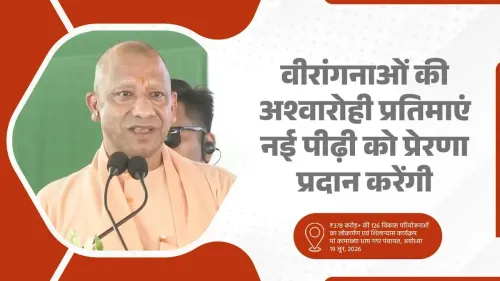
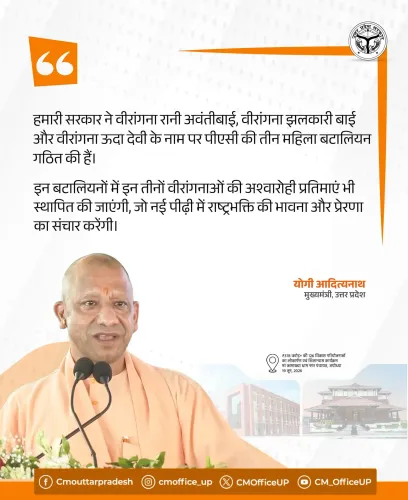
Three PAC battalions in Lucknow, Badaun, and Gorakhpur are being named after Veerangana Uda Devi Pasi , Veerangana Avantibai Lodhi , and Veerangana Jhalakari Bai Kori respectively.
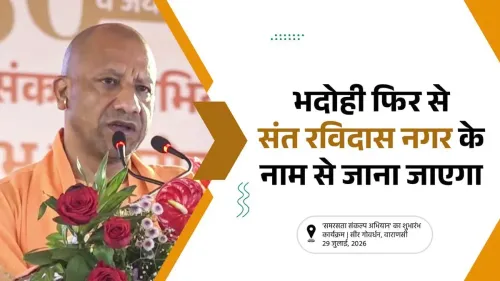
Restoration of the birthplace of Sant Ravidas at Seer Govardhanpur, Varanasi is already underway.
A grand memorial for Maharaja Bijli Pasi is being constructed in Lucknow , with his fort also being redeveloped.
All three PAC battalion figures were fighters from SC or OBC communities who participated in the 1857 revolt against British rule .
The initiatives extend a Yogi government policy, active since 2017 , of building heritage infrastructure around Dalit and OBC historical figures.
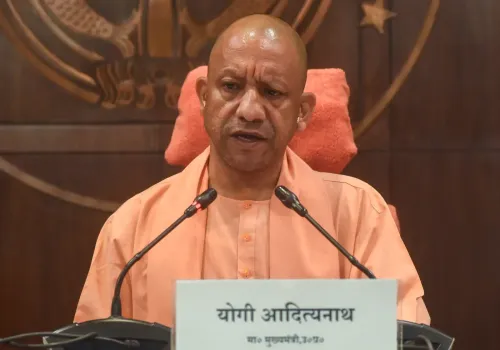
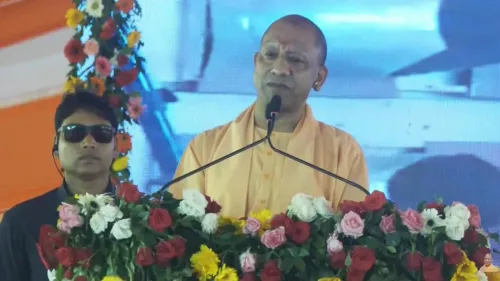
Three PAC battalions named after women warriors from Scheduled Caste and OBC communities, a grand memorial for a medieval Pasi king, and the ongoing restoration of a 15th-century Bhakti saint's birthplace — Uttar Pradesh Chief Minister Yogi Adityanath has outlined a raft of heritage initiatives aimed squarely at communities whose histories have long sat outside the mainstream of state commemoration.
In a post from the Chief Minister's Office of Uttar Pradesh on Monday, 26 October 2026, CM Yogi detailed work already underway: 'सीर गोवर्धनपुर, वाराणसी में सद्गुरु रविदास जी महाराज की पावन जन्मभूमि के पुनरुद्धार का कार्य आगे बढ़ाया जा चुका है' ('The restoration of the sacred birthplace of Sadguru Ravidas Ji Maharaj in Seer Govardhanpur, Varanasi has been taken forward'). The announcement bundled together cultural revival and institutional renaming in a single, deliberate sweep.
Three battalions, three veeranganas, three communities
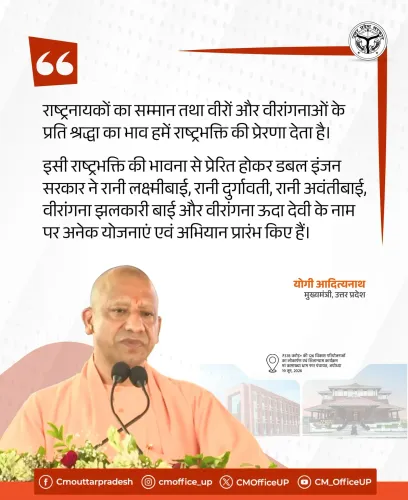
The most striking institutional move is the formation of three Provincial Armed Constabulary (PAC) battalions — each named after a woman who fought in the 1857 revolt. Lucknow gets a battalion honouring Veerangana Uda Devi Pasi, the Pasi-community fighter who held off British soldiers from the trees of Sikandar Bagh. Badaun gets one in the name of Veerangana Avantibai Lodhi, the Lodhi queen who led resistance from Ramgarh before choosing death over capture. And Gorakhpur gets a battalion named after Veerangana Jhalakari Bai Kori, the Kori-community soldier who fought alongside Rani Lakshmibai during the siege of Jhansi.
Naming active security units after these figures is not merely symbolic. It places SC and OBC warrior women inside a living institutional framework — every official order, every parade, every recruitment drive will carry their names forward. That is a very different kind of remembrance from a statue in a park.
Seer Govardhanpur and the Sant Ravidas legacy
Seer Govardhanpur, a locality in Varanasi, is traditionally regarded as the birthplace of Sant Ravidas — the 15th–16th century Bhakti poet and social reformer from the Chamar community whose verses are included in the Guru Granth Sahib and who remains one of the most revered figures among Dalit communities across northern India. The restoration of his birthplace site has been a recurring policy commitment of the Yogi administration since 2017, forming part of a broader effort to develop religious and cultural infrastructure linked to Bhakti saints from marginalised communities.
Maharaja Bijli Pasi's fort gets a grand makeover
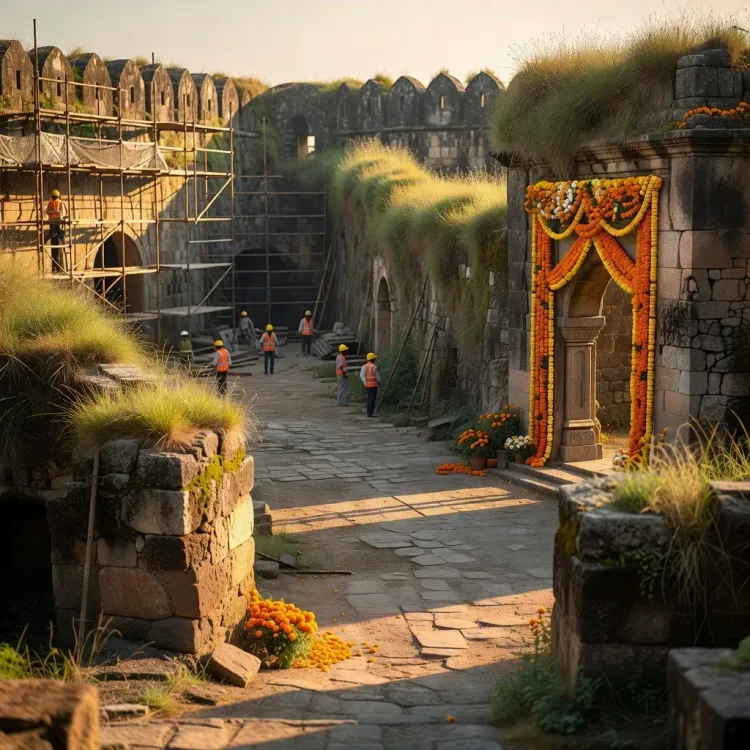
In Lucknow, a 'grand memorial' (भव्य स्मारक) is being built for Maharaja Bijli Pasi, the medieval Pasi-community ruler whose fort still stands on the city's outskirts. The fort itself is being given what the CM described as a 'भव्य स्वरूप' — a grand new form. For the Pasi community, one of Uttar Pradesh's largest Scheduled Caste groups, the rehabilitation of Bijli Pasi as a regal, commemorable ancestor carries significant cultural weight.
Taken together, these announcements fit a pattern the Yogi government has cultivated consistently: expanding the official heritage map of Uttar Pradesh to include SC and OBC figures who participated in the anti-colonial struggle or the Bhakti reform movement, communities whose contributions were for long either absent from textbooks or confined to footnotes. The question now is delivery — completion timelines for the Varanasi birthplace and the Lucknow memorial will be the real measure of whether the ambition matches the announcement.
Point of View
The government creates durable, recurring visibility rather than a one-time inauguration. This complements the Sant Ravidas and Maharaja Bijli Pasi projects in forming a coherent counter-narrative — that Uttar Pradesh's glorious past belongs equally to communities historically excluded from it. Politically, the move addresses multiple vote-bank constituencies simultaneously: Pasi, Kori, Lodhi, and the vast Chamar-Dalit base that reveres Sant Ravidas. Whether these projects translate into electoral capital will depend entirely on whether they are completed, inaugurated, and maintained visibly before the next state assembly cycle.
NationPress
26 Oct 2026
Frequently Asked Questions
Who is Veerangana Uda Devi Pasi?
Veerangana Uda Devi Pasi was a fighter from the Pasi community who participated in the 1857 revolt against the British in Lucknow, famously ambushing soldiers from a tree. A PAC battalion in Lucknow is now being named in her honour.
Where is Sant Ravidas born?
Sant Ravidas is traditionally believed to have been born at Seer Govardhanpur in Varanasi, Uttar Pradesh. The state government is currently undertaking restoration work at his birthplace site.
What is the PAC battalion announcement in Uttar Pradesh?
Chief Minister Yogi Adityanath has announced the formation of three Provincial Armed Constabulary (PAC) battalions in Lucknow, Badaun, and Gorakhpur, named after Veerangana Uda Devi Pasi, Veerangana Avantibai Lodhi, and Veerangana Jhalakari Bai Kori respectively.
Who was Maharaja Bijli Pasi?
Maharaja Bijli Pasi was a medieval ruler from the Pasi Scheduled Caste community whose fort is located near Lucknow. The Yogi government is building a grand memorial in his honour and redeveloping his fort.
What is the Yogi government doing for Dalit heritage in UP?
Since 2017, the Yogi Adityanath government has pursued a series of heritage projects for SC and OBC communities, including the restoration of Sant Ravidas's birthplace in Varanasi, a memorial for Maharaja Bijli Pasi in Lucknow, and the naming of three PAC battalions after 1857 Dalit and OBC women warriors.