CM Yogi Says SP Removed Sant Ravidas Name from Bhadohi
Synopsis
Chief Minister Yogi Adityanath has accused the Samajwadi Party of erasing Sant Ravidas's name from Bhadohi district, reigniting a long-running political battle over Dalit symbolism and place-name identity in Uttar Pradesh.
Key Takeaways
CM Yogi Adityanath posted on 22 July 2026 accusing the Samajwadi Party of removing Sant Ravidas's name from Bhadohi district .
Bhadohi was officially designated Sant Ravidas Nagar (Bhadohi) when it was carved out as a district in the mid- 1990s .
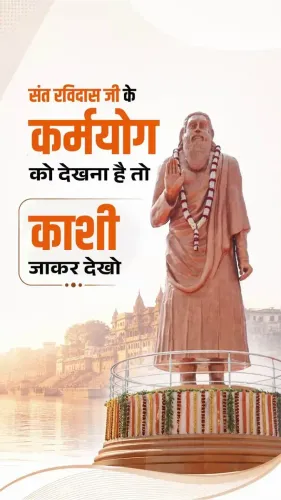
Sant Ravidas is a 15th-century Bhakti saint from the Varanasi region, central to Dalit devotional traditions in eastern Uttar Pradesh .
The BJP administration since 2017 has made renaming of places after Hindu and Dalit saints a signature governance signal.
The precise dates of any name modification during Samajwadi Party tenures remain unconfirmed from public records.
The dispute is expected to intensify as Uttar Pradesh moves closer to the next state election cycle.
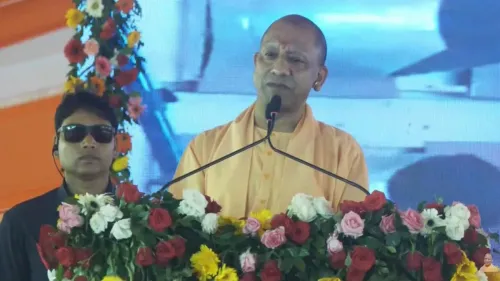
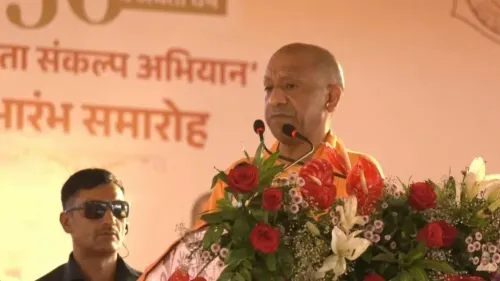
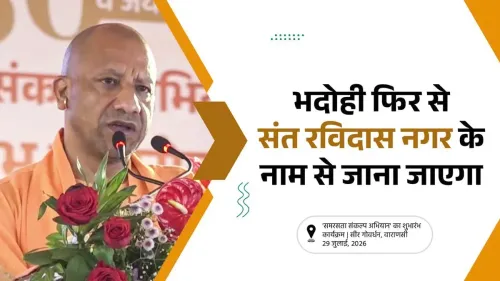
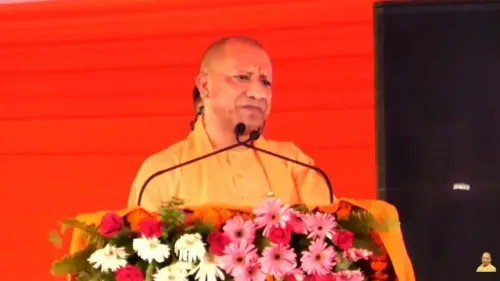
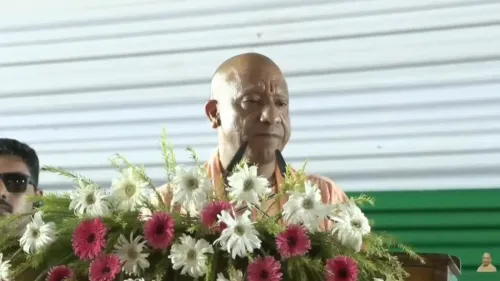
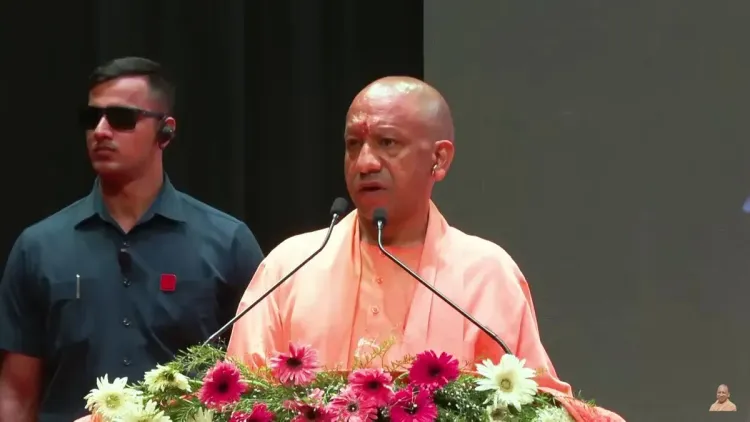
Uttar Pradesh Chief Minister Yogi Adityanath on Wednesday, 22 July 2026, publicly accused the Samajwadi Party of removing the name of 15th-century Bhakti saint Sant Ravidas from Bhadohi district, asserting that the district was originally named in the saint's honour before the opposition party erased that designation.
In his post on X, the Chief Minister wrote: 'Janpad Bhadohi Sant Ravidas ji ke naam par tha, lekin Samajwadi Party ne us naam ko hata diya' — ('The district of Bhadohi was named after Sant Ravidas ji, but the Samajwadi Party removed that name.')
Context
Bhadohi, located in eastern Uttar Pradesh and nationally known for its carpet-weaving industry, was created as a separate district in the mid-1990s during an administrative reorganisation. At the time of its creation, the district was officially designated Sant Ravidas Nagar (Bhadohi), a naming decision tied to the region's deep connection with the Bhakti saint's legacy and the significant presence of Dalit communities in the area. Sant Ravidas, born in the Varanasi region, is a revered figure whose devotional and social teachings remain central to Dalit identity across eastern Uttar Pradesh.
Policy Backdrop
The naming and renaming of districts and towns in Uttar Pradesh has been a recurring feature of state politics, with successive governments using nomenclature decisions to signal alignment with particular caste and religious communities. The BJP administration under Yogi Adityanath, in power since 2017, has accelerated renamings that foreground Hindu and Dalit saints — a pattern that positions such decisions as acts of cultural restoration. The Chief Minister's post squarely places the alleged removal of the Sant Ravidas name at the door of the Samajwadi Party, which governed Uttar Pradesh for multiple terms across the 1990s and 2000s.
It is important to note that the precise dates and official notifications for any modification to the district's name during Samajwadi Party tenures have not been independently confirmed from established public records. The district continues to carry the official designation Sant Ravidas Nagar (Bhadohi) in current administrative usage.
Stakeholders and Impact
Dalit communities across Uttar Pradesh — particularly those who revere Sant Ravidas as a spiritual and social ancestor — are the most directly affected constituency in this political conversation. For them, the retention or removal of the saint's name from a district carries deep symbolic weight beyond administrative convenience. Bhadohi residents, whose district identity is intertwined with the saint's name, also have a stake in how this debate unfolds in the legislature and public discourse.
The Samajwadi Party, which draws significant support from OBC and Muslim voter bases but also courts Dalit constituencies, faces a pointed accusation that could complicate its outreach to communities devoted to Sant Ravidas. The timing of the Chief Minister's post suggests an intent to sharpen this contrast ahead of future electoral cycles in the state.
What's Next
Political observers will watch for any formal move in the Uttar Pradesh cabinet or assembly to reinforce or further codify the district's name, as well as a formal response from the Samajwadi Party to the Chief Minister's allegation. The debate over Sant Ravidas Nagar (Bhadohi) is likely to feed into the broader contest over Dalit symbolism and administrative identity that both major parties in the state are actively contesting. With state elections on the horizon, such symbolic disputes over names and heritage are expected to intensify across Uttar Pradesh.
Point of View
Where place names function as proxies for caste and community allegiance. By invoking Sant Ravidas — a figure of immense spiritual authority among Dalit communities — the Chief Minister frames the Samajwadi Party as an adversary of Dalit heritage, a charge designed to erode the opposition's cross-caste coalition. This fits a broader BJP pattern since 2017 of using renamings and heritage restoration as governance branding, particularly in eastern Uttar Pradesh where Dalit voter concentration is high. The accusation, whether or not it is substantiated by official records, is likely to set the terms of a symbolic debate that the opposition will be forced to respond to.
NationPress
21 Oct 2026
Frequently Asked Questions
Why is Bhadohi called Sant Ravidas Nagar?
Bhadohi was officially named Sant Ravidas Nagar (Bhadohi) when it was created as a separate district in the mid-1990s, honouring the 15th-century Bhakti saint Sant Ravidas who is deeply revered by Dalit communities in eastern Uttar Pradesh.
What did CM Yogi say about Samajwadi Party and Bhadohi?
CM Yogi Adityanath posted on 22 July 2026 that Bhadohi district was originally named after Sant Ravidas but the Samajwadi Party removed that name, framing it as an act of disrespect toward the Dalit saint's legacy.
Who was Sant Ravidas?
Sant Ravidas was a 15th-century Bhakti poet-saint from the Varanasi region whose teachings on equality and devotion are foundational to Dalit spiritual and social identity across northern India, particularly in Uttar Pradesh .
Has Uttar Pradesh renamed districts under BJP?
Yes. The BJP government under Yogi Adityanath since 2017 has pursued several renaming exercises across Uttar Pradesh , foregrounding Hindu and Dalit saints as part of its broader cultural and political positioning.
What is the political significance of the Bhadohi name dispute?
The dispute over Bhadohi's official name is part of a wider pattern in Uttar Pradesh where place-name decisions serve as proxies for caste mobilisation. Both the BJP and the Samajwadi Party compete for Dalit support, making the invocation of Sant Ravidas politically significant ahead of state elections.