CM Yogi Blames SP for Ayodhya Violence, Rakes Up Old Wounds

Synopsis
UP Chief Minister Yogi Adityanath accused the Samajwadi Party of staining Ayodhya's sacred lanes and the Saryu river with blood, invoking the city's communal past in a sharp political broadside against the SP's governance legacy.
Key Takeaways
CM Yogi Adityanath posted on August 4, 2026 accusing the Samajwadi Party government of bloodying Ayodhya Dham and the Saryu river .
The post is in Hindi and frames the charge as a 'sin' ( paap ), invoking religious and moral language.
No specific incident or date is named in the post; the accusation targets SP's overall governance record in UP.
Ayodhya's political and religious significance — amplified by the Ram temple consecration in January 2024 — makes the charge especially potent.
The BJP has consistently contrasted its post-2017 governance in UP against what it describes as SP-era lawlessness.
The SP had not publicly responded to this specific post at the time of publication.
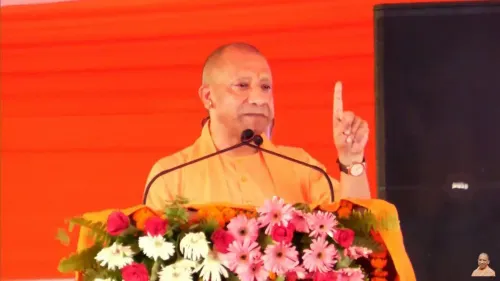
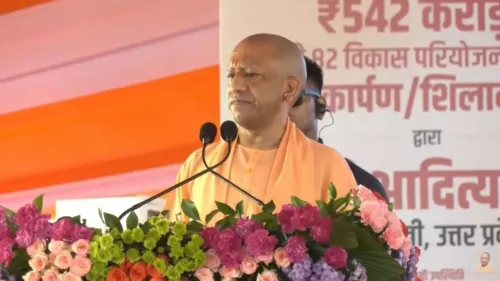
A political charge that cuts to the bone: Uttar Pradesh Chief Minister Yogi Adityanath on Tuesday, August 4, 2026, accused the Samajwadi Party of having committed what he called the sin of drenching the sacred lanes of Ayodhya Dham and the holy waters of the Saryu river in blood — a pointed invocation of past communal violence in one of India's most politically charged cities.
In his post on X, CM Yogi wrote: 'श्री अयोध्या धाम की गलियों और सरयू की पावन धारा को रक्तरंजित करने का पाप समाजवादी पार्टी की सरकार ने किया था' — translated: 'It was the Samajwadi Party government that committed the sin of staining the lanes of Shri Ayodhya Dham and the sacred current of the Saryu with blood.' The phrasing is deliberate and loaded: Ayodhya, seat of the Ram temple and the Gorakhnath Math's spiritual universe, is sacred ground in the BJP's political imagination. To invoke its 'bloodying' is to reach for the sharpest edge in the UP political vocabulary.
Ayodhya as political battleground
Ayodhya has long been the most contested city in Uttar Pradesh's political geography. The city carries the weight of decades of communal tension, legal battles over the Ram Janmabhoomi, and periodic episodes of violence that have shaped electoral outcomes across the state. For CM Yogi — who heads the Gorakhnath Math and has positioned himself as the guardian of Hindu religious heritage in UP — Ayodhya is not merely a constituency but a civilisational statement.
The accusation against the Samajwadi Party and its governments in UP is a recurring motif in BJP political communication, particularly around elections and moments of communal sensitivity. By specifically naming the Saryu — the river central to Ayodhya's religious identity — the Chief Minister frames the charge in terms of sacrilege, not merely law and order failure.
The political arithmetic behind the attack
With no specific incident named in the post, the statement reads as a broad indictment of SP's governance legacy in Uttar Pradesh — a framing the BJP has deployed consistently since coming to power in 2017. CM Yogi's government has repeatedly contrasted what it describes as restored order and religious dignity in Ayodhya under BJP rule against what it characterises as SP-era neglect and violence. The Ram temple consecration in January 2024 dramatically amplified Ayodhya's national symbolism, making any charge of past desecration politically potent.
The SP has not yet responded publicly to this specific post. The exchange is the latest episode in a long-running rivalry that will define UP's political landscape heading into the next state assembly cycle.
In Lucknow's political theatre, the past is never really past — and in Ayodhya, every accusation carries the echo of a temple, a river, and a wound that neither side has let heal.
Point of View
The statement operates at the level of civilisational grievance, which is harder to rebut with facts and easier to sustain as an emotional charge. With UP's political cycle turning, expect Ayodhya to remain the BJP's sharpest rhetorical weapon — and the SP's most difficult liability to neutralise.
NationPress
18 Sept 2026
Frequently Asked Questions
What did CM Yogi Adityanath say about Samajwadi Party and Ayodhya?
CM Yogi accused the Samajwadi Party government of having stained the sacred lanes of Ayodhya Dham and the waters of the Saryu river with blood, calling it a 'sin' committed during SP's rule in Uttar Pradesh.
Which incident in Ayodhya is Yogi Adityanath referring to?
The post does not name a specific incident. It is a broad indictment of SP's governance legacy in Uttar Pradesh, invoking Ayodhya's history of communal violence without citing a particular event.
What is the significance of Ayodhya in UP politics?
Ayodhya is the most politically and religiously charged city in Uttar Pradesh, home to the Ram temple consecrated in January 2024. It sits at the heart of BJP's Hindu heritage narrative and has been a flashpoint for communal tension for decades.
How has the BJP used Ayodhya against the SP in past elections?
Since coming to power in 2017, the BJP and CM Yogi have repeatedly contrasted their administration's focus on Ayodhya's development and religious dignity against what they characterise as SP-era neglect and violence in the city.
What is Yogi Adityanath's connection to Ayodhya?
Yogi Adityanath heads the Gorakhnath Math and has positioned himself as a guardian of Hindu religious heritage in UP. Ayodhya's Ram temple is central to his political and spiritual identity as Chief Minister.