CM Yogi Targets SP-Congress 'Secularism', Vows Sanatan-Rooted India
Synopsis
UP Chief Minister Yogi Adityanath on 20 July 2026 accused the SP and Congress of defining secularism as building cemetery walls while banning Kanwar Yatra, Ram Navami, and Janmashtami. He called for uprooting such secularism and building a safe India on Sanatan foundations.
Key Takeaways
CM Yogi Adityanath posted on 20 July 2026 attacking the SP-Congress record on religious freedom in Uttar Pradesh .
He accused previous governments of banning Kanwar Yatra , Ram Navami Shobha Yatra , and Janmashtami while funding cemetery boundary walls.
He described this as a false standard of 'secularism' that must be 'uprooted.' He called for building a 'secure India' on the 'firm ground of Sanatan Dharma.' The statement targets the SP led by Akhilesh Yadav , the main opposition in UP, ahead of elections expected in early 2027 .
The post is part of the BJP's sustained political narrative framing Hindu religious identity as a governance and electoral issue in Uttar Pradesh .
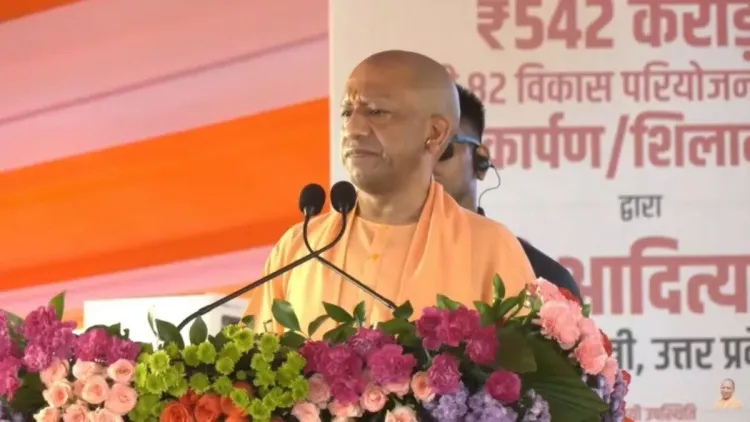
Uttar Pradesh Chief Minister Yogi Adityanath on Monday, 20 July 2026, launched a sharp political attack on the Samajwadi Party (SP) and the Congress, accusing both parties of defining 'secularism' as building cemetery walls while banning Hindu religious processions. The Chief Minister declared that India must discard this version of secularism and build a 'safe India' on the firm ground of Sanatan Dharma.
Context
In his post, CM Yogi wrote — 'सपा-कांग्रेस के समय कब्रिस्तान की बाउंड्री वाल बनाना और कांवड़ यात्रा, रामनवमी की शोभा यात्रा व जन्माष्टमी पर प्रतिबंध ही 'धर्मनिरपेक्षता' का मानक था' — translating to: 'During the SP-Congress era, building cemetery boundary walls and banning Kanwar Yatra, Ram Navami Shobha Yatra, and Janmashtami was the standard of secularism.' He added that India must uproot such secularism and move toward building a secure nation on the foundations of Sanatan Dharma.
The statement is a direct indictment of the governance records of the SP — which ruled Uttar Pradesh most recently from 2012 to 2017 — and the Congress, which has governed at the Centre and in various states over decades. Yogi Adityanath has been Chief Minister of Uttar Pradesh since March 2017, when the Bharatiya Janata Party (BJP) swept to power in the state.
Policy Backdrop
The three festivals named in the post — Kanwar Yatra, Ram Navami, and Janmashtami — are among the largest Hindu religious observances in Uttar Pradesh, drawing tens of millions of devotees annually. Restrictions or administrative curbs on processions and gatherings associated with these festivals during previous governments have been a recurring point of political contention in the state.
Since assuming office, CM Yogi has consistently positioned his administration as one that actively facilitates Hindu religious events, citing improved law-and-order arrangements during festivals as a governance achievement. The BJP has long argued that the SP and Congress practised 'appeasement politics' that privileged minority community infrastructure — such as cemetery or kabristan walls — over the religious rights of the Hindu majority.
The phrase 'सनातन की सुदृढ़ भूमि' ('the firm ground of Sanatan') signals a broader ideological framing that the BJP and affiliated organisations have used to argue for a cultural nationalism rooted in Hindu civilisational values, as distinct from what they describe as 'pseudo-secularism.'
Stakeholders and Impact
The post is directed squarely at the political opposition in Uttar Pradesh, particularly the SP led by Akhilesh Yadav, which remains the principal challenger to the BJP in the state. By invoking specific festivals and the cemetery-wall narrative, CM Yogi is reinforcing a political binary that has defined UP electoral contests since at least 2017.
For the BJP's core Hindu voter base, the message reaffirms the party's commitment to cultural and religious identity as a governance principle. For minority communities and secular opposition parties, the framing raises concerns about the conflation of state policy with religious majoritarianism. Civil society voices have periodically flagged that such rhetoric can deepen communal polarisation.
What's Next
Uttar Pradesh is not immediately due for assembly elections — the next state polls are expected in early 2027 — but political positioning in the state is a near-constant exercise given its size and national importance. CM Yogi's post is likely to provoke responses from the SP and Congress, and may intensify the ongoing debate over the meaning and practice of secularism in Indian constitutional politics. The statement also signals that the BJP intends to keep Hindu religious identity at the centre of its political narrative heading into the next electoral cycle.
Point of View
CM Yogi is not making an abstract ideological argument but a targeted voter-mobilisation statement aimed at consolidating the Hindu vote ahead of the 2027 UP assembly elections. The invocation of 'Sanatan' as a governance foundation rather than merely a cultural identity marks an escalation in how BJP leaders are publicly framing state policy. This positions Yogi Adityanath simultaneously as a religious head — of the Gorakhnath Math — and as an elected chief minister, a duality that continues to blur the line between temple and state in UP's political discourse.
NationPress
19 Oct 2026
Frequently Asked Questions
What did CM Yogi Adityanath say about SP and Congress secularism?
CM Yogi Adityanath said that during the SP and Congress era, building cemetery boundary walls while banning Hindu festivals like Kanwar Yatra, Ram Navami, and Janmashtami was treated as the standard of secularism. He called for uprooting this model and building India on Sanatan Dharma.
Which Hindu festivals did Yogi Adityanath say were banned by SP and Congress?
CM Yogi named three festivals: Kanwar Yatra, Ram Navami Shobha Yatra, and Janmashtami. He alleged that processions and gatherings related to these festivals faced restrictions or bans during SP and Congress rule in Uttar Pradesh.
What does Yogi Adityanath mean by 'Sanatan ki sudridh bhoomi'?
'Sanatan ki sudridh bhoomi' translates to 'the firm ground of Sanatan Dharma.' CM Yogi used the phrase to argue that a safe and secure India should be built on the foundations of Sanatan — the ancient Hindu civilisational tradition — rather than what he calls false secularism.
When did Yogi Adityanath make this statement?
CM Yogi Adityanath posted this statement on X (formerly Twitter) on Monday, 20 July 2026, at approximately 1:47 PM IST.
What is the political significance of Yogi Adityanath's attack on SP-Congress secularism?
The statement is seen as early political positioning ahead of the Uttar Pradesh assembly elections expected in early 2027. By invoking specific festival bans and the cemetery-wall narrative, CM Yogi is reinforcing the BJP's Hindu-identity political message and targeting the SP — led by Akhilesh Yadav — as the principal opposition in the state.