CM Yogi names UP schemes after five women warriors of 1857
Synopsis
The Chief Minister's Office of Uttar Pradesh, quoting CM Yogi Adityanath, announced on 19 June 2026 that the state's Double Engine government has launched multiple schemes and campaigns named after five women warriors of the 1857 revolt: Rani Lakshmibai, Rani Durgavati, Rani Avantibai, Jhalkari Bai, and Uda Devi.
Key Takeaways
The Chief Minister's Office of Uttar Pradesh shared a statement from CM Yogi Adityanath on 19 June 2026 honouring women warriors of the 1857 revolt.
The Double Engine government has launched multiple schemes and campaigns named after Rani Lakshmibai, Rani Durgavati, Rani Avantibai, Veerangana Jhalkari Bai , and Veerangana Uda Devi .
Jhalkari Bai and Uda Devi are particularly significant as icons for Dalit and Pasi communities in Uttar Pradesh.
The Uttar Pradesh government has followed this practice of naming welfare schemes after 1857-era women figures since 2017 .
Further scheme-level details and district launches are expected around upcoming 1857 commemoration events .
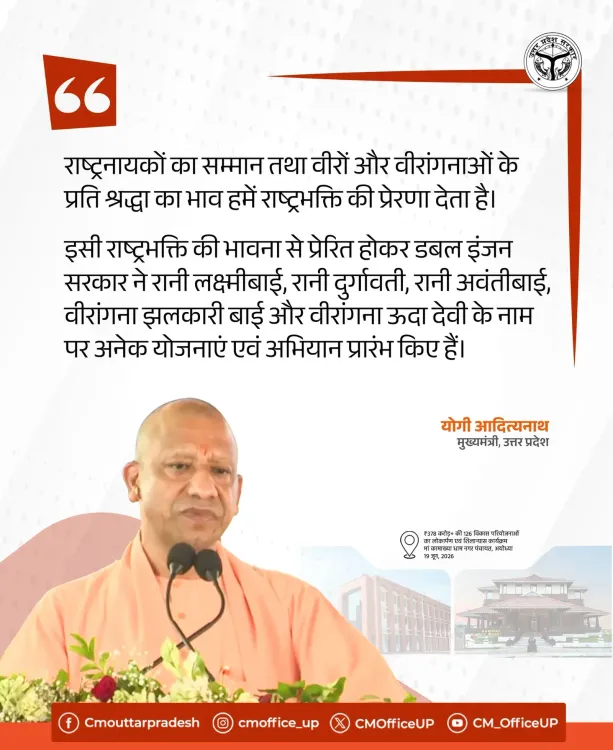
The Chief Minister's Office of Uttar Pradesh shared a statement attributed to Chief Minister Yogi Adityanath on Friday, 19 June 2026, affirming that the state's 'Double Engine' government has launched multiple schemes and campaigns named after five women heroes of the 1857 revolt.
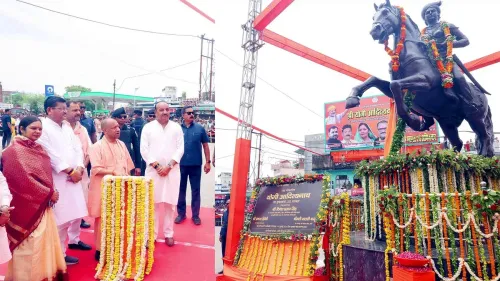
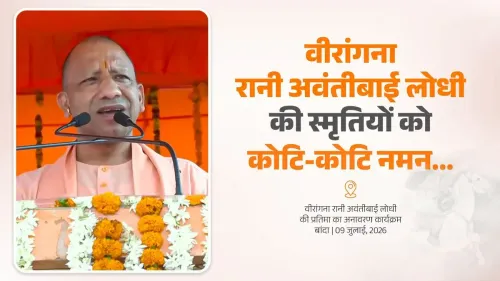
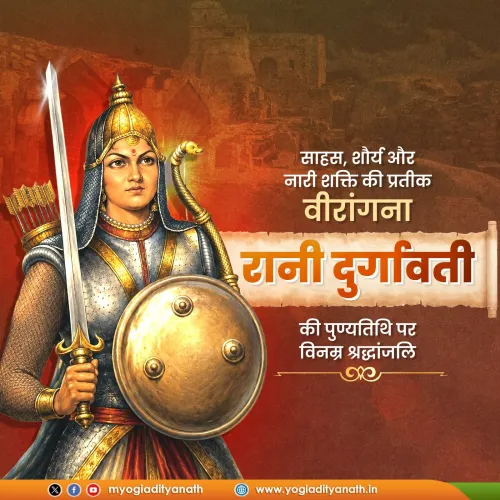
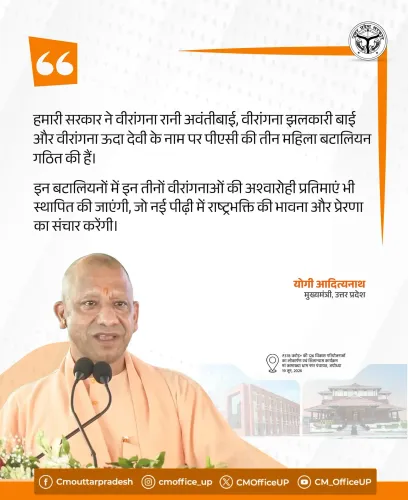
In the post, CM Yogi Adityanath stated: 'Rashtranayakon ka samman tatha veeron aur veeranganaon ke prati shraddha ka bhaav hamein rashtrbhakti ki prerna deta hai' — 'Honouring national heroes and holding our brave men and women in reverence inspires us with patriotism.' He added that it is this very spirit of patriotism that has motivated the Double Engine government to launch numerous schemes and campaigns in the names of Rani Lakshmibai, Rani Durgavati, Rani Avantibai, Veerangana Jhalkari Bai, and Veerangana Uda Devi.
Context
Rani Lakshmibai, the Queen of Jhansi, led one of the most celebrated armed resistances against British forces during the 1857 revolt. Rani Durgavati was a 16th-century Gond queen who resisted Mughal expansion in central India, and Rani Avantibai of Ramgarh fought British forces in the same 1857 uprising. Veerangana Jhalkari Bai, a Dalit woman warrior, served alongside Rani Lakshmibai, while Veerangana Uda Devi, from the Pasi community, also took up arms against British rule in 1857. Together, these five figures represent a cross-caste tapestry of women's resistance in Indian history.Policy Backdrop
Since 2017, the Uttar Pradesh government under CM Yogi Adityanath has periodically launched or renamed welfare and honour schemes after women figures from the 1857 era, particularly around anniversaries and cultural events. This practice of attaching historical names to state programmes is part of a broader approach that combines cultural commemoration with welfare delivery. The 'Double Engine' framing — referring to alignment between the state BJP government and the BJP-led central government — is routinely used to signal coordinated governance on such initiatives.Stakeholders and Impact
The schemes and campaigns named after these five figures carry particular symbolic weight for women, Scheduled Caste, and Other Backward Class communities in Uttar Pradesh, given that Jhalkari Bai and Uda Devi are venerated icons within Dalit and Pasi communities respectively. By invoking these names in official nomenclature, the state government signals both cultural nationalism and targeted outreach to constituencies historically linked to these warriors. The gesture reinforces the government's stated commitment to recognising women's contributions to India's freedom struggle.What's Next
Further details on specific scheme guidelines, eligibility criteria, or district-level launches are expected to emerge around state-level 1857 commemorations or during upcoming budget presentations. The government's continued emphasis on honouring these figures suggests that such naming conventions and associated campaigns will remain a visible part of Uttar Pradesh's welfare and cultural policy landscape going forward.Point of View
Simultaneously advancing a cultural-nationalist narrative and making symbolic overtures to Dalit and OBC constituencies. By invoking figures such as Jhalkari Bai and Uda Devi — venerated within Dalit communities — the Yogi government signals outreach beyond its core base ahead of potential electoral cycles. The 'Double Engine' framing further reinforces the message that state and central governments are working in tandem on both cultural and welfare agendas. Whether the schemes translate into substantive programme delivery will determine their long-term political resonance.
NationPress
19 Sept 2026
Frequently Asked Questions
Which schemes has the Yogi government launched after women warriors of 1857?
The Chief Minister's Office stated that the UP government has launched multiple schemes and campaigns named after Rani Lakshmibai, Rani Durgavati, Rani Avantibai, Veerangana Jhalkari Bai, and Veerangana Uda Devi, though specific scheme names and eligibility details have not yet been officially enumerated in this announcement.
Who was Veerangana Jhalkari Bai?
Jhalkari Bai was a Dalit woman warrior who fought alongside Rani Lakshmibai of Jhansi during the 1857 revolt against British rule and is a celebrated icon in Dalit communities across Uttar Pradesh.
Who was Veerangana Uda Devi?
Uda Devi was a woman fighter from the Pasi community who took up arms against British forces during the 1857 uprising and is honoured as a hero particularly within Pasi and Scheduled Caste communities in Uttar Pradesh.
What does 'Double Engine government' mean in the context of Uttar Pradesh?
'Double Engine government' is a term used by the BJP to describe the alignment of a BJP state government with the BJP-led central government, implying coordinated policy and resource delivery.
Why does the UP government name schemes after 1857 women warriors?
The Uttar Pradesh government has, since 2017, periodically named welfare schemes and campaigns after women figures from the 1857 revolt to honour India's freedom struggle, promote cultural nationalism, and extend symbolic recognition to communities historically linked to these figures.