CM Sai's Chhattisgarh Gives ₹20,000 to Women Workers at Birth
Synopsis
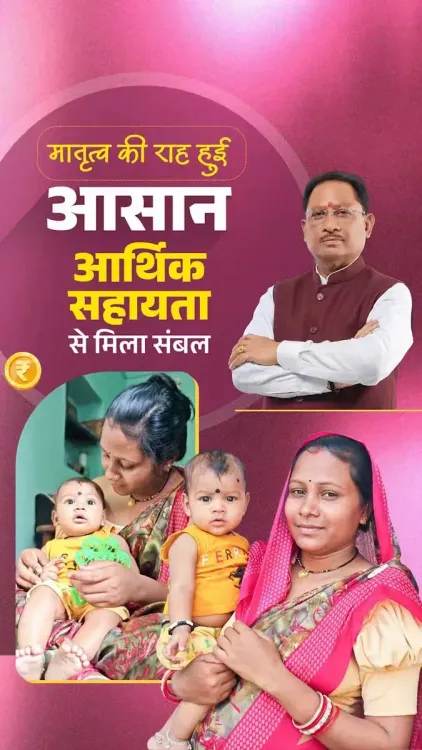
The Chief Minister's Office of Chhattisgarh has highlighted the Minimata Mahtari Jatan Yojana, which provides eligible women workers ₹20,000 in maternity assistance under CM Vishnu Dev Sai to support new mothers and ensure better care for newborns.
Key Takeaways
₹20,000 maternity assistance is provided to eligible women workers under the Minimata Mahtari Jatan Yojana in Chhattisgarh.
The scheme aims to offer economic support to new mothers and ensure better care for newborns.
The announcement was made on 18 October 2026 by the Chief Minister's Office of Chhattisgarh during the Navratri period.
The scheme is named after Minimata , a pioneering tribal and labour rights leader from Chhattisgarh.
It complements the national Pradhan Mantri Matru Vandana Yojana (2017), following the practice of states layering additional support on central schemes.
The programme is part of the BJP-led Chhattisgarh government's broader Viksit Chhattisgarh women-welfare agenda since 2023 .
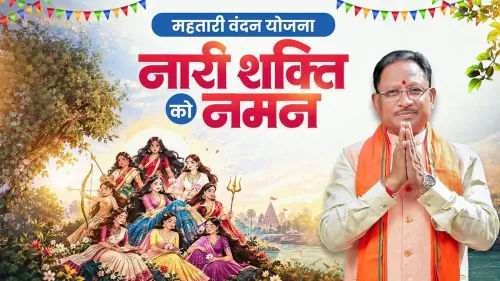
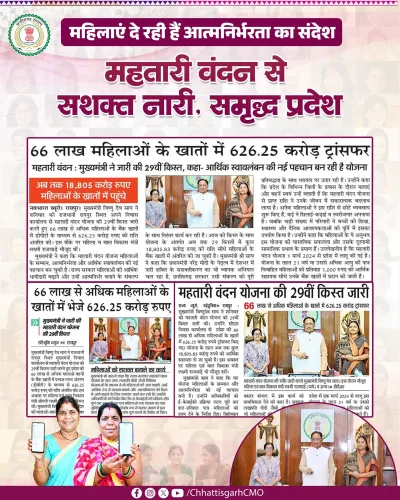
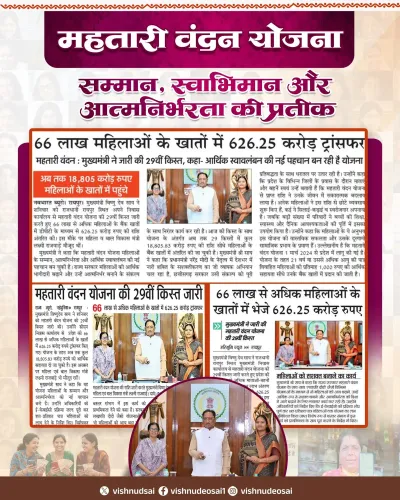
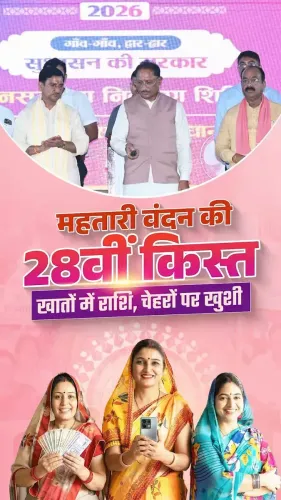
Every pregnant woman worker in Chhattisgarh's labour force is entitled to walk away with ₹20,000 in maternity assistance — a commitment the state government is amplifying this Navratri as a salute to nari shakti (women's power). The Chief Minister's Office of Chhattisgarh posted on Sunday, 18 October 2026, highlighting the Minimata Mahtari Jatan Yojana as a cornerstone of welfare under Chief Minister Vishnu Dev Sai.
What the ₹20,000 is meant to do
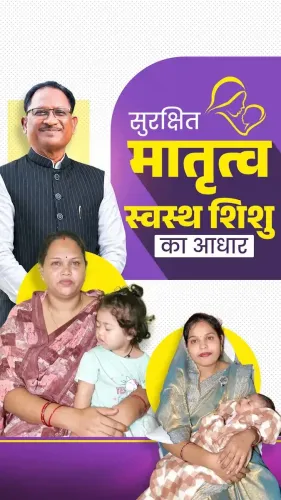
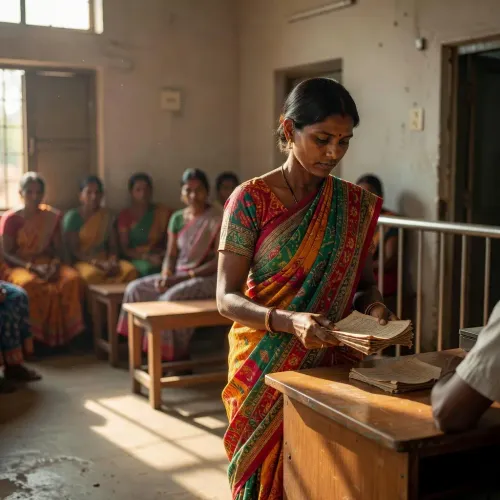
The scheme's logic is straightforward: a newborn's arrival brings joy but also immediate financial pressure, particularly for working-class mothers who may lose wages during recovery. The post states the assistance is designed to provide 'aarthik sambal' — economic support — to the mother and to ensure better care for the newborn. At ₹20,000, the payout is intended to cushion those early weeks when both health and household expenditure spike simultaneously.
The timing of the announcement — framed with the hashtags #CGNavratri2026 and #ShaktiVandan — is deliberate. Navratri, which venerates the goddess in nine forms, has become a recurring occasion for state governments to highlight women-centric welfare, lending cultural resonance to what is essentially a cash-transfer programme.
Minimata's legacy behind the scheme's name
Minimata — born Meena Devi — was a pioneering tribal leader from Chhattisgarh who fought for labour rights and women's dignity in independent India's early decades. Naming the scheme after her is not incidental: it anchors the maternity benefit squarely in the tradition of advocacy for working and tribal women, the very demographic the programme targets.
How it sits within India's maternity support architecture
India's national maternity safety net, the Pradhan Mantri Matru Vandana Yojana launched in 2017, provides conditional cash transfers to first-time mothers across the country. Chhattisgarh's scheme layers an additional state-funded amount on top of that baseline — a pattern common across Indian states that want to address local economic realities that a centrally-designed scheme cannot fully capture. Together, the two programmes represent the kind of federal stacking that can meaningfully change the calculus for a low-income mother deciding whether to rest or return to work after childbirth.
Under the broader Viksit Chhattisgarh agenda of the BJP-led government that took office in 2023, women's economic security has been positioned as a primary governance deliverable, with several schemes operating in parallel to address different life-stage needs.
The measure of any maternity scheme is ultimately in its reach — how many women actually receive the money, how quickly, and with how little friction. Those numbers are what the next update from Raipur will need to answer.
Point of View
The Sai government is embedding a cash-transfer in a cultural and historical narrative that resonates with Chhattisgarh's tribal and working-class electorate. The broader Viksit Chhattisgarh frame positions women's welfare as a governance credential ahead of future electoral cycles. The scheme's real test, however, lies in beneficiary coverage and disbursement efficiency — metrics the government has yet to publicly detail.
NationPress
18 Oct 2026
Frequently Asked Questions
What is the Minimata Mahtari Jatan Yojana?
The Minimata Mahtari Jatan Yojana is a Chhattisgarh state government scheme that provides ₹20,000 in maternity financial assistance to eligible women workers to support mothers economically and ensure better care for newborns.
Who is eligible for the Minimata Mahtari Jatan Yojana?
The scheme targets eligible women workers in Chhattisgarh. Specific eligibility criteria have not been officially detailed in the current announcement; interested beneficiaries should contact state labour or women and child development departments.
How much money does Chhattisgarh give under the maternity scheme?
Eligible women workers receive ₹20,000 as maternity assistance under the Minimata Mahtari Jatan Yojana launched by the Chhattisgarh government under Chief Minister Vishnu Dev Sai.
Who was Minimata and why is the scheme named after her?
Minimata, born Meena Devi, was a prominent tribal and labour rights leader from Chhattisgarh who championed women's and workers' rights in post-independence India. The scheme is named in her honour to reflect its focus on working and tribal women.
How does Chhattisgarh's maternity scheme differ from the central PM Matru Vandana Yojana?
The Pradhan Mantri Matru Vandana Yojana is a national conditional cash transfer scheme for first-time mothers launched in 2017. Chhattisgarh's Minimata Mahtari Jatan Yojana is an additional state-funded benefit for women workers, designed to address local economic needs on top of the central scheme.