CM Sai Cabinet Moves Recruitment Board Under GAD
Synopsis
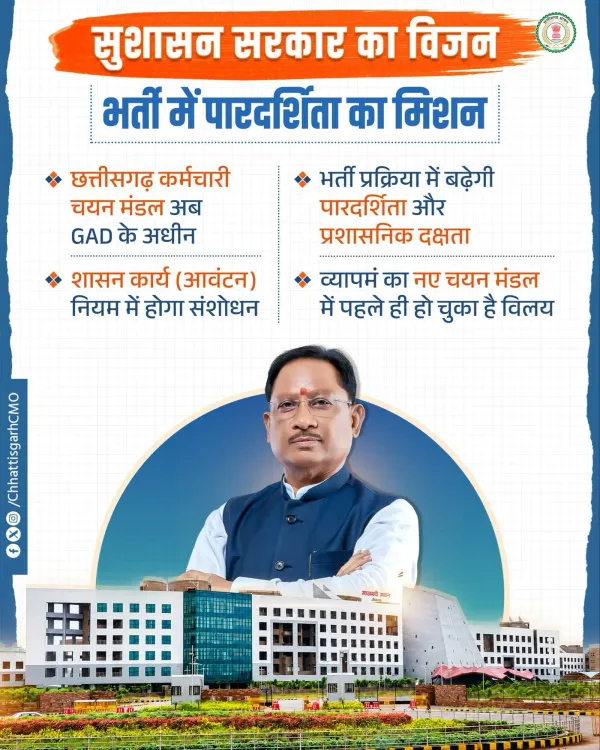
The Chhattisgarh cabinet, chaired by Chief Minister Vishnu Dev Sai, has approved placing the state Employees Selection Board under the General Administration Department to strengthen transparency and efficiency in public recruitment — a key plank of the BJP government's 'Sushasan Sarkar' agenda.
Key Takeaways
The Chhattisgarh cabinet approved bringing the Chhattisgarh Employees Selection Board under the General Administration Department (GAD) on 27 May 2026 .
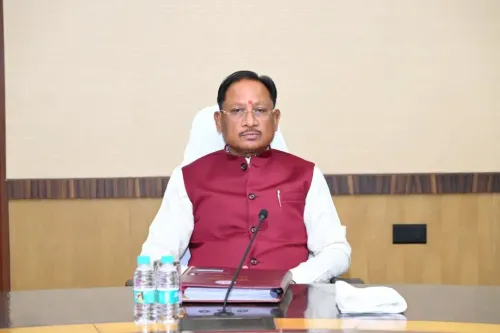
Chief Minister Vishnu Dev Sai chaired the cabinet meeting that cleared the proposal.
The board conducts recruitments for non-gazetted state government posts across departments.
The government says the shift will improve transparency and administrative efficiency in the recruitment process.
The decision is part of the BJP government's broader 'Sushasan Sarkar' (Good Governance Government) reform framework launched after its December 2023 election victory.
A formal notification and revised recruitment guidelines from GAD are expected to follow the cabinet approval.
The Chief Minister's Office of Chhattisgarh announced on Wednesday, 27 May 2026 that the state cabinet, chaired by Chief Minister Vishnu Dev Sai, has approved a proposal to bring the Chhattisgarh Employees Selection Board (Chhattisgarh Karmachari Chayan Mandal) under the General Administration Department (GAD), a structural shift aimed at improving transparency and administrative efficiency in the state's public recruitment process.
Context
The cabinet's decision, described officially as a 'big change in the recruitment system' (bhartee vyavastha mein bada badlaav), places the selection board directly under the department that coordinates overall state personnel policy. The Chhattisgarh Employees Selection Board is the principal body for recruiting non-gazetted state government employees across multiple departments. By routing its oversight through GAD, the government seeks to centralise accountability for public hiring under a single administrative umbrella.
Policy Backdrop
Since Chhattisgarh's formation in 2000, separate recruitment bodies were established to manage state-level hiring outside the Public Service Commission framework. The BJP government that took office in December 2023 under Chief Minister Vishnu Dev Sai has positioned administrative streamlining as a core governance priority, branding its agenda under the 'Sushasan Sarkar' — or 'Good Governance Government' — framework. Centralising recruitment oversight under GAD mirrors steps taken in other states to reduce procedural delays and curb allegations of irregularities in public hiring.
Across several Hindi-belt states that have seen changes of government in recent years, tightening oversight of selection boards has emerged as a recurring reform pattern. Placing such boards under GAD or equivalent departments is seen as a way to enforce uniform rules, faster recruitment calendars, and clearer lines of ministerial accountability.
Stakeholders and Impact
The most direct beneficiaries of the reform are job aspirants competing for non-gazetted state government posts, who have long flagged concerns about delays and opacity in recruitment timelines. State government departments that depend on the board to fill vacancies stand to gain from a more coordinated hiring pipeline. Civil society groups and opposition parties will likely watch whether the structural change translates into measurable reductions in recruitment backlogs and legal disputes over selection processes.
The move also consolidates the GAD's role as the nodal department for personnel matters, potentially enabling it to issue standardised guidelines on examination schedules, eligibility norms, and grievance redressal across all board-conducted recruitments.
What's Next
A formal government notification transferring administrative control of the Chhattisgarh Employees Selection Board to GAD is expected to follow the cabinet approval. Observers will watch for revised recruitment calendars, new operational rules framed by GAD, and any subsequent cabinet decisions on related personnel reforms. The government's ability to demonstrate faster, cleaner recruitments under the new structure will be a key test of the 'Sushasan' promise ahead of future electoral cycles.
Point of View
It signals a deliberate effort to pre-empt the kind of recruitment controversies that have dogged governments across India's Hindi belt. Whether the reform delivers on its transparency promise will depend entirely on implementation: standardised rules, timely notifications, and an accessible grievance mechanism. The decision also subtly reinforces GAD as the nerve centre of personnel governance in Chhattisgarh, a consolidation of executive authority that will be closely watched by aspirants, unions, and the opposition alike.
NationPress
22 Sept 2026
Frequently Asked Questions
What did the Chhattisgarh cabinet decide about the Employees Selection Board?
The Chhattisgarh cabinet approved a proposal to bring the Chhattisgarh Employees Selection Board under the General Administration Department (GAD), aiming to make public recruitment more transparent and administratively efficient.
Who chairs the Chhattisgarh cabinet that approved this decision?
Chief Minister Vishnu Dev Sai chairs the Chhattisgarh cabinet. He has led the BJP state government since December 2023.
What is the Chhattisgarh Employees Selection Board?
The Chhattisgarh Karmachari Chayan Mandal (Employees Selection Board) is the state body responsible for conducting recruitment examinations for non-gazetted government posts across various departments in Chhattisgarh.
What is the General Administration Department (GAD) in Chhattisgarh?
The General Administration Department coordinates overall state administration, personnel policy, and inter-departmental matters in Chhattisgarh. Placing the selection board under GAD centralises recruitment oversight under a single nodal department.
What is 'Sushasan Sarkar' and how does this decision relate to it?
'Sushasan Sarkar' translates to 'Good Governance Government' and is the BJP government's governance branding in Chhattisgarh. This recruitment reform is presented as part of that agenda to improve transparency and reduce inefficiency in public administration.