Chirag Paswan pays tribute to Pingali Venkayya on birth anniversary
Synopsis
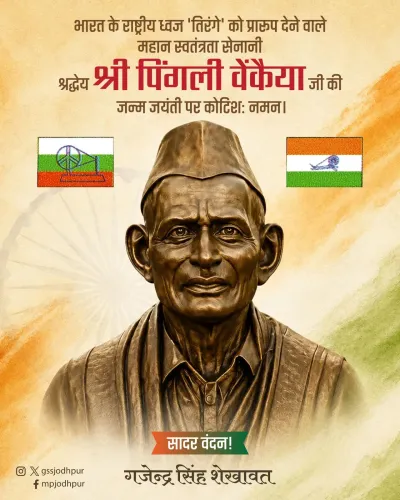
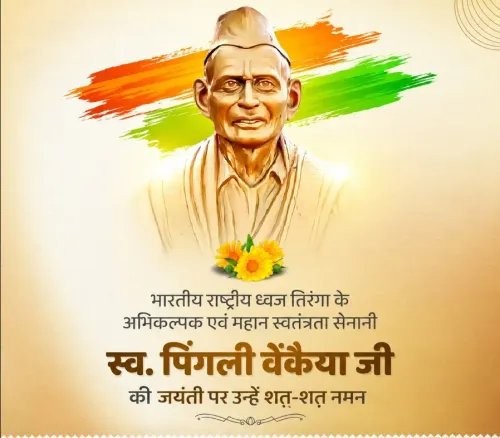
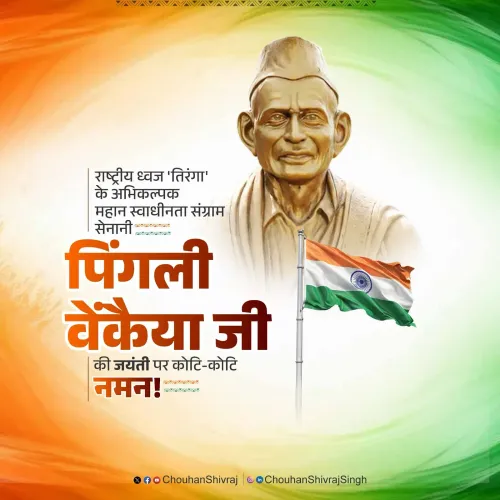
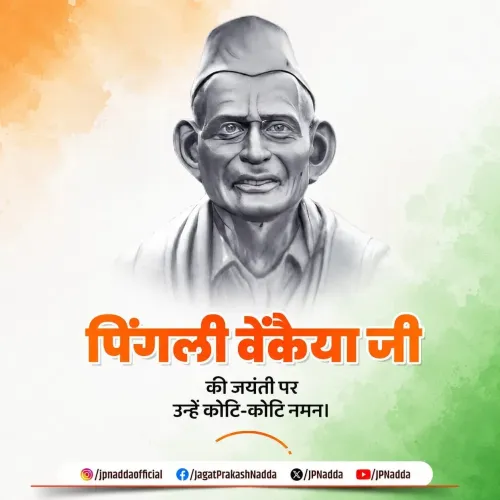
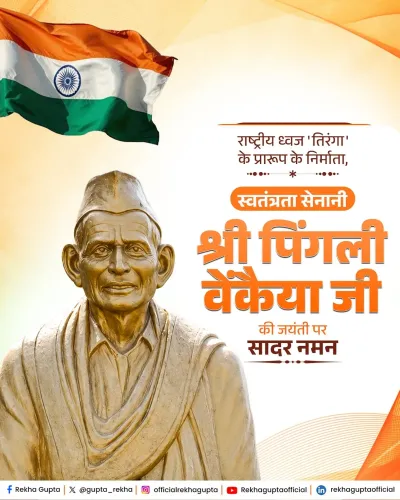
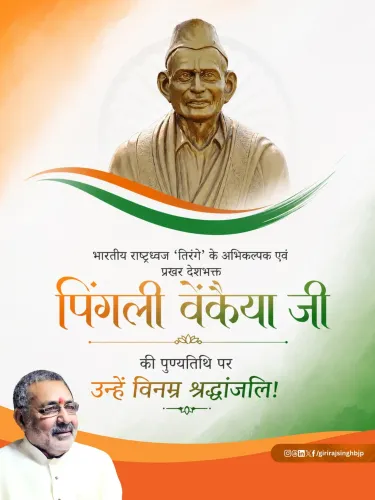
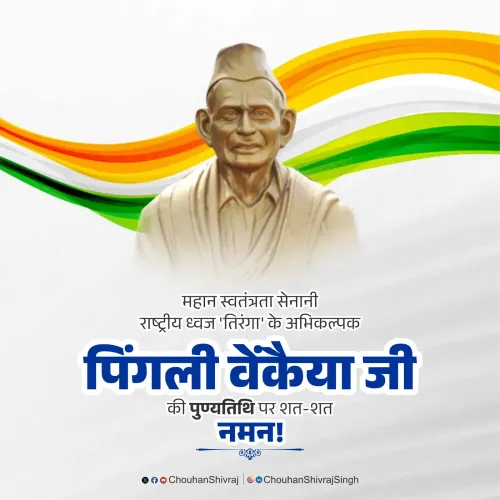
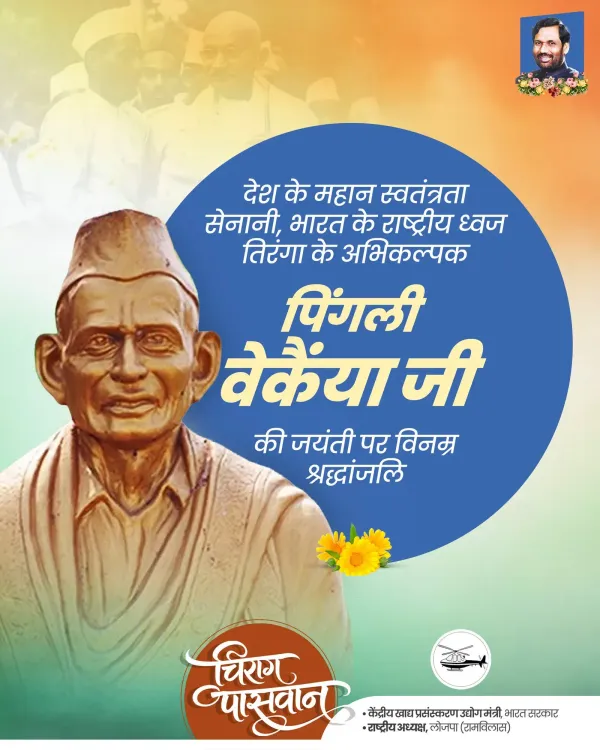
Union Food Processing Minister Chirag Paswan paid homage to Pingali Venkayya on his birth anniversary, honouring the freedom fighter who designed India's Tricolour, formally adopted by the Constituent Assembly on 22 July 1947.
Key Takeaways
Chirag Paswan , Union Minister of Food Processing Industries, paid tribute to Pingali Venkayya on his birth anniversary on 2 August 2026 .
Pingali Venkayya was a freedom fighter and educationist who designed the Indian national flag, first presenting a design to Mahatma Gandhi in 1921 .
The Constituent Assembly formally adopted the Tricolour on 22 July 1947 , with the Ashoka Chakra at its centre.
The Government of India issued a commemorative postage stamp in Venkayya's honour in 2009 .
Venkayya's legacy has gained renewed relevance amid campaigns like Har Ghar Tiranga that keep the flag's symbolism active in public life.
The man who gave India its tricolour rarely gets the spotlight he deserves — but on Sunday, 2 August 2026, Union Food Processing Minister Chirag Paswan made sure his name rang out, marking the birth anniversary of Pingali Venkayya, the freedom fighter and educationist who designed the flag that now flies over every government building, warship, and Olympic podium India has ever claimed.
Posting on X in Hindi, Minister Paswan offered a respectful salute — 'विनम्र श्रद्धांजलि' ('humble tribute') — to Venkayya, describing him as 'a great freedom fighter of the country and the designer of India's national flag, the Tricolour.'The man behind the Tricolour
Pingali Venkayya was a polymath from Andhra Pradesh — a geologist, agriculturist, linguist, and passionate nationalist who devoted years to the idea that India needed a flag of its own. He first presented a flag design to Mahatma Gandhi in 1921, anchoring it in a simple, powerful visual language that could unite a vast and diverse people. The design evolved through deliberation, and on 22 July 1947 — just weeks before Independence — the Constituent Assembly formally adopted the Tricolour as India's national flag, with the Ashoka Chakra at its centre replacing the earlier spinning wheel.
Venkayya died in 1963, decades before the full weight of his contribution was widely acknowledged. The Government of India issued a commemorative postage stamp in his honour in 2009, and his legacy has seen renewed attention in recent years as national symbols have moved to the centre of India's public discourse.
A calendar ritual with deeper resonance
Indian political leaders routinely mark the birth anniversaries of freedom-era figures on social media, but Venkayya's anniversary carries a particular charge: the Tricolour is not merely a historical artefact — it is a living, contested, and fiercely loved symbol. From the Har Ghar Tiranga campaign to debates over flag protocol, the flag's meaning is actively renewed by each generation. A tribute to its designer, then, is never purely ceremonial.
For a nation that wraps its identity in saffron, white, and green, remembering the man who first drew those stripes is the least it can do — and the most enduring kind of patriotism.Point of View
Marking such anniversaries signals alignment with a broader cultural-nationalist current without requiring a policy position. Venkayya's relative obscurity for decades, followed by his recent rehabilitation into mainstream commemoration, reflects how India's ruling establishment selectively recovers and amplifies figures from the freedom struggle. The tribute is routine in form, but the symbol it honours is anything but.
NationPress
16 Sept 2026
Frequently Asked Questions
Who was Pingali Venkayya?
Pingali Venkayya was an Indian freedom fighter, educationist, and polymath from Andhra Pradesh who designed the Indian national flag. He first presented a flag design to Mahatma Gandhi in 1921 , and the Tricolour based on his work was formally adopted by the Constituent Assembly on 22 July 1947 .
When is Pingali Venkayya's birth anniversary?
Pingali Venkayya was born on 2 August 1876 . His birth anniversary is observed on 2 August each year.
What did Chirag Paswan say about Pingali Venkayya?
Chirag Paswan posted a tribute in Hindi on X, describing Venkayya as 'a great freedom fighter of the country and the designer of India's national flag, the Tricolour,' and offering his vinamra shraddhanjali — humble tribute — on his birth anniversary.
When was the Indian national flag adopted?
The Indian national flag, the Tricolour, was formally adopted by the Constituent Assembly on 22 July 1947 , just before India's Independence on 15 August 1947.
Has the Indian government honoured Pingali Venkayya officially?
Yes. The Government of India issued a commemorative postage stamp in honour of Pingali Venkayya in 2009 , recognising his foundational contribution to India's national identity.