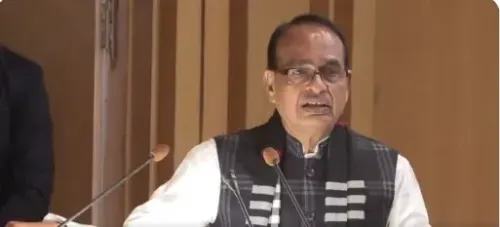
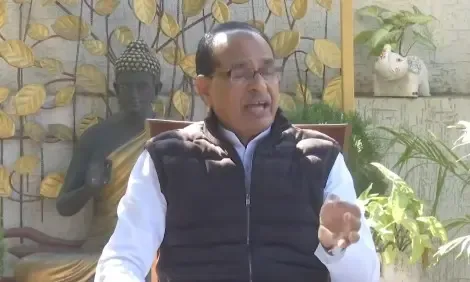
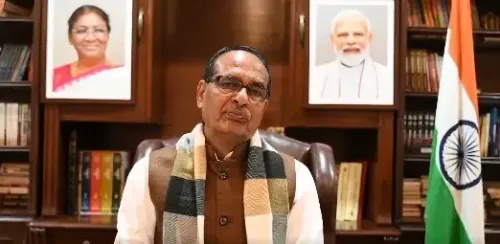
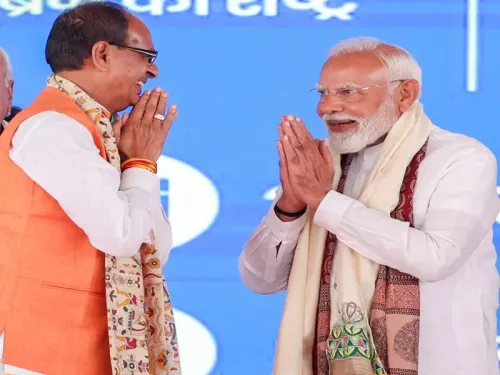
Why is Shivraj Singh Chouhan Defending the New Rural Employment Act?
Synopsis
Union Minister Shivraj Singh Chouhan presents a compelling defense of the newly introduced VB-G RAM G Act, asserting its benefits for rural communities while countering opposition claims. Discover how this Act aims to empower laborers and enhance transparency in rural employment.
Key Takeaways
125 days of employment guarantee per household.
Mandatory unemployment allowance for delayed work.
Increased decentralization of decision-making.
Focus on women's participation and self-help groups.
Transparency through digital tools and social audits.
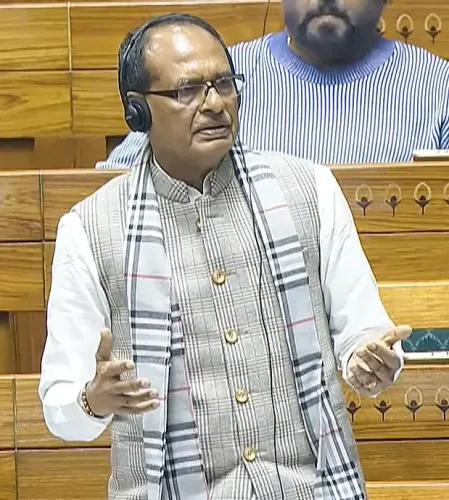
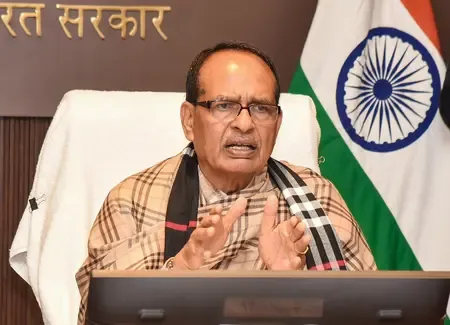
New Delhi, Dec 27 (NationPress) As opposition parties, spearheaded by Congress, prepare for nationwide protests, Union Minister for Rural Development and Agriculture and Farmers Welfare Shivraj Singh Chouhan robustly defended the recently enacted Viksit Bharat Guarantee for Rozgar and Ajeevika Mission (Gramin) Act, commonly known as the VB-G RAM G Act, dismissing the opposition's criticisms as unfounded and politically motivated.
In light of the controversy surrounding the replacement of the Mahatma Gandhi National Rural Employment Guarantee Act (MNREGA), Chouhan accused the Congress and other opposition groups of deliberately disseminating misinformation regarding rural employment, laborers' rights, and the powers of Gram Panchayats.
"Under the leadership of Prime Minister Narendra Modi, we have strengthened both laborers and rural communities, rather than undermining them," he stated.
The Union Minister highlighted the differences between the new legislation and the Congress-era MNREGA, which he claimed was riddled with corruption.
"We have established full transparency with the VB-G RAM G Act, ensuring that genuine benefits reach the laborers," he asserted, adding that the Congress party had shown both a lack of intent and effective policy during its governance.
He accused the Congress of misusing Mahatma Gandhi's legacy for electoral advantages, consistently cutting MNREGA budgets, freezing wages, and now shedding crocodile tears.
Chouhan pointed out significant improvements in the new Act, including an enhanced guarantee of 125 days of employment for each rural household (up from 100 days), making it a legal obligation to provide work on demand.
"Employment denial is not an option -- if work isn't available on time, the mandatory unemployment allowance will be activated, and late payments will incur additional compensation," he explained.
Refuting claims of diminished powers for Gram Sabhas and Panchayats, the Union Minister underscored an increase in decentralization.
"Decisions will be made at the village level, rather than imposed from above," he emphasized, noting enhanced responsibilities in planning, prioritization, approval, monitoring, and social audits.
He added that the participation of women, self-help groups, and community engagement are prioritized, along with the use of digital tools for transparency and grievance resolution.
Chouhan characterized the VB-G RAM G Act as aligned with Gandhian principles of Gram Swaraj, self-sufficiency, and respect for labor.
"This is not a handout -- it represents dignified rights: timely work in villages, fair wages, safe working conditions, transparent payments, and sustainable livelihoods," he stated.
The Union Minister framed the VB-G RAM G Act, 2025, as a progressive framework for a developed India, in line with Prime Minister Modi’s vision while ensuring sanitation and comprehensive rural development.
Point of View
It's vital to recognize the ongoing political tensions surrounding rural employment legislation. The new VB-G RAM G Act promises to reshape rural labor dynamics, but the discourse around it must remain factual and unbiased to ensure public trust.
NationPress
17 Sept 2026
Frequently Asked Questions
What is the VB-G RAM G Act?
The VB-G RAM G Act is a newly introduced legislation aimed at enhancing rural employment and ensuring transparency in labor rights and wages.
How does the VB-G RAM G Act differ from MNREGA?
The VB-G RAM G Act increases the employment guarantee from 100 to 125 days and incorporates measures for transparency and accountability.
What are the key features of the new Act?
Key features include mandatory employment on demand, unemployment allowances, and strengthened roles for Gram Panchayats.
How does this Act support rural communities?
The Act ensures fair wages, safe working conditions, and sustainable livelihoods for rural laborers.
What is the government's vision for rural development?
The government aims for comprehensive rural development that aligns with Gandhian principles, focusing on self-reliance and empowerment.