Jhargram tribal package: Adhikari announces ₹342 crore for Lodha, Shabar families
Synopsis
West Bengal's new BJP Chief Minister Suvendu Adhikari unveiled a ₹342 crore package for Jhargram's tribal communities — covering 70,000 families with daily foodgrain kits and two lakh students with monthly scholarships. The announcement doubles as a political statement, hitting the previous TMC government's tribal record just months after the BJP swept every tribal-dominated Assembly seat in the state.
Key Takeaways
West Bengal CM Suvendu Adhikari announced a ₹342 crore special package for Jhargram district on 23 October 2026 .
Daily foodgrain kits — rice, pulses, oil, soybeans — will reach 25,000 tribal families in Jhargram and 45,000 families in adjoining Midnapore, totalling 70,000 beneficiary households .
Two lakh students in Jhargram will receive ST scholarships of ₹800 per month .
Adhikari guaranteed 125 days of work and announced the forthcoming Adivasi Mahila Samridhi Yojana .
2,72,903 women in Jhargram are currently enrolled under the Annapurna Yojana .
The BJP swept all tribal-dominated Assembly seats in West Bengal in elections held earlier this year , reshaping the political landscape in these constituencies.
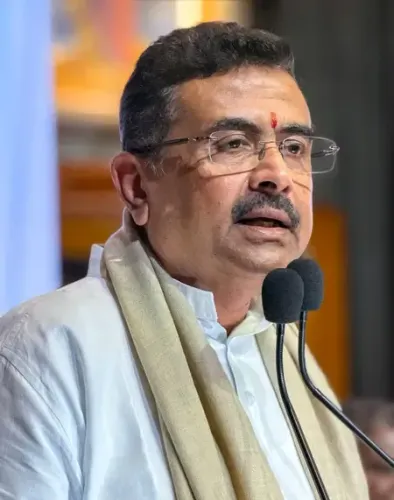
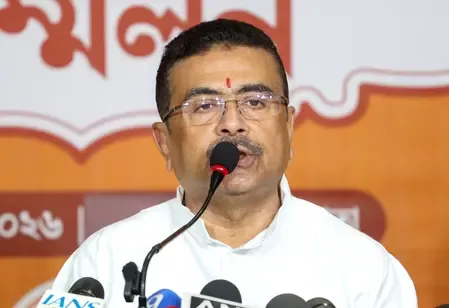
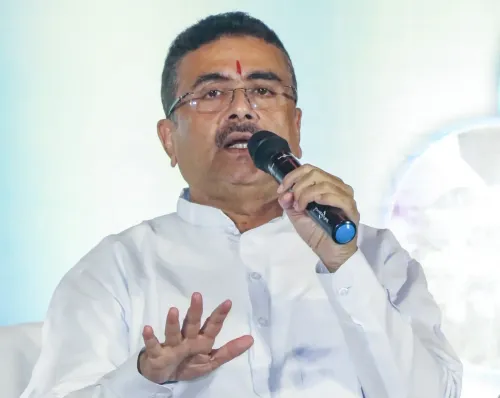
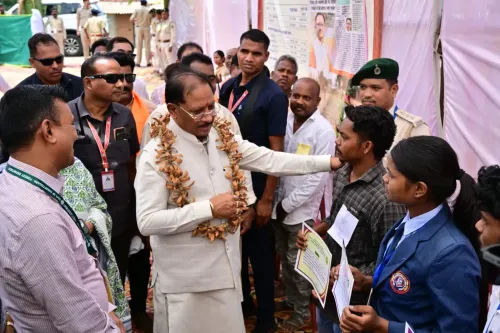
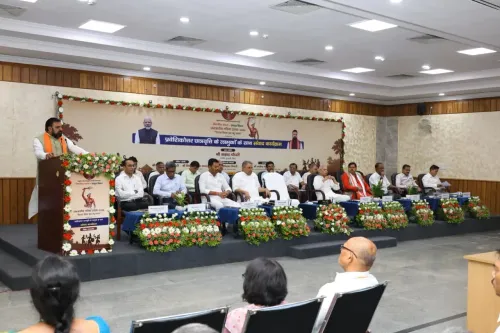
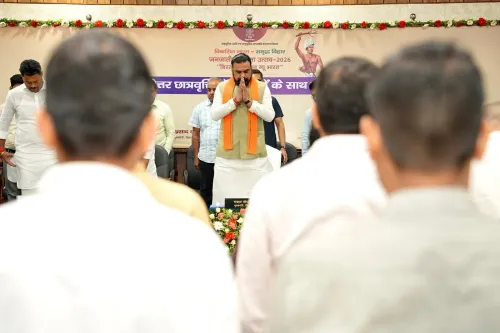
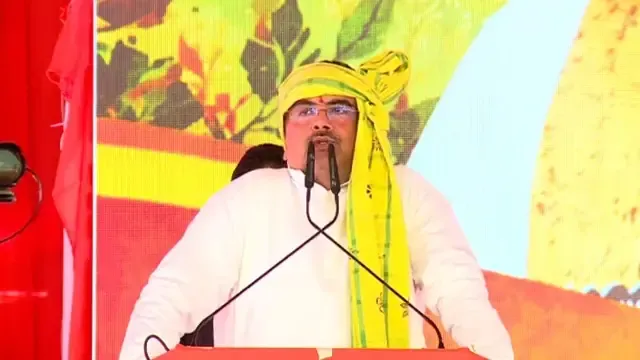
West Bengal Chief Minister Suvendu Adhikari on Friday, 23 October 2026, announced a ₹342 crore special package for the tribal-dominated Jhargram district in western West Bengal, promising nutritious foodgrain kits, monthly scholarships, and guaranteed employment to thousands of indigenous families. The announcement was made at Kalajhariya, a community development block in Jhargram where the Lodha and Shabar tribal communities form the majority of the population.
What the Package Covers
Under the ₹342 crore scheme, the state government will distribute daily kits containing rice, pulses, oil, and soybeans to eligible tribal households. Adhikari described these kits as supplementary to the existing Public Distribution System (PDS), not a replacement. A total of 25,000 tribal families in Jhargram and an additional 45,000 tribal families in adjoining areas of Midnapore district will benefit from the scheme — covering approximately 70,000 families in all.
The Chief Minister also announced monthly Scheduled Tribe (ST) scholarships of ₹800 each for two lakh students in Jhargram, aimed at reducing dropout rates and encouraging educational continuity in tribal households.
Employment Guarantees and Upcoming Schemes
Adhikari pledged 125 days of work under employment guarantee provisions and said new job cards would be issued on demand. He also confirmed the imminent launch of the Adivasi Mahila Samridhi Yojana, a welfare programme targeting tribal women, though a specific launch date was not announced. Separately, he noted that 2,72,903 women in Jhargram are currently receiving financial support under the Annapurna Yojana.
Political Context: BJP's Attack on TMC's Tribal Record
The announcement carried a pronounced political edge. Adhikari launched a sharp attack on the previous Trinamool Congress (TMC) government led by Mamata Banerjee, alleging that tribal communities had been systematically neglected during her tenure. 'The previous state government did not get involved in any development project of the Union government. The development of the people from the tribal community remained neglected during the previous government,' he said.
This comes amid a significant political shift in Bengal's tribal belt. In the Assembly elections earlier this year, the Bharatiya Janata Party (BJP) swept all tribal-dominated constituencies, marking an extraordinary performance in seats where TMC had previously held sway. Analysts have noted that the BJP's outreach to Adivasi voters — framed around Union government schemes and Centre-state coordination — was a decisive factor in that landslide.
Why Jhargram Matters
Jhargram, carved out of West Midnapore as a separate district in 2017, has historically been among West Bengal's most underdeveloped regions, with large sections of its population dependent on forest produce and daily labour. The district's Lodha and Shabar communities are classified among the Particularly Vulnerable Tribal Groups (PVTGs) — a category that receives special central funding but has long seen implementation gaps at the state level, according to critics and welfare researchers.
Adhikari, who took oath as West Bengal's ninth Chief Minister following the BJP's electoral victory, had earlier listed tribal welfare as a top priority. Friday's package appears to be the most concrete policy articulation of that commitment so far. Whether the announced schemes translate into on-ground delivery will depend on state administrative capacity and the pace of fund disbursement — areas where past welfare initiatives in the region have faced scrutiny.
Point of View
Meaning chronic underdelivery here is a measurable failure, not a routine governance gap. The real test is institutional: West Bengal's administrative machinery was calibrated under TMC priorities for over a decade, and reorienting fund flows to these communities will require more than headline announcements. Adhikari's credibility on tribal welfare hinges entirely on implementation speed.
NationPress
23 Oct 2026
Frequently Asked Questions
What is the ₹342 crore tribal package announced in Jhargram?
It is a special welfare package announced by West Bengal Chief Minister Suvendu Adhikari on 23 October 2026 for tribal communities in Jhargram district. The package includes daily nutritious foodgrain kits for 70,000 tribal families and monthly ST scholarships of ₹800 for two lakh students, among other measures.
Which tribal communities will benefit from the Jhargram scheme?
The primary beneficiaries are the Lodha and Shabar communities — both classified as Particularly Vulnerable Tribal Groups — residing in Jhargram district and adjoining tribal areas of Midnapore district in West Bengal.
What is the Adivasi Mahila Samridhi Yojana announced by CM Adhikari?
The Adivasi Mahila Samridhi Yojana is an upcoming welfare scheme for tribal women in West Bengal, announced by Chief Minister Adhikari alongside the Jhargram package. A specific launch date has not yet been confirmed.
How does this announcement relate to West Bengal's recent Assembly elections?
The BJP swept all tribal-dominated Assembly constituencies in West Bengal in elections held earlier in 2026, defeating the incumbent Trinamool Congress. The Jhargram package is seen as a follow-through on the party's electoral promises to tribal voters, as well as a pointed contrast with TMC's governance record in these areas.
Who are the Lodha and Shabar communities in West Bengal?
The Lodha and Shabar are indigenous tribal groups concentrated in Jhargram and West Midnapore districts of West Bengal. Both are classified as Particularly Vulnerable Tribal Groups (PVTGs) by the Government of India, a designation reserved for the most marginalised tribal communities requiring special protective measures and targeted development funding.