CM Samrat Choudhary Outlines Tribal Welfare Push in Bihar
Synopsis
Bihar Chief Minister Samrat Choudhary interacted with tribal scholarship beneficiaries on 27 May as part of the 'Birsa Lives in New Bharat' week, listing state initiatives including scholarships for over 20 lakh students and heliport projects in Valmikinagar and Kaimur to boost eco-tourism.
Key Takeaways
Bihar CM Samrat Choudhary met tribal students at the CM Secretariat on 27 May 2026 as part of the 'Birsa Lives in New Bharat' week.
The Post Matric Scholarship scheme reportedly benefits more than 1.04 lakh SC/ST students in Bihar.
The Pre-Matric Scholarship covers 20.46 lakh students , including 1.41 lakh ST students .
Heliports are planned at Valmikinagar and Kaimur to promote eco-tourism in tribal regions.
Marathon events in tribal areas offer cash prizes of up to ₹1 lakh , with homestay promotion aimed at boosting tribal culture and livelihoods.
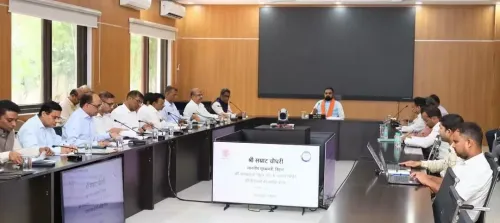
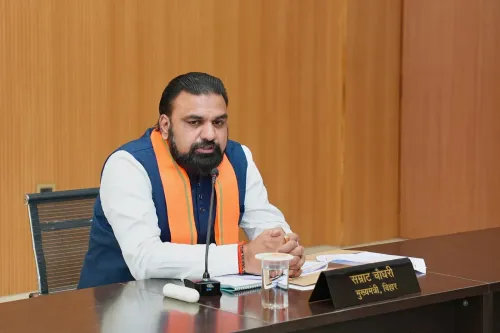
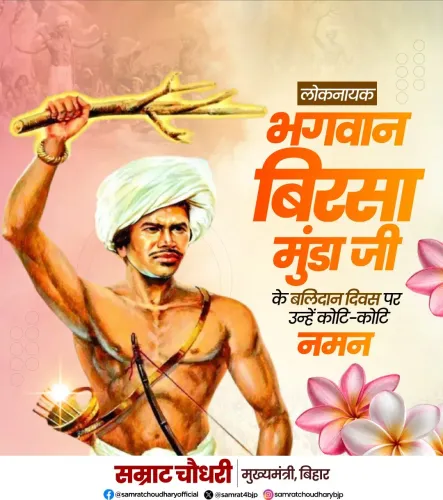
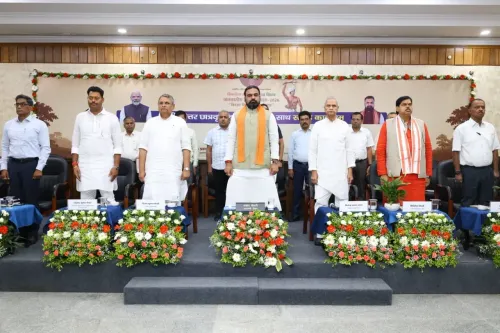
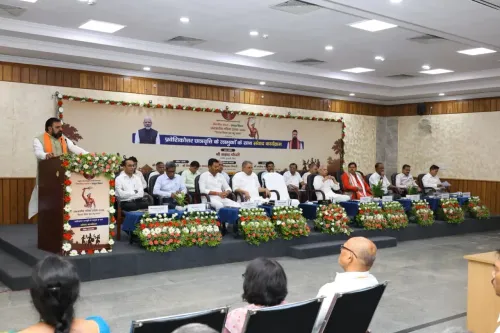
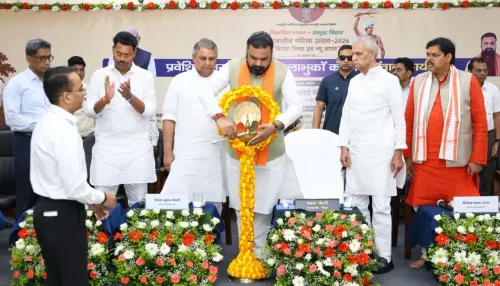
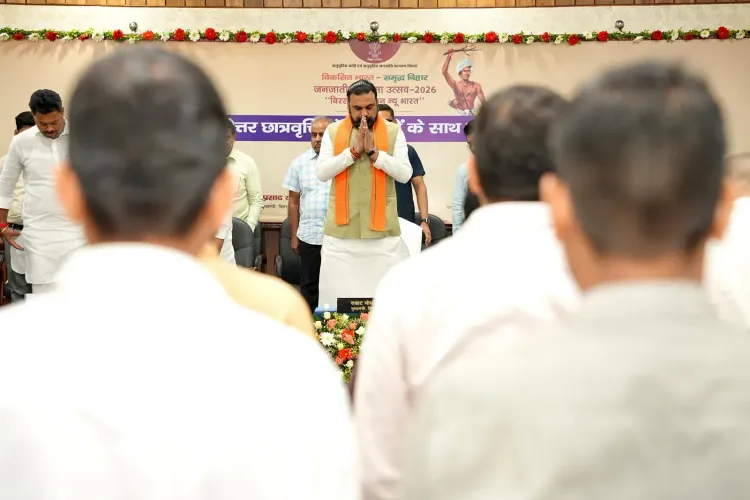
Bihar Chief Minister Samrat Choudhary met with tribal students benefiting from the Post Matric Scholarship Scheme at the Chief Minister's Secretariat in Patna on Wednesday, 27 May 2026, as part of the 'Birsa Lives in New Bharat' week, a state-organised campaign invoking the legacy of tribal freedom fighter Birsa Munda.
Context
Addressing the students, CM Choudhary wished them a bright future and reaffirmed the state government's commitment to tribal empowerment through education, opportunity, and equality. The interaction was held in the Samvad Sabhagar (dialogue hall) of the secretariat, bringing together meritorious students from tribal communities across Bihar. The event forms part of a week-long programme framed around Birsa Munda's enduring legacy in the context of modern India's development agenda.
Policy Backdrop
The Bihar government listed several concurrent initiatives aimed at tribal communities. According to CM Choudhary's post, the Post Matric Scholarship scheme has benefited more than 1.04 lakh SC/ST students, while the Pre-Matric Scholarship has reached 20.46 lakh students, of whom 1.41 lakh are ST students. The centrally sponsored Post-Matric Scholarship for Scheduled Tribe students has operated for decades as a key instrument for enabling higher-education access among tribal communities, with state governments co-funding and administering disbursements.
Beyond scholarships, the state government announced marathon events in tribal areas, with cash prizes of ₹1 lakh, ₹75,000, and ₹50,000 for the top three finishers. Heliport construction has been planned at Valmikinagar and Kaimur to promote eco-tourism, and a homestay programme in tribal areas is being encouraged to simultaneously strengthen tourism infrastructure and tribal cultural heritage.
Stakeholders and Impact
The scholarship figures, if borne out by official disbursement records, would represent a substantial reach into Bihar's tribal and scheduled-caste student population. Tribal communities in districts such as Kaimur and Valmikinagar stand to gain from the proposed eco-tourism infrastructure, which state authorities say will generate livelihoods alongside preserving indigenous culture. Homestay operators and local eco-tourism businesses in scheduled areas are also identified as direct beneficiaries of the government's push.
The invocation of Birsa Munda — the 19th-century tribal freedom fighter revered across Jharkhand, Bihar, and adjoining states — lends political and cultural symbolism to the campaign, situating contemporary welfare measures within a narrative of historical justice and recognition for tribal communities.
What's Next
Actual rollout timelines for the Valmikinagar and Kaimur heliports, as well as utilisation and disbursement reports for the scholarship schemes, will be the key metrics to watch in the coming months. The state government has signalled that the 'Birsa Lives in New Bharat' framework will continue to guide tribal welfare programming, though the precise calendar and scope of activities beyond this week remain to be announced. Annual scholarship disbursement data will offer a clearer picture of whether the stated beneficiary numbers translate into sustained educational outcomes for tribal students across Bihar.
Point of View
Using the 'Birsa Lives in New Bharat' frame to associate the BJP-led state government with a revered indigenous icon ahead of a politically sensitive period for tribal constituencies. The bundling of scholarships, eco-tourism infrastructure, and cultural programming reflects a broader national BJP strategy of linking scheduled-area development to identity politics. The scholarship beneficiary numbers — if verified — would represent one of Bihar's larger social-sector outreach claims, making independent audit of disbursements a critical accountability test. Whether the heliport and homestay projects translate into tangible livelihood gains for tribal communities will determine whether this initiative is remembered as substantive policy or ceremonial optics.
NationPress
11 Oct 2026
Frequently Asked Questions
What is the 'Birsa Lives in New Bharat' week in Bihar?
It is a state-organised campaign in Bihar invoking the legacy of tribal freedom fighter Birsa Munda to highlight government welfare initiatives for tribal communities, including scholarship interactions and cultural events.
How many students benefit from Bihar's Post Matric Scholarship for SC/ST?
According to Bihar CM Samrat Choudhary's post, more than 1.04 lakh SC/ST students benefit from the Post Matric Scholarship scheme in the state.
What are the heliport projects announced for tribal areas in Bihar?
The Bihar government has announced heliport construction at Valmikinagar and Kaimur to promote eco-tourism in tribal regions of the state.
What is the Pre-Matric Scholarship reach in Bihar?
Bihar's Pre-Matric Scholarship reportedly covers 20.46 lakh students , of whom 1.41 lakh are Scheduled Tribe students , according to the Chief Minister's statement.
Who is Birsa Munda and why is he invoked in Bihar's tribal campaigns?
Birsa Munda was a 19th-century tribal freedom fighter revered across Bihar, Jharkhand, and neighbouring states. His legacy is frequently invoked by governments to frame contemporary tribal welfare and development programmes within a narrative of historical recognition and justice.