CM Bhagwant Mann Greets Sikhs on Guru Granth Sahib Gaddi Divas
Synopsis
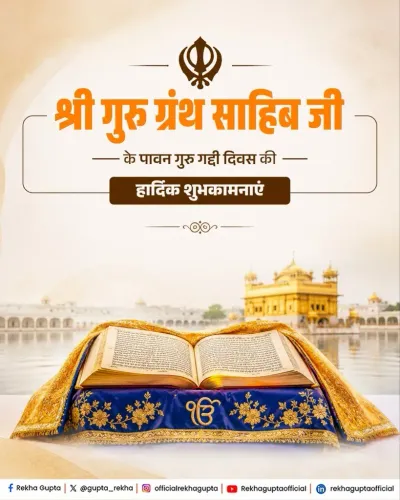
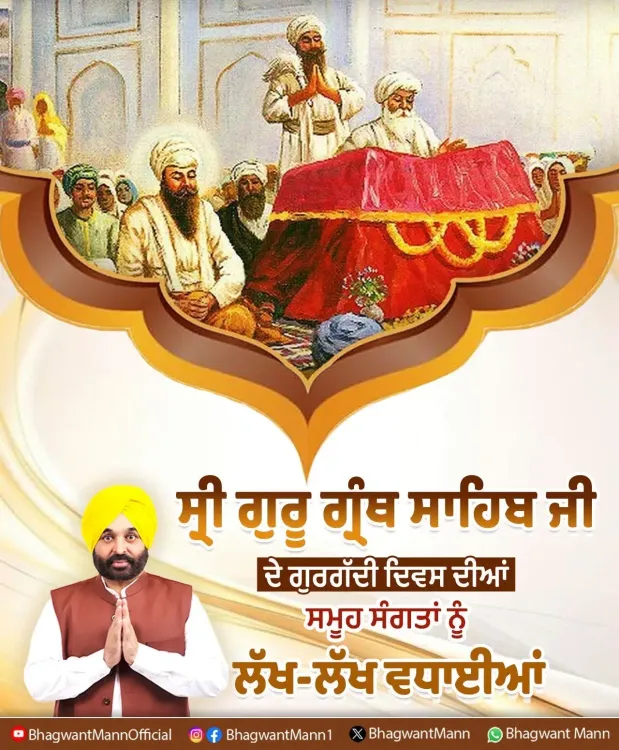
Punjab Chief Minister Bhagwant Mann marked Guru Gaddi Divas by greeting the Sikh Sangat in Punjabi, invoking the eternal Shabad Guru legacy of Sri Guru Granth Sahib Ji and urging all to pledge themselves to Sarbat da Bhala — the well-being of all humanity.
Key Takeaways
CM Bhagwant Mann posted Guru Gaddi Divas greetings on November 11, 2026 , addressing the entire Sikh congregation.
The occasion commemorates the moment in 1708 when Guru Gobind Singh Ji installed the Guru Granth Sahib as the eternal, living Guru at Nanded .
Mann invoked the Shabad Guru concept — the scripture as the perpetual spiritual guide — and the principle of Sarbat da Bhala , universal well-being.
The greeting was posted in Punjabi, reinforcing cultural and linguistic connection with Punjab's Sikh community.
Punjab Chief Ministers across parties have a consistent tradition of marking key Sikh anniversaries with public messages of religious engagement.
On a morning steeped in Sikh devotion, Punjab Chief Minister Bhagwant Mann extended heartfelt greetings to the entire Sikh congregation on the occasion of Guru Gaddi Divas — the day commemorating the installation of Sri Guru Granth Sahib Ji as the eternal, living Guru of the Sikhs.
Posting in Punjabi on Wednesday, November 11, 2026, CM Mann wrote, 'Jugo-jug attal, Shabad Guru Sahib Sri Guru Granth Sahib Ji' — invoking the scripture's eternal and unshakeable status. He offered kotan-kot (countless) congratulations to the Sangat, the Sikh congregation, and urged all to take inspiration from the ideology of the Shabad Guru and the sacred Bani to pledge themselves to Sarbat da Bhala — the universal well-being of all. He closed with a prayer: 'Waheguru Ji sabh te mehr karan' — may the Almighty bless everyone.
The 1708 moment that changed Sikhism forever
Guru Gaddi Divas marks one of the most pivotal moments in Sikh history. In 1708, at Nanded in present-day Maharashtra, the Tenth Sikh Guru, Guru Gobind Singh Ji, conferred eternal Guruship upon the Guru Granth Sahib — ending the line of human Gurus and declaring the scripture itself as the perpetual, living guide for all Sikhs. The concept of the Shabad Guru — the Word as Guru — became the cornerstone of Sikh spiritual and moral life from that moment forward.
Sarbat da Bhala: a principle Punjab's leaders return to
CM Mann's invocation of Sarbat da Bhala is deliberate and deeply rooted. The phrase, drawn from the Ardas — the Sikh daily prayer — calls for the welfare of all of humanity, not just the Sikh community. It is a longstanding ethical pillar in Sikh public discourse, and Punjab Chief Ministers across party lines have consistently woven it into addresses on major Sikh anniversaries. For Mann, leading a state where the Sikh faith is woven into daily civic life, the message serves as both a religious tribute and a reaffirmation of inclusive governance values.
The greeting reflects a broader pattern of cultural and religious engagement that Punjab's political leadership maintains with the Sikh Sangat — keeping the state's spiritual heritage visible in public life while drawing on its universal, humanist message.
Point of View
Non-sectarian welfare — signals an effort to position the AAP government as a steward of inclusive Sikh values rather than narrow communal identity. For a party that unseated the Shiromani Akali Dal, long considered the custodian of Sikh religious politics in Punjab, such gestures carry quiet but pointed significance. The post is ceremonial in register but strategic in its cultural grammar.
NationPress
11 Nov 2026
Frequently Asked Questions
What is Guru Gaddi Divas?
Guru Gaddi Divas commemorates the historic occasion in 1708 when Guru Gobind Singh Ji , the Tenth Sikh Guru, installed the Sri Guru Granth Sahib as the eternal, living Guru at Nanded , ending the lineage of human Gurus.
What did CM Bhagwant Mann say on Guru Gaddi Divas 2026?
CM Mann posted greetings in Punjabi, calling the Guru Granth Sahib 'jugo-jug attal' (eternal across ages), offering countless congratulations to the Sikh Sangat, and urging everyone to pledge themselves to Sarbat da Bhala — the well-being of all — guided by the sacred Bani.
What does Sarbat da Bhala mean?
Sarbat da Bhala is a Punjabi phrase meaning 'well-being of all' or 'may everyone prosper.' It is drawn from the Sikh Ardas (daily prayer) and represents the faith's commitment to universal, non-sectarian human welfare.
What is the Shabad Guru concept in Sikhism?
The Shabad Guru concept holds that the divine Word — as enshrined in the Guru Granth Sahib — is itself the Guru, the eternal guide for all Sikhs. It was formalised when Guru Gobind Singh Ji declared the scripture the perpetual Guru in 1708 .
Why do Punjab Chief Ministers mark Sikh religious occasions?
Punjab has a majority Sikh population and Sikh heritage is central to the state's cultural and political identity. Chief Ministers across all parties have consistently issued messages on major Sikh anniversaries to maintain religious and cultural engagement with the community.