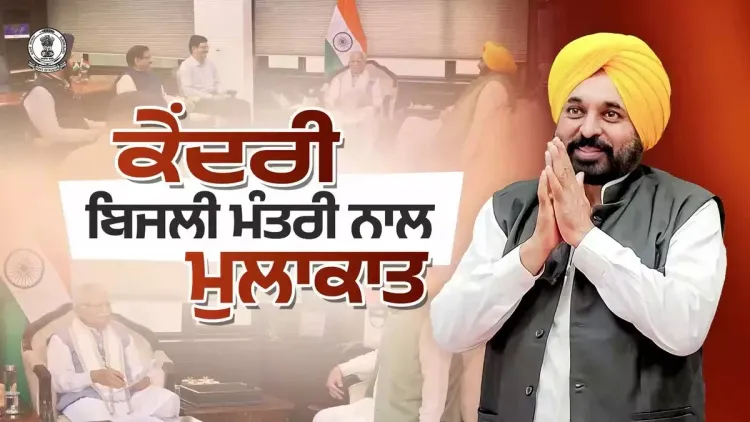
CM Bhagwant Mann Meets Union Power Minister in Delhi Over Punjab Power Crisis
Synopsis
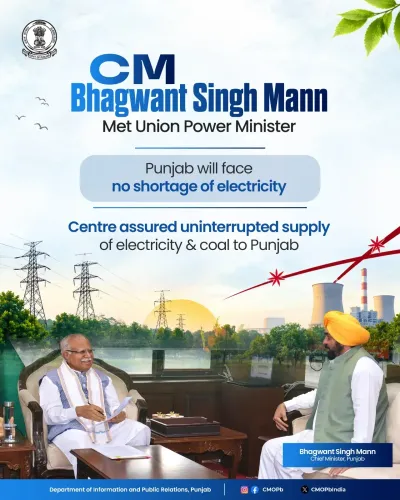
Chief Minister Bhagwant Mann met the Union Power Minister in New Delhi on 16 October 2026, holding detailed talks on PSPCL's operations, coal supply continuity, and the heightened power demand during Punjab's paddy harvest season.
Key Takeaways
CM Bhagwant Mann met the Union Minister for Power in New Delhi on 16 October 2026 .
Discussions centred on Punjab State Power Corporation Limited (PSPCL) , uninterrupted coal supply, and the paddy season electricity load.
Punjab's paddy season triggers sharp tubewell-driven demand spikes that stress PSPCL's coal-dependent thermal generation.
The AAP government's free 300-unit domestic power subsidy since 2022 adds ongoing financial pressure to PSPCL.
Centre-state coal linkage coordination has been a recurring feature of Punjab power governance since at least 2018 .
Follow-up announcements on additional coal linkages or central support for PSPCL remain the key outcome to watch.
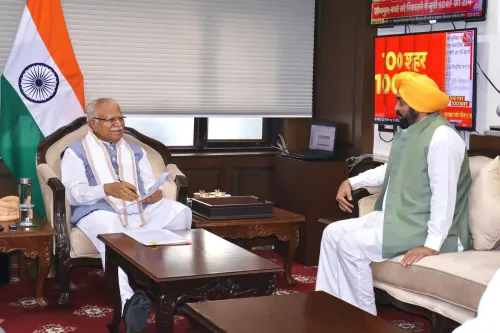
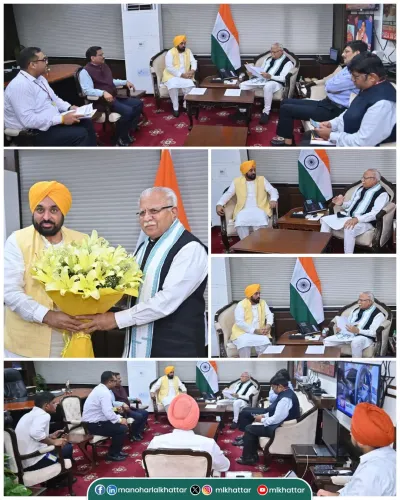
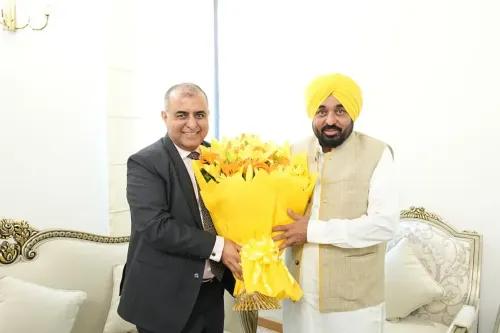
With paddy season placing maximum stress on Punjab's power grid, Chief Minister Bhagwant Mann flew to New Delhi on Friday, 16 October 2026, for a high-stakes meeting with the Union Minister for Power — pressing hard on three fronts that keep Punjab's lights on and its tubewells running: the state's power sector health, uninterrupted coal supply, and the electricity demands of the ongoing paddy harvest season.
The Chief Minister's Office of Punjab confirmed the meeting in a post on X, stating that 'detailed and meaningful discussions' (ਵਿਸਥਾਰਪੂਰਵਕ ਅਤੇ ਸਾਰਥਕ ਗੱਲਬਾਤ) were held on issues relating to the Punjab State Power Corporation Limited (PSPCL), with coal supply continuity and the paddy season's electricity load at the centre of the agenda.
Why Paddy Season Is a Power Emergency for Punjab
Every year, the paddy transplantation and harvesting cycle transforms Punjab's electricity map almost overnight. Hundreds of thousands of tubewells switch on simultaneously to flood-irrigate fields, and PSPCL's demand curve spikes in ways that can expose every weakness in the supply chain — from coal stockpiles at thermal plants to grid transmission capacity.
The state's thermal stations run on coal allocations tied to central government linkages, making the Union Power Ministry not just a policy counterpart but a direct operational partner. Any shortfall in coal inventory during peak agricultural load can trigger outages that hit farmers hardest — precisely the constituency the AAP government has staked its political identity on protecting.
The Free-Power Equation and PSPCL's Finances
Since 2022, the Mann government has delivered on its flagship promise of 300 units of free domestic electricity per month — a subsidy that has simultaneously boosted its approval ratings and deepened PSPCL's financial pressure. The corporation must absorb the cost of that subsidy while also maintaining infrastructure, servicing debt, and keeping coal bunkers stocked for baseload generation.
Centre-state coordination on coal linkages has been a recurring feature of Punjab's power governance since at least 2018, when national coal allocation reforms reshaped how state utilities access fuel. Friday's meeting signals that the coordination imperative has not diminished — if anything, the combination of the free-power subsidy load and the paddy-season surge makes it sharper than ever.
What Comes Next for PSPCL and Punjab's Grid
The meeting produced no publicly announced outcomes in the immediate post, but the agenda itself tells the story. A follow-up on additional coal linkages or central financial support for PSPCL — ahead of the winter rabi season that follows immediately after paddy — is now the thing to watch. Every tonne of coal secured and every rupee of central support unlocked in Delhi today translates directly into uninterrupted power for Punjab's farms tomorrow.
Point of View
Mann signals that he treats uninterrupted agricultural power as a non-negotiable political deliverable. The paddy-season timing is no accident — securing coal commitments now protects both the harvest and the government's credibility before the next electoral cycle. Broader centre-state power dynamics in India increasingly hinge on how state utilities manage the gap between subsidised tariffs and real generation costs, and Punjab is a live test case.
NationPress
16 Oct 2026
Frequently Asked Questions
Why did CM Bhagwant Mann meet the Union Power Minister?
CM Bhagwant Mann met the Union Power Minister in New Delhi on 16 October 2026 to discuss key issues related to PSPCL, including ensuring uninterrupted coal supply and managing the elevated electricity demand during Punjab's paddy season.
What is PSPCL and why does it matter for Punjab?
PSPCL, or Punjab State Power Corporation Limited, is Punjab's primary electricity generation and distribution utility. It runs the thermal plants that supply baseload power and is central to meeting the state's agricultural electricity needs, especially during paddy season.
Why does Punjab need extra power during paddy season?
During paddy transplantation and harvesting, a large number of tubewells are operated simultaneously for flood irrigation, causing a sharp spike in electricity demand that strains PSPCL's generation and coal supply.
How does Punjab's free electricity scheme affect PSPCL?
Since 2022, the Mann government has provided 300 units of free domestic power monthly. While politically popular, the subsidy increases PSPCL's financial burden, making central government support and efficient coal supply even more critical to the utility's operations.
What outcome is expected from the CM's meeting with the Power Minister?
No specific outcomes were announced immediately. Observers are watching for follow-up decisions on additional coal linkages or central financial assistance to PSPCL ahead of the winter rabi farming season.