CM Bhagwant Mann releases Rs 1,291 crore to 37 lakh women in Punjab
Synopsis
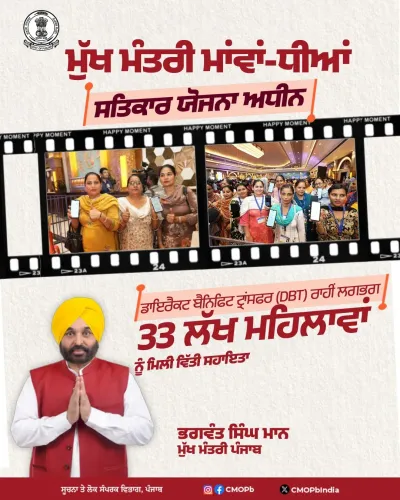
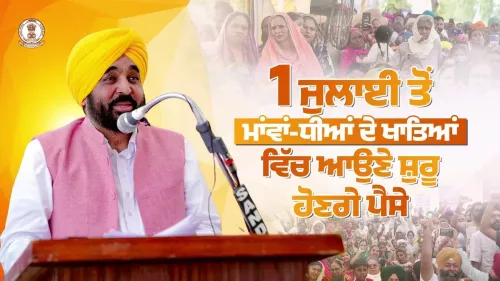
Chief Minister Bhagwant Singh Mann released the next installment of the Mukhmantri Mawan-Dhiyan Satkar Yojana at Abohar on 1 November 2026, crediting Rs 1,291.09 crore directly into the bank accounts of over 37.4 lakh women across Punjab.
Key Takeaways
Rs 1,291.09 crore released in a single tranche under the Mukhmantri Mawan-Dhiyan Satkar Yojana on 1 November 2026 .
A total of 37,43,168 women across Punjab are receiving the direct bank credit simultaneously.
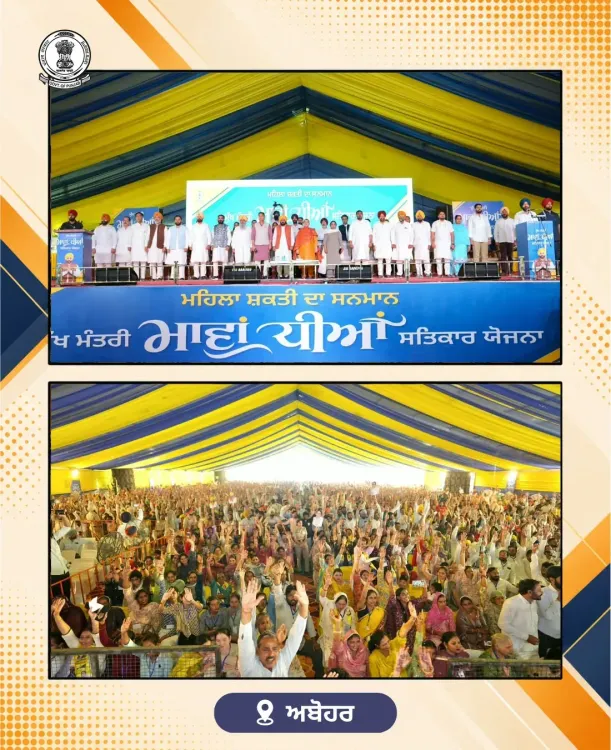
CM Bhagwant Singh Mann personally attended and released the installment at an event in Abohar, Fazilka district .
The scheme was launched by the AAP government after its March 2022 Punjab election victory as part of women's financial-inclusion commitments.
The direct-transfer model bypasses intermediaries, routing funds straight to individual women's bank accounts.
Subsequent installments and the scheme's budget allocation are key markers to watch in the upcoming Punjab budget session .
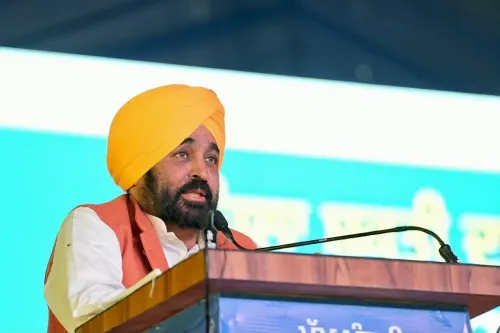
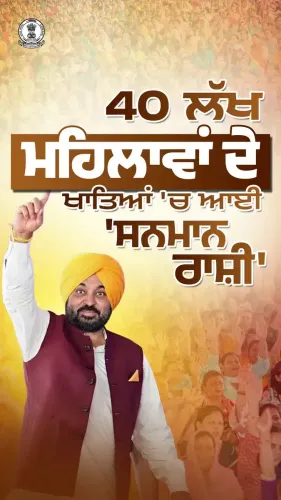
More than 37 lakh women across Punjab woke up to a direct credit in their bank accounts on Sunday, 1 November 2026 — as Chief Minister Bhagwant Singh Mann released the next installment of the Mukhmantri Mawan-Dhiyan Satkar Yojana at a state event in Abohar, pushing Rs 1,291.09 crore simultaneously into 37,43,168 individual accounts.
What the Abohar event delivered
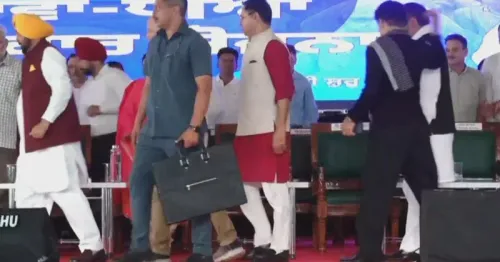
Standing at Abohar in Fazilka district, CM Mann formally released the installment at a programme convened specifically under the scheme. The Chief Minister's Office confirmed that Rs 1,291.09 crore is being credited across the state in a single tranche — one of the largest single-day direct-benefit transfers under this women-centric programme. The scheme, whose Punjabi name translates broadly as the Mukhmantri Mawan-Dhiyan Satkar Yojana ('Chief Minister Mothers-Daughters Respect Scheme'), is designed to route periodic cash support directly to eligible women, bypassing intermediaries.
The scheme's roots in AAP's Punjab project
The Aam Aadmi Party government, which swept Punjab in March 2022 under Bhagwant Singh Mann, launched the scheme as part of a broader commitment to women's financial inclusion — mirroring the direct-transfer model AAP had road-tested in Delhi. The logic is straightforward: put money directly in the hands of mothers and daughters, with no bureaucratic filter between the government and the beneficiary. That approach has become a signature of AAP-governed states and has since been replicated in various forms by other state governments chasing the same financial-inclusion dividend.
37 lakh beneficiaries — and why the scale matters
A beneficiary count of 37,43,168 women represents a substantial share of Punjab's adult female population, signalling near-saturation reach within the eligible category. At Rs 1,291.09 crore per installment, the cumulative fiscal commitment across all tranches runs into several thousand crore rupees — a number that will feature prominently when the Punjab government frames its next budget session. Each fresh installment also serves as a live stress-test of the state's direct-benefit-transfer infrastructure: whether bank accounts are seeded, whether payments clear without rejections, and whether the last-mile delivery actually reaches rural women in districts like Fazilka.
What the next installment signals
The release at Abohar — a town in the cotton-growing southwest of Punjab — is not incidental. Holding the event in a region with strong agricultural roots and a dense rural female population is a visible statement about where the scheme's weight falls. Observers will watch subsequent installments to see whether the beneficiary count grows, whether the per-beneficiary transfer amount shifts, and how the scheme figures in pre-budget announcements from Chandigarh.
For the women whose accounts just received a credit, the arithmetic is simple. For the government, each tranche is a proof point — and a political one — that the promise made in 2022 is still being kept.
Point of View
291 crore per tranche, the scheme has crossed the threshold where it becomes a structural feature of Punjab's fiscal calendar rather than a one-off gesture. The choice of Abohar — a rural, agrarian constituency in southwest Punjab — as the venue underlines that the AAP government is deliberately anchoring this narrative in its less urban strongholds. How the scheme is funded, expanded, or renegotiated in the next budget will reveal whether it is a sustainable social compact or a political instrument approaching fiscal strain.
NationPress
1 Nov 2026
Frequently Asked Questions
What is the Mukhmantri Mawan-Dhiyan Satkar Yojana?
It is a Punjab government scheme launched by the AAP administration after March 2022 that provides periodic direct cash transfers to eligible women in the state, routing funds straight into their bank accounts.
How much money was released under the Satkar Yojana on 1 November 2026?
Chief Minister Bhagwant Singh Mann released Rs 1,291.09 crore as the next installment of the scheme at an event in Abohar.
How many women benefited from this Satkar Yojana installment?
A total of 37,43,168 women across Punjab are receiving the credit in their bank accounts under this installment.
Where did CM Bhagwant Mann release the Satkar Yojana installment?
He released the installment at an event held in Abohar , a town in Fazilka district, Punjab.
When did AAP launch the Mukhmantri Mawan-Dhiyan Satkar Yojana in Punjab?
The scheme was introduced by the AAP government following its election victory in March 2022 , as part of its poll commitments on women's financial support.