CM Bhajan Lal: BJP govt gave 1.75 lakh youth govt jobs in 2.5 yrs
Synopsis
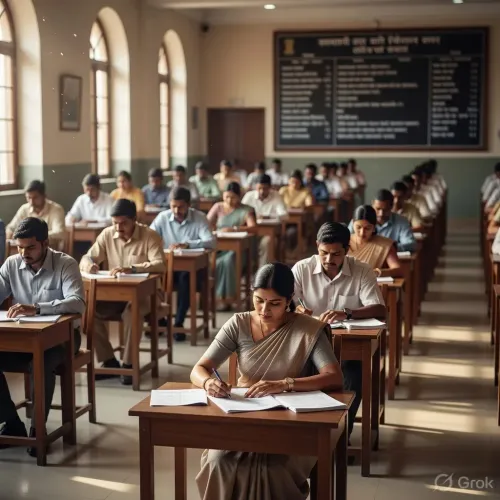
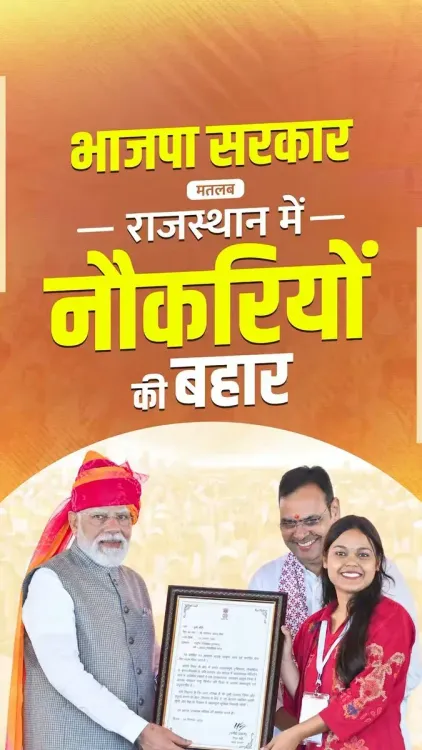
Rajasthan Chief Minister Bhajan Lal Sharma has claimed the BJP government provided over 1.75 lakh government jobs to youth in its first 2.5 years, framing the milestone as an 'amritkaal' for young people in the state.
Key Takeaways
Rajasthan CM Bhajan Lal Sharma announced on 10 July 2026 that the BJP government has given government jobs to more than 1.75 lakh youth in 2.5 years .
The Chief Minister used the term Amrit Kaal — a BJP framework for India's 25-year development arc to 2047 — to characterise the period for Rajasthan's youth.
The BJP assumed power in Rajasthan in December 2023 with youth employment as a core campaign promise.
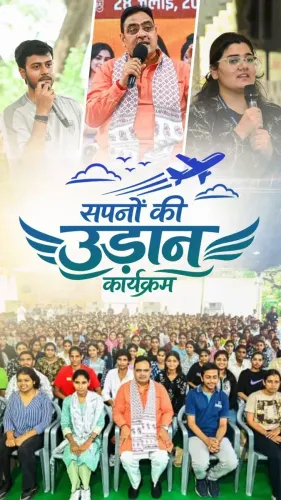
The announcement was accompanied by a video , signalling a structured government communication effort around the milestone.
Subsequent Rajasthan Public Service Commission notifications and state budget disclosures are expected to provide sector-wise recruitment details.
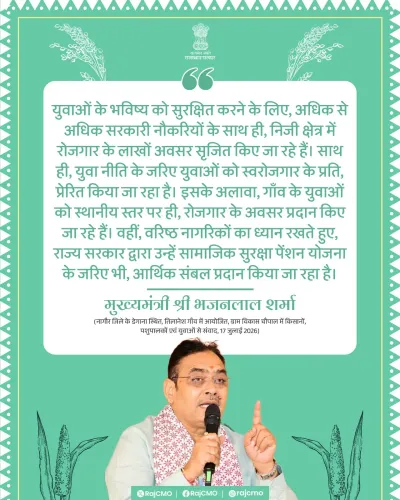
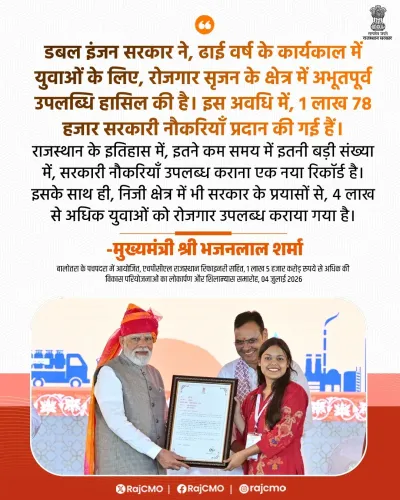
Rajasthan Chief Minister Bhajan Lal Sharma on Friday, 10 July 2026 declared that the BJP government's 2.5 years in office have proved to be an amritkaal (golden era) for the state's youth, citing the allocation of more than 1.75 lakh government jobs to young people during this period.
Context
In his post on X, the Chief Minister stated: 'BJP sarkar ke 2.5 saal yuvaon ke liye sabit hue amritkaal — 1.75 lakh se adhik yuvaon ko mili sarkari naukri' — translating to: 'The BJP government's 2.5 years have proved to be an amritkaal for youth — more than 1.75 lakh young people have received government jobs.' The post accompanied a video, indicating a broader communication push around the milestone.
The announcement marks the halfway point of the current BJP term in Rajasthan, which began in December 2023 following the state assembly elections. Youth employment was a central campaign promise at the time, and the government has periodically publicised recruitment figures as evidence of delivery on that pledge.
Policy Backdrop
The term Amrit Kaal was introduced into national political discourse by the BJP-led central government around India's 75th Independence Day in August 2022, framing the 25-year period leading to 2047 — India's centenary — as a decisive era of development. State-level BJP administrations, including Rajasthan, have since adopted the phrase to anchor governance messaging.
The Rajasthan Public Service Commission and various state departments have been central to executing recruitment drives across sectors. Youth unemployment has historically been a persistent concern in Rajasthan, making government job creation a politically significant metric for any ruling party in the state.
Stakeholders and Impact
The primary beneficiaries cited are young job seekers across Rajasthan, a state with a large aspirant population that has long competed intensely for limited government positions. For many families in the state, a government job remains the most stable form of employment, carrying benefits such as pension entitlements and job security.
State government departments that absorbed these recruits — spanning education, health, police, and administrative services — stand to see capacity additions, though the distribution across sectors has not been detailed in the post. Opposition parties and civil society groups are likely to scrutinise the breakdown of these figures in the coming days.
What's Next
Attention will now turn to forthcoming Rajasthan Public Service Commission notifications and state budget documents, which typically provide granular data on recruitment targets versus actual inductions. The government's ability to sustain this pace of hiring through the remaining half of its term will be a key benchmark for youth-focused governance claims heading into the next electoral cycle.
Point of View
And far enough from the next cycle to avoid appearing purely electoral. The figure of 1.75 lakh, if substantiated by commission data, would represent a significant acceleration over historical recruitment rates in the state, making independent verification the immediate next test. This messaging pattern mirrors BJP administrations in other large states, suggesting coordinated national-level communication strategy around governance deliverables.
NationPress
10 Oct 2026
Frequently Asked Questions
How many government jobs has the Rajasthan BJP government given to youth?
Chief Minister Bhajan Lal Sharma has stated that the BJP government in Rajasthan provided government jobs to more than 1.75 lakh youth in its first 2.5 years in office, as announced on 10 July 2026.
What is Amrit Kaal and why is it used in Rajasthan government messaging?
Amrit Kaal is a term introduced by the BJP-led central government around India's 75th Independence Day in August 2022, describing the 25-year development period leading to India's centenary in 2047. BJP-governed states, including Rajasthan, have adopted the phrase to frame governance achievements within this national vision.
When did Bhajan Lal Sharma become Chief Minister of Rajasthan?
Bhajan Lal Sharma was sworn in as Chief Minister of Rajasthan in December 2023, following the BJP's victory in the state assembly elections.
Which departments in Rajasthan absorbed the 1.75 lakh government recruits?
The post by CM Bhajan Lal Sharma does not specify the sector-wise breakdown. Recruitment in Rajasthan typically spans education, health, police, and administrative services, but granular details are expected in forthcoming Rajasthan Public Service Commission notifications.
What is the BJP's record on youth employment in Rajasthan?
Youth employment was a central BJP campaign promise ahead of the December 2023 Rajasthan assembly elections. The party has since periodically publicised recruitment figures, with the 1.75 lakh figure being the most recent milestone claimed by CM Bhajan Lal Sharma.