CM Bhajan Lal Hails PM Modi's Commitment to Rajasthan's Development
Synopsis
Rajasthan Chief Minister Bhajan Lal Sharma credited Prime Minister Narendra Modi for accelerating the state's all-round progress, posting his appreciation on X on 4 July 2026 under the hashtag #PMModi4ViksitRajasthan — reinforcing the BJP's cooperative federalism narrative ahead of potential project announcements.
Key Takeaways
CM Bhajan Lal Sharma publicly credited PM Narendra Modi for giving new momentum to Rajasthan's all-round development on 4 July 2026 .
The post was made under the campaign hashtag #PMModi4ViksitRajasthan , linking state progress to the national Viksit Bharat 2047 vision.
Sharma has served as Rajasthan Chief Minister since December 2023 , aligning state governance with central BJP priorities.
The Viksit Bharat framework was first announced by PM Modi on Independence Day 2022 , targeting a developed India by 2047 .
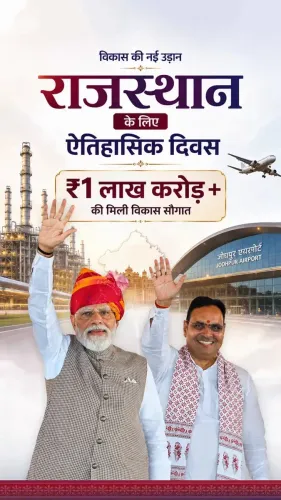
Rajasthan , India's largest state by area, has been a focal point for central investment in solar energy, infrastructure, and rural welfare.
Analysts will watch for follow-up policy announcements, including state budget alignments with schemes such as PM Gati Shakti .
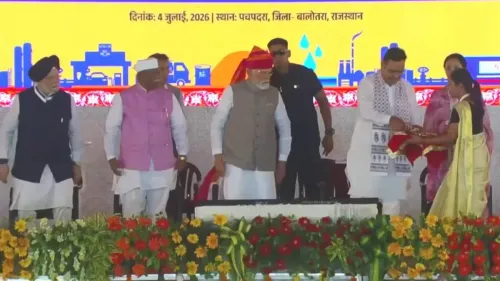
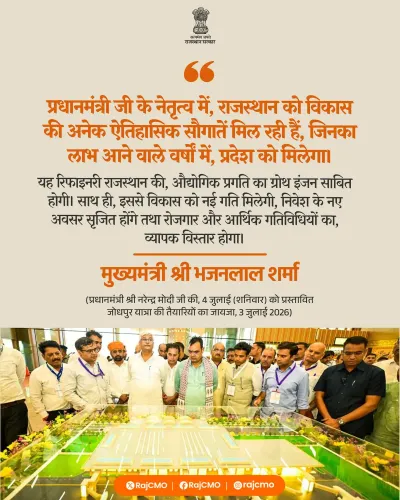
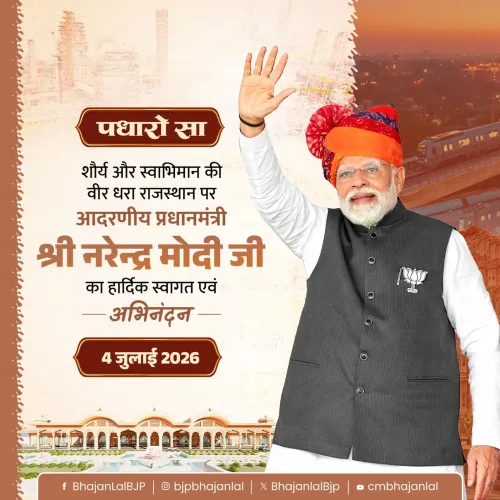
Rajasthan Chief Minister Bhajan Lal Sharma on Saturday, 4 July 2026, publicly credited Prime Minister Narendra Modi for providing fresh momentum to the state's all-round progress, sharing his appreciation on the social media platform X under the hashtag #PMModi4ViksitRajasthan. The post underscores the ruling BJP's consistent messaging of cooperative federalism, linking state-level advancement directly to central leadership.
Context
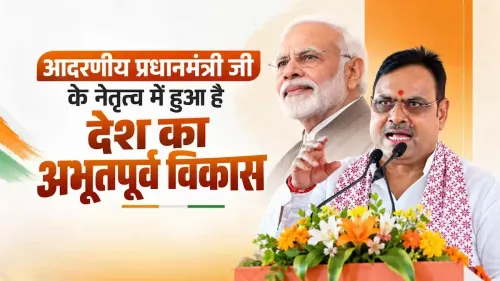
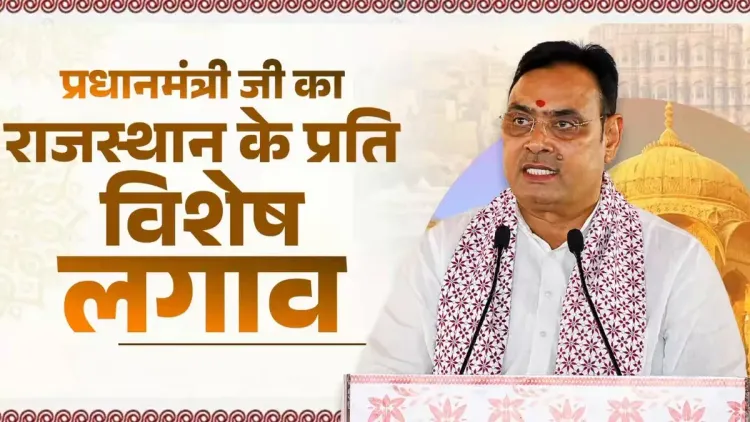
In his post, Sharma wrote — 'राजस्थान के सर्वांगीण विकास के प्रति आदरणीय प्रधानमंत्री श्री @narendramodi जी का विशेष स्नेह और प्रतिबद्धता प्रदेश की प्रगति को नई गति दे रही है' — which translates as: 'The special affection and commitment of the honourable Prime Minister Shri Narendra Modi towards the all-round development of Rajasthan is giving new momentum to the progress of the state.' The statement was accompanied by a video and the campaign hashtag linking the state's trajectory to the broader Viksit Bharat vision.
Sharma assumed office as Chief Minister in December 2023, following the BJP's return to power in Rajasthan. Since then, his administration has positioned itself as a proactive partner in implementing centrally sponsored schemes across infrastructure, welfare delivery, and renewable energy.
Policy Backdrop
Prime Minister Modi first articulated the Viksit Bharat — or 'Developed India' — vision during his Independence Day address in 2022, setting a national development target for 2047, the centenary of Indian independence. State governments led by the BJP have since aligned their own development narratives and budgetary priorities with this overarching framework.
Rajasthan, India's largest state by area, presents both significant opportunities and logistical challenges in this regard. The state has been a focal point for central investment in solar energy infrastructure, highway connectivity, and rural welfare programmes. The hashtag #PMModi4ViksitRajasthan mirrors similar state-level digital campaigns run by BJP-governed states, reinforcing a coordinated political and policy messaging strategy.
Stakeholders and Impact
The primary beneficiaries of the development alignment being referenced are Rajasthan's approximately 8 crore residents, who stand to gain from the convergence of state budgetary resources with centrally funded schemes such as PM Gati Shakti for infrastructure and various rural livelihood programmes. The state administration, district-level officials, and implementing agencies are key stakeholders in translating this political messaging into on-ground outcomes.
For the BJP as a political organisation, such public affirmations by state chief ministers serve to reinforce the party's cooperative governance model, presenting a unified front between New Delhi and Jaipur ahead of any future electoral cycles. The messaging also signals to investors and central ministries that Rajasthan's leadership is aligned with national priorities.
What's Next
Observers will watch whether Sharma's public appreciation is followed by concrete announcements — such as the alignment of Rajasthan's upcoming state budget with central schemes, new solar park expansions, or fresh tranches of infrastructure funding under national programmes. The post's accompanying video, whose specific content was not detailed in available information, may offer additional clues about the specific projects or milestones being highlighted.
As Rajasthan continues to position itself within the Viksit Bharat 2047 framework, the degree to which state-level governance outcomes visibly improve will determine whether this cooperative federalism narrative translates into durable political capital for the BJP in one of India's most electorally significant states.
Point of View
Where state leaders publicly anchor their governance credentials to the Prime Minister's national vision. By invoking the Viksit Bharat 2047 framework, Sharma positions Rajasthan not merely as a recipient of central largesse but as an active partner in a shared national project — a framing that simultaneously elevates his own administration's profile. The hashtag-driven campaign mirrors strategies deployed by other BJP-governed states, suggesting a centrally coordinated digital outreach effort rather than a spontaneous expression. The real test of this narrative will come when specific project deliverables, budget allocations, or infrastructure milestones are placed on record.
NationPress
3 Oct 2026
Frequently Asked Questions
What did Rajasthan CM Bhajan Lal Sharma say about PM Modi?
CM Bhajan Lal Sharma stated that PM Narendra Modi's 'special affection and commitment' towards Rajasthan's all-round development is giving new momentum to the state's progress, posting this on X on 4 July 2026.
What is the Viksit Bharat vision?
Viksit Bharat, meaning 'Developed India', is a national development vision articulated by PM Modi during his Independence Day address in 2022, targeting a fully developed India by 2047 — the centenary of independence.
When did Bhajan Lal Sharma become Chief Minister of Rajasthan?
Bhajan Lal Sharma assumed office as Chief Minister of Rajasthan in December 2023, following the BJP's victory in the state assembly elections.
What is the #PMModi4ViksitRajasthan hashtag about?
The hashtag #PMModi4ViksitRajasthan is a BJP-aligned digital campaign linking Rajasthan's state-level development goals to PM Modi's broader Viksit Bharat 2047 national framework.
How is Rajasthan aligned with central government schemes?
Rajasthan has been integrating with central programmes covering infrastructure under PM Gati Shakti, solar energy expansion, and rural welfare delivery, with the state administration publicly signalling alignment with New Delhi's development priorities.