CM Bhajan Lal flags off 100 Kalika Patrolling Units in Jaipur
Synopsis
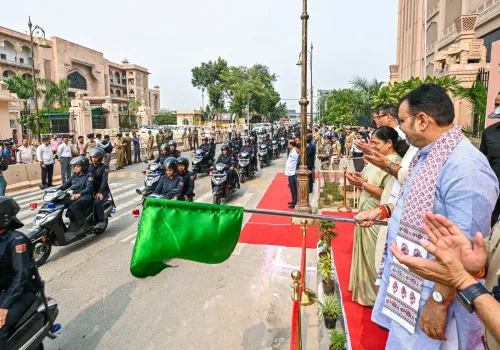
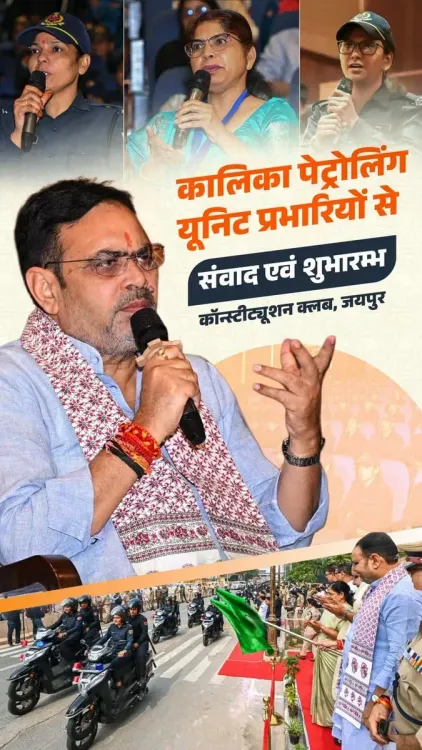
Rajasthan CM Bhajan Lal Sharma flagged off 100 Kalika Patrolling Units at Constitution Club, Jaipur, interacting with unit commanders and reaffirming his government's commitment to providing every woman in the state a safe and fearless environment.
Key Takeaways
100 Kalika Patrolling Units were flagged off by CM Bhajan Lal Sharma at Constitution Club, Jaipur on 18 October 2026 .
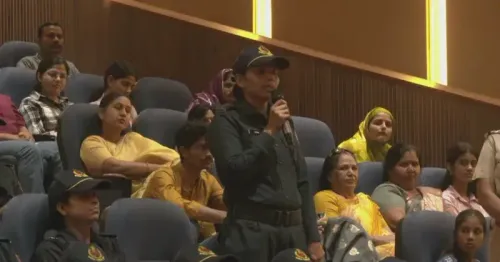
The CM held a direct dialogue with unit commanders, emphasising operational accountability.
Kalika units are specialised squads dedicated to targeted patrolling to deter gender-based offences.
The initiative is part of a broader national pattern of state-level women's-safety policing infrastructure.
CM Sharma, in office since December 2023 , has positioned women's security as a flagship governance priority.
Further district-level rollout and official crime data will be the key metrics to watch.
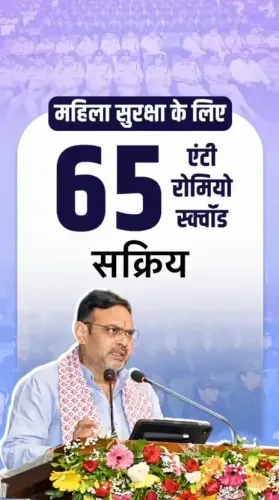
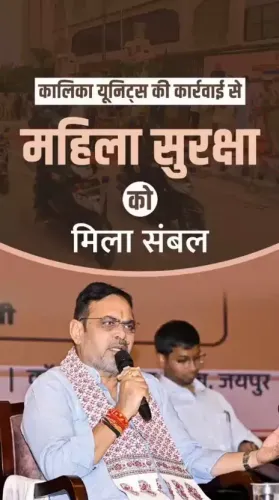
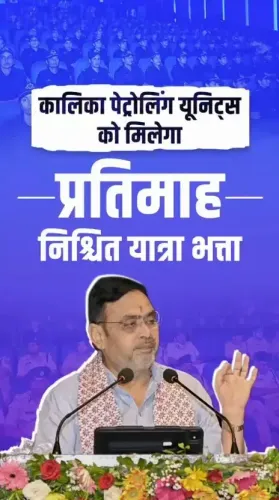
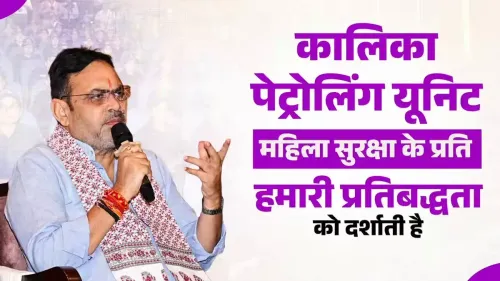
A hundred new police units rolled out of Constitution Club, Jaipur on Sunday, 18 October 2026 — each one dedicated to keeping Rajasthan's women and girls safer on the streets. Rajasthan Chief Minister Bhajan Lal Sharma personally flagged off the 100 newly activated Kalika Patrolling Units and held a direct dialogue with unit commanders, signalling that women's security sits at the top of his government's agenda.
Sharing the moment on X, CM Sharma wrote: 'Mahila suraksha ko sashakt banana aur pradesh ki har beti ko surakshit, bhaymukt evam garimamay vatavaran pradaan karna hamari prathamikta hai' — ('Empowering women's security and providing every daughter of the state with a safe, fearless, and dignified environment is our priority.')
What the Kalika Patrolling Units do
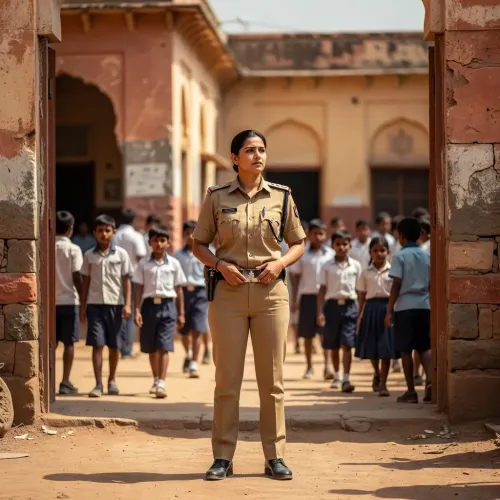
The Kalika Patrolling Units are specialised police squads designed for targeted patrolling in urban zones and other areas where women face heightened risk. Unlike general beat policing, these units are configured specifically to deter and respond to gender-based offences — harassment, assault, and stalking among them. Today's flag-off brought the cumulative deployment to at least 100 units operating across Rajasthan.
The CM's direct interaction with unit commanders — rather than a purely ceremonial handover — underscores an operational focus: ensuring on-ground personnel understand the mandate and feel the political weight behind it.
Rajasthan's wider push on women's safety
The Kalika initiative fits into a broader national pattern. Across India, state governments have steadily expanded dedicated women's-safety infrastructure — all-women police stations, 112 emergency helplines, and specialised patrol units — in response to persistent public concern over gender-based crime. Rajasthan, a large state with both dense urban centres and sprawling rural districts, has particular ground to cover.
CM Sharma, who took office in December 2023, has positioned women's security as a flagship governance commitment. The Kalika units represent visible, localised policing — a form of deterrence that puts uniformed presence where it can be seen and felt by residents and potential offenders alike.
What to watch next
The rollout of 100 units is a headline number, but the harder test is district-level reach. Observers will watch whether the government follows through with data on deployment coverage and, crucially, whether official figures on reported crimes against women in Rajasthan show measurable movement in the months ahead.
If the Kalika model proves effective, it could become a template for further scale-up — and a political benchmark the CM's government will be held to.
Point of View
Allowing governments to demonstrate responsiveness to gender-security concerns without requiring legislative change. The real political test, however, will come from outcome data: if crime figures against women in Rajasthan do not improve, the optics of a well-photographed flag-off will count for little. The CM's decision to personally engage with unit commanders rather than delegate the ceremony suggests an awareness that implementation — not announcement — is where this initiative will be judged.
NationPress
18 Oct 2026
Frequently Asked Questions
What are Kalika Patrolling Units in Rajasthan?
Kalika Patrolling Units are specialised Rajasthan Police squads focused on targeted patrolling in urban and high-risk areas to deter and respond to crimes against women such as harassment, assault, and stalking.
How many Kalika Patrolling Units were launched by CM Bhajan Lal Sharma?
100 new Kalika Patrolling Units were flagged off by Rajasthan CM Bhajan Lal Sharma at Constitution Club, Jaipur on 18 October 2026.
Where were the Kalika Patrolling Units flagged off?
The units were flagged off at Constitution Club, Jaipur , Rajasthan.
What is CM Bhajan Lal Sharma's stance on women's safety?
CM Bhajan Lal Sharma has stated that empowering women's security and providing every daughter of Rajasthan a safe, fearless, and dignified environment is the state government's top priority.
When did Bhajan Lal Sharma become Chief Minister of Rajasthan?
Bhajan Lal Sharma became Chief Minister of Rajasthan in December 2023 after the BJP's victory in the state assembly elections.