CM Bhajan Lal Marks Start of Amarnath Yatra 2026
Synopsis
Rajasthan Chief Minister Bhajan Lal Sharma on 3 July 2026 offered prayers marking the grand commencement of Amarnath Yatra 2026, wishing all pilgrims a safe, auspicious and peaceful journey to the sacred Amarnath Cave shrine in Jammu and Kashmir.
Key Takeaways
Rajasthan Chief Minister Bhajan Lal Sharma posted on X on 3 July 2026 to mark the start of Amarnath Yatra 2026 .
He prayed to Baba Amarnath for the pilgrimage to be auspicious, safe and pleasant for all devotees.
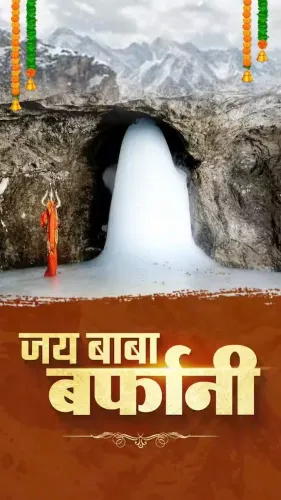
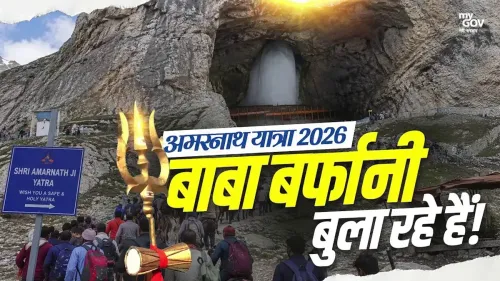
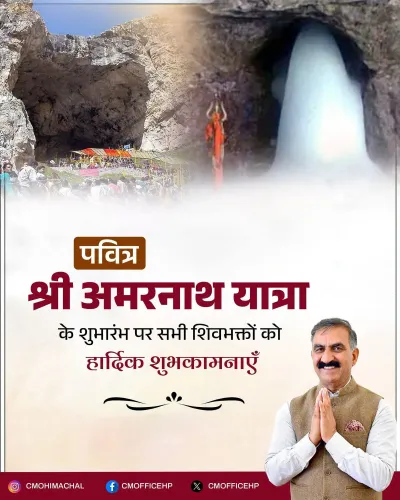
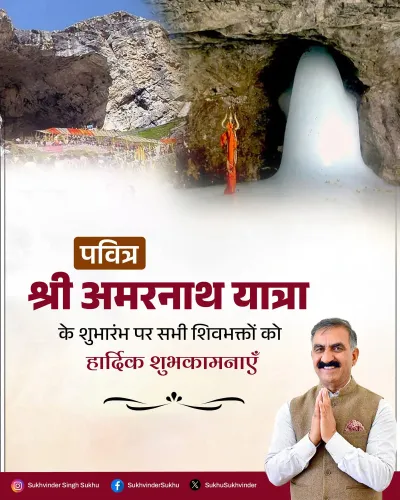
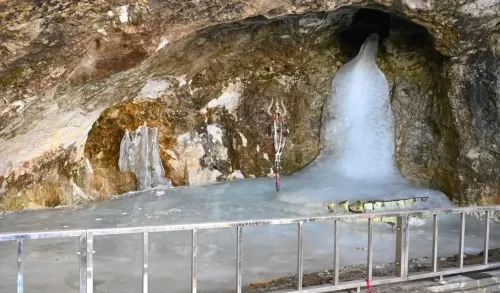
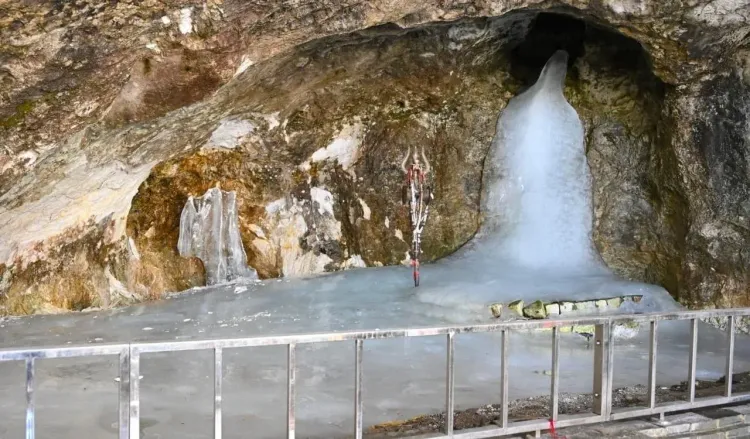
The Amarnath Cave shrine, located in Jammu and Kashmir , houses a naturally formed ice lingam revered as a form of Lord Shiva .
The pilgrimage is managed by the Shri Amarnathji Shrine Board in coordination with the Union Ministry of Home Affairs .
The yatra has been conducted annually since the early 1990s and is seen as a symbol of normalcy in Jammu and Kashmir following the 2019 reorganisation.
Senior BJP leaders routinely issue public messages at the commencement of major Hindu pilgrimages, reflecting a consistent pattern of associating governance with religious milestones.
Rajasthan Chief Minister Bhajan Lal Sharma on Friday, 3 July 2026 extended prayers and blessings to pilgrims as the Amarnath Yatra 2026 commenced, invoking the blessings of Baba Amarnath for a safe and auspicious journey for all devotees.
Context
Posting on X, Sharma wrote in Hindi: 'अगाध श्रद्धा, अटूट विश्वास और पवित्र भक्ति की प्रतीक अमरनाथ यात्रा का आज से भव्य शुभारंभ हो रहा है' — translated as, 'The grand commencement of the Amarnath Yatra, a symbol of profound reverence, unshakeable faith and sacred devotion, begins today.' He prayed that Baba Amarnath make the pilgrimage auspicious, safe and pleasant for all devotees, and wished happiness, peace and prosperity upon everyone, closing with the traditional invocation 'Jai Baba Burfani' — 'Victory to the Lord of Ice.'
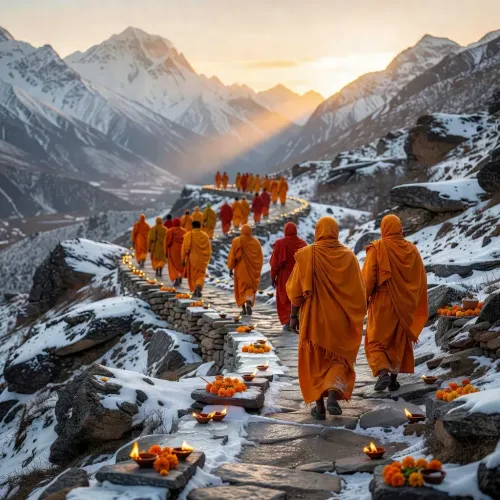
The Amarnath Yatra is one of India's most significant annual Hindu pilgrimages, drawing lakhs of devotees each summer to the sacred Amarnath Cave in Jammu and Kashmir, where a naturally formed ice lingam is revered as a manifestation of Lord Shiva.
Policy Backdrop
The pilgrimage is administered by the Shri Amarnathji Shrine Board, a statutory body that oversees logistics, pilgrim registration, and on-ground facilities in coordination with the Union Ministry of Home Affairs, which deploys security personnel along the yatra routes. This institutional framework has been in place since the early 1990s, providing a structured channel for managing the large influx of pilgrims each season.
Since the reorganisation of Jammu and Kashmir in 2019, the Amarnath Yatra has been prominently positioned by the central and state governments as a marker of restored normalcy and the revival of religious tourism in the region. The pilgrimage's uninterrupted conduct each year is viewed as a signal of improved security and administrative capacity in the Union Territory.
Stakeholders and Impact
The yatra draws hundreds of thousands of Hindu pilgrims from across India each year, making it a major driver of seasonal economic activity for local communities in Jammu and Kashmir. Traders, transporters, and hospitality providers along the two primary routes — Baltal and Pahalgam — depend significantly on the pilgrimage season.
BJP-governed states have made it a visible practice for senior leaders and chief ministers to publicly mark the commencement of major Hindu pilgrimages, reflecting a broader pattern of associating governance with religious sentiment and cultural identity. CM Sharma's message is consistent with this established practice among party leaders.
What's Next
Attention will now turn to official announcements from the Shri Amarnathji Shrine Board on this season's pilgrim registration figures, security deployment details, and any new facilities or infrastructure introduced for Yatra 2026. The smooth conduct of the pilgrimage will be closely watched as a barometer of ground conditions in Jammu and Kashmir, with the administration expected to provide regular updates on pilgrim movement and safety throughout the season.
Point of View
Reinforcing cultural identity as a pillar of governance. The Amarnath Yatra carries particular political weight because it doubles as a symbol of the party's narrative of restored peace and administrative control in Jammu and Kashmir after the 2019 reorganisation. By invoking the yatra's commencement from Rajasthan, Sharma participates in a pan-BJP signalling exercise that transcends state boundaries. The broader pattern suggests these messages serve both as genuine expressions of faith and as calibrated political communication ahead of an active electoral cycle.
NationPress
1 Oct 2026
Frequently Asked Questions
When did Amarnath Yatra 2026 start?
Amarnath Yatra 2026 commenced on 3 July 2026 , as marked by public messages from leaders including Rajasthan Chief Minister Bhajan Lal Sharma .
Who is Bhajan Lal Sharma?
Bhajan Lal Sharma is the Chief Minister of Rajasthan and a senior BJP leader, having assumed office in December 2023 .
Where is the Amarnath Cave located?
The Amarnath Cave is located in Jammu and Kashmir , high in the Himalayas, and is the site of a naturally formed ice lingam revered as a form of Lord Shiva .
Who manages the Amarnath Yatra?
The Shri Amarnathji Shrine Board is the statutory body that manages pilgrim registration, logistics and facilities for the Amarnath Yatra , in coordination with the Union Ministry of Home Affairs .
What is the significance of Amarnath Yatra for Jammu and Kashmir?
The Amarnath Yatra is considered a key indicator of normalcy and security in Jammu and Kashmir , and has been highlighted by governments as evidence of restored stability following the region's administrative reorganisation in 2019 .