CM Bhajan Lal Hails India's Best-Ever Science Olympiad Haul
Synopsis
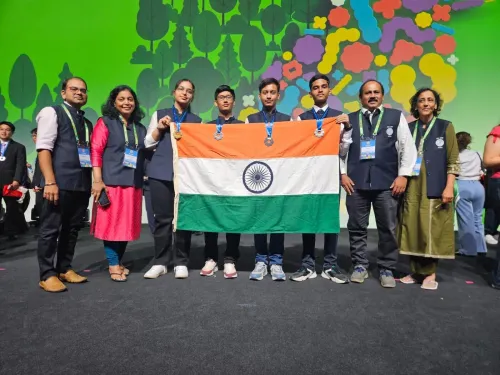
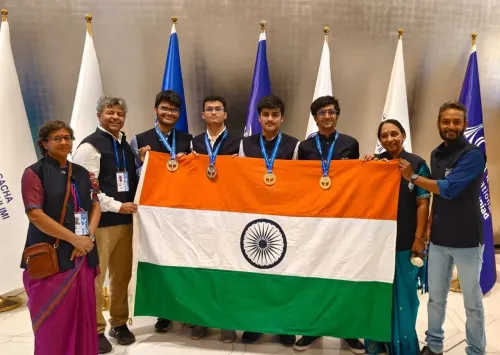
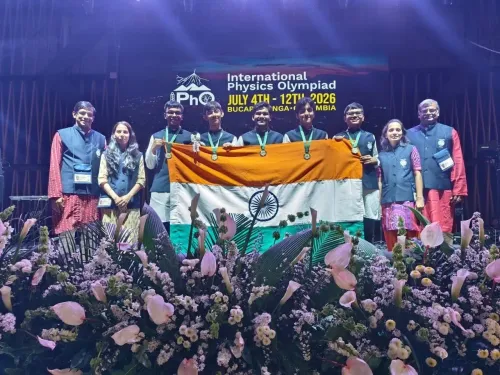
Rajasthan Chief Minister Bhajan Lal Sharma has congratulated Indian students for the country's best-ever science olympiad showing — a clean sweep of four golds at the 58th IChO and one gold plus three silvers at the 37th IBO — calling the feat an inspiration for crores of young Indians.
Key Takeaways
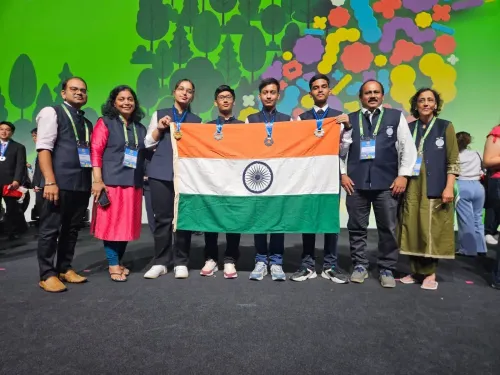
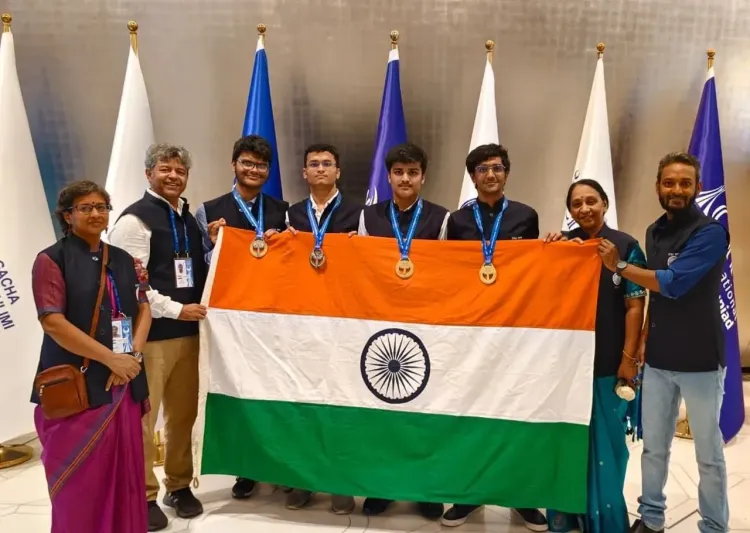
India won all 4 gold medals at the 58th International Chemistry Olympiad , its best-ever result at the event.
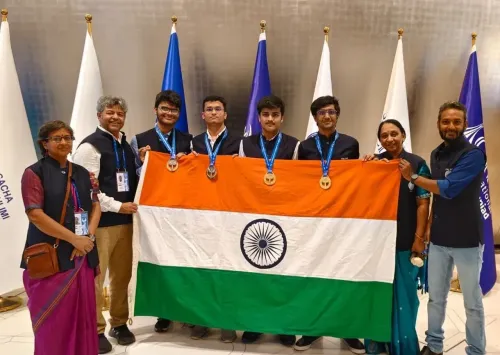
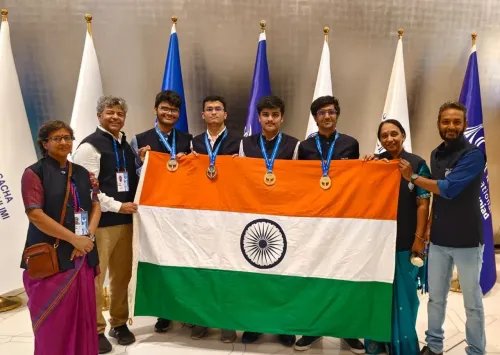
The Indian team claimed 1 gold and 3 silver medals at the 37th International Biology Olympiad .
Rajasthan Chief Minister Bhajan Lal Sharma described the combined performance as India's best-ever at international science olympiads.
The achievements align with the goals of the National Education Policy 2020 , which prioritised scientific temper and experiential learning.
India's rising olympiad medal tallies reflect over a decade of expanded specialised coaching and laboratory infrastructure investment.
Sharma called on the results to inspire crores of young Indians to pursue science and raise India's global standing.
Rajasthan Chief Minister Bhajan Lal Sharma on Sunday, 19 July 2026, congratulated Indian students for what he called the country's best-ever performance at two international science olympiads — a clean sweep of all four gold medals at the 58th International Chemistry Olympiad (IChO) and a haul of 1 gold and 3 silver medals at the 37th International Biology Olympiad (IBO).
Posting on X, Sharma wrote: '58वें अंतरराष्ट्रीय रसायन विज्ञान ओलंपियाड में सभी चार स्वर्ण पदक... भारत का अब तक का सर्वश्रेष्ठ प्रदर्शन' — ('All four gold medals at the 58th International Chemistry Olympiad... India's best performance to date'). He added that the students' 'hard work, dedication and scientific thinking have today raised the entire nation's head with pride.'
Context
The International Chemistry Olympiad is an annual global competition for secondary-school students testing advanced chemistry knowledge and experimental skills, while the International Biology Olympiad is a parallel prestigious contest at the high-school level. India has been a consistent participant in both events, with its medal tallies rising steadily over the past decade and a half.
A clean sweep of all four gold medals at the IChO represents a historic high-water mark for Indian chemistry students on the world stage. The concurrent biology result — 1 gold and 3 silver — reinforces a pattern of broad-based improvement across science disciplines.
Policy Backdrop
India's improving science-olympiad record is closely linked to expanded government investment in specialised coaching and laboratory infrastructure at both central and state levels. The National Education Policy 2020 explicitly prioritised scientific temper, critical thinking, and experiential learning in school curricula — a framework that educators and policymakers have cited as a structural enabler for such results.
Central and state governments have over the years set up dedicated olympiad training programmes, residential camps, and mentorship networks that funnel talented students toward competitive science pathways. Sharma's statement reflects a bipartisan political tendency to highlight these outcomes as evidence of progress in STEM education policy.
Stakeholders and Impact
The immediate beneficiaries are the Indian student medallists themselves, whose results are expected to open doors to premier research institutions and scholarship programmes domestically and abroad. Science educators and coaching institutions that prepared the teams also stand to gain in visibility and funding support.
More broadly, Sharma framed the achievement as inspiration for 'देश के करोड़ों युवाओं' ('crores of young people across the country') to pursue science and raise India's global standing. Such recognition from senior political figures can translate into increased state-level investment in science education infrastructure in Rajasthan and other states.
What's Next
Attention will now turn to whether the central government or state administrations announce follow-up measures — expanded olympiad training centres, enhanced scholarships, or formal felicitation ceremonies for the medal-winning students. The results are also likely to inform budget allocations for science-education programmes in upcoming state and union budgets.
India's performance at the next editions of the IChO and IBO will serve as a benchmark to gauge whether this record haul marks a sustained inflection point or a peak year, making continued investment in grassroots science talent identification a key policy priority.
Point of View
Internationally validated outcomes. India's clean sweep at the IChO in particular is a genuinely historic result that transcends partisan framing, but its amplification by senior politicians signals that STEM performance is increasingly treated as a governance metric. The broader pattern suggests that science olympiad results are becoming a soft-power and electoral asset, likely to spur competitive investment in talent pipelines across states.
NationPress
20 Jul 2026
Frequently Asked Questions
How did India perform at the 58th International Chemistry Olympiad?
India won all four gold medals at the 58th International Chemistry Olympiad, which Rajasthan Chief Minister Bhajan Lal Sharma described as the country's best-ever performance at the event.
What medals did India win at the 37th International Biology Olympiad?
India's team won 1 gold and 3 silver medals at the 37th International Biology Olympiad, contributing to what officials called the nation's best-ever combined science olympiad haul.
Who is Bhajan Lal Sharma and why did he comment on the science olympiad results?
Bhajan Lal Sharma is the Chief Minister of Rajasthan and a BJP leader. He posted congratulations on X to celebrate Indian students' record medal performance at two international science olympiads.
What is the International Chemistry Olympiad (IChO)?
The International Chemistry Olympiad is an annual global competition for secondary-school students that tests advanced chemistry knowledge and experimental skills. India has been a regular participant with improving results over the past fifteen years.
How does India's science olympiad success connect to education policy?
India's rising olympiad medal tallies are widely linked to expanded government investment in specialised coaching and the National Education Policy 2020, which prioritised scientific temper and experiential learning in school curricula.