CM Bhajan Lal Hails Rajya Sabha Nod to Exam Anti-Cheat Bill

Synopsis
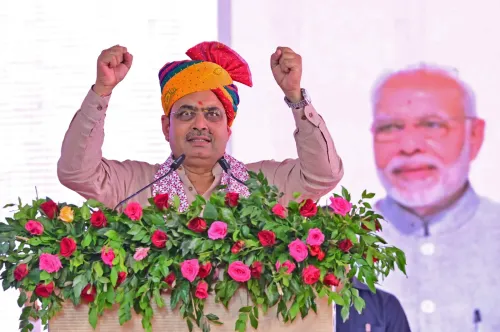
Rajasthan CM Bhajan Lal Sharma welcomed the Rajya Sabha's passage of the Public Examinations (Prevention of Unfair Means) Amendment Bill, 2026, crediting PM Modi and calling it a landmark move to eliminate paper leaks, exam mafias, and cheating from India's competitive examination system.
Key Takeaways
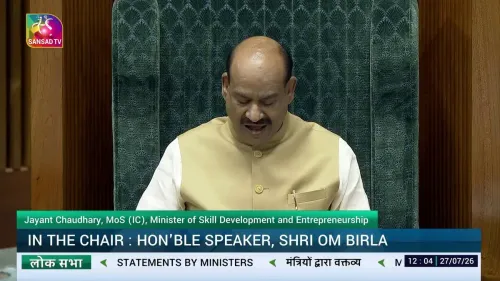
The Rajya Sabha passed the Public Examinations (Prevention of Unfair Means) Amendment Bill, 2026 on July 30, 2026 .
Rajasthan CM Bhajan Lal Sharma described the bill as a 'historic step' for crores of hardworking youth.
The bill targets exam mafias, paper leaks, and organised cheating networks through strict legal provisions.
It builds on the original Public Examinations (Prevention of Unfair Means) Act enacted in February 2024 .
CM Sharma credited PM Narendra Modi and called the legislation proof of the government's 'unwavering commitment to youth.' State-level enforcement mechanisms will be critical to the law's real-world impact.
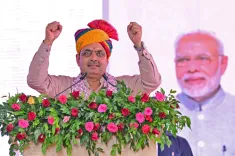
Millions of competitive exam aspirants across India woke up to a significant legislative shift on Thursday, July 30, 2026, as the Rajya Sabha passed the 'Public Examinations (Prevention of Unfair Means) Amendment Bill, 2026' — and Rajasthan Chief Minister Bhajan Lal Sharma was among the first to mark the moment, calling it a historic step toward a just future for the country's hardworking youth.
In his post, CM Sharma wrote: 'Sansad dwara... ek aitihasik kadam hai' — 'The passage of this bill by Parliament is a historic step in the direction of a bright future for crores of hardworking young people of the country.' He extended warm gratitude and felicitations to Prime Minister Narendra Modi, crediting his government's resolve for pushing the amendment through the upper house.
What the Amendment Targets: Exam Mafias and Paper Leaks
Sharma was unambiguous about the bill's core purpose. In his words, it will prove to be 'a milestone in rooting out anti-social tendencies like exam mafias, paper leaks, and copying.' These are not abstract threats — recurring scandals around national-level recruitment tests have repeatedly derailed the careers of lakhs of aspirants who spent years preparing, only to see results cancelled or tainted by organised cheating networks. The legislative foundation for this effort was laid in February 2024, when Parliament enacted the original Public Examinations (Prevention of Unfair Means) Act, introducing stringent penalties for malpractice in national recruitment and competitive exams. The 2026 Amendment Bill builds on that framework, tightening provisions and, according to Sharma, ensuring 'strict legal arrangements' to guarantee purity and impartiality in competitive examinations.A Governance Promise to India's Exam-Taking Generation
For a country where a single government job examination can draw tens of millions of applicants, the integrity of the testing system is not a procedural footnote — it is a question of social equity. Sharma framed the bill in exactly those terms, describing it as 'proof of our unwavering commitment to the youth,' one that will ensure their 'dedication and hard work receive their rightful reward.' He also pointed to a psychological dimension: restoring confidence. A transparent, fear-free examination system, he argued, will 'further strengthen the trust of youth' — a direct acknowledgment that repeated paper leak controversies have done measurable damage to that trust. As a BJP Chief Minister whose state of Rajasthan has itself witnessed high-stakes exam controversies in recent years, Sharma's endorsement carries both political weight and on-the-ground relevance. State governments will now be watched closely for how swiftly and rigorously they implement the central law's provisions at the ground level — because legislation, however stern on paper, is only as strong as the enforcement machinery built around it.Point of View
Signalling that the 2024 Act alone was deemed insufficient against entrenched cheating networks. For the BJP, championing the bill serves a dual purpose: it addresses a genuine governance failure that has triggered street protests from exam aspirants, while also positioning the party as the defender of meritocracy ahead of state election cycles. Rajasthan CM Sharma's vocal endorsement is strategically notable — his state has been a flashpoint for recruitment exam controversies, and aligning with the central legislation helps him project reform credentials locally. The real test, however, lies not in Parliament but in whether state police, exam bodies, and courts can operationalise the law's strict provisions against well-resourced cheating syndicates.
NationPress
31 Jul 2026
Frequently Asked Questions
What is the Public Examinations Amendment Bill 2026?
The Public Examinations (Prevention of Unfair Means) Amendment Bill, 2026 is a central legislation passed by the Rajya Sabha on July 30, 2026, that strengthens legal provisions to prevent paper leaks, exam mafias, and cheating in competitive and recruitment examinations across India.
Why did Bhajan Lal Sharma welcome the exam bill?
Rajasthan CM Bhajan Lal Sharma welcomed the bill as a historic step for India's youth, saying it will root out exam mafias and paper leaks, ensure fair results, and restore aspirants' trust in the examination system.
What was the original Public Examinations Act and when was it passed?
The original Public Examinations (Prevention of Unfair Means) Act was enacted by Parliament in February 2024 to introduce strict penalties for malpractice in national competitive and recruitment exams. The 2026 bill amends and strengthens that law.
How does the new exam bill affect competitive exam aspirants in India?
The bill aims to protect the interests of crores of aspirants by deterring organised cheating networks through harsher legal penalties, thereby ensuring that results reflect genuine merit and hard work.
What happens after the Rajya Sabha passes the exam bill?
After Rajya Sabha passage, the bill moves toward presidential assent before becoming law. State governments and exam-conducting bodies will then need to establish enforcement mechanisms to implement its provisions on the ground.