CM Bhajan Lal Inaugurates Rajasthan Refinery Stalled Since 2018
Synopsis
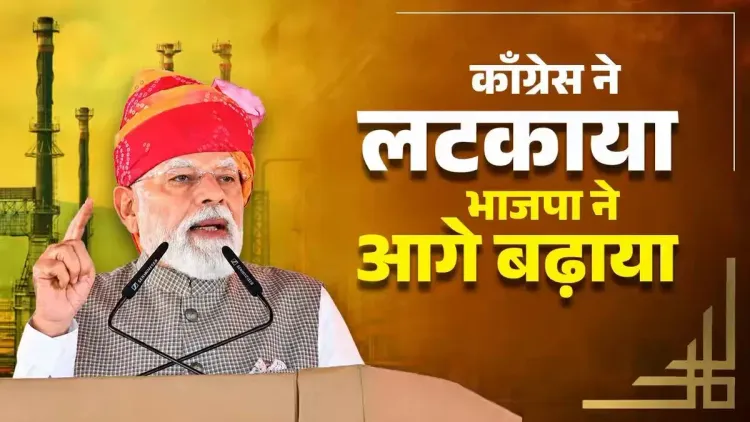
Rajasthan CM Bhajan Lal Sharma shared PM Modi's remarks at the inauguration of a refinery project on 4 July 2026, noting the MoU was signed in 2017 but work stalled during Congress rule from 2018 to 2023, before being revived under the current BJP double-engine government.
Key Takeaways
The MoU for the Rajasthan refinery was signed in 2017 during the BJP government of Vasundhara Raje .
PM Modi stated that Congress's non-cooperation caused work to stall for the entire period of 2018 to 2023 .
The project was formally inaugurated on 4 July 2026 under the BJP's 'double engine' government.
CM Bhajan Lal Sharma has been in office since December 2023 , making this one of his government's first major infrastructure completions.
Modi invoked his governance style — 'whoever lays the foundation stone, we also dedicate it to the public' — to underline project completion as a BJP hallmark.
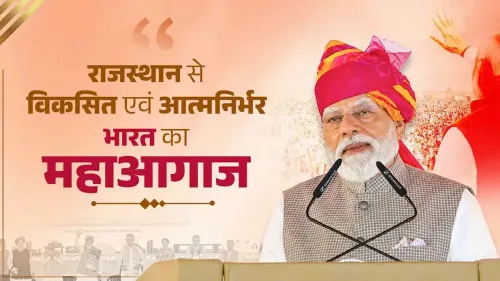
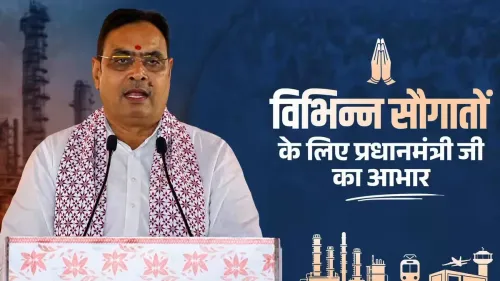
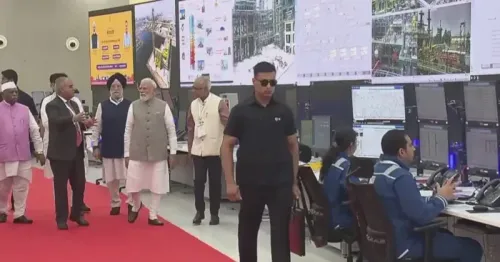
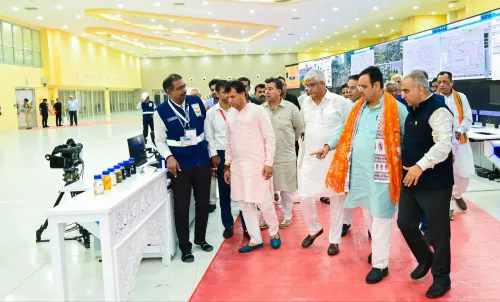
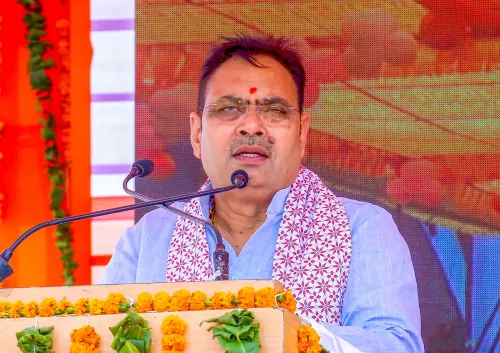
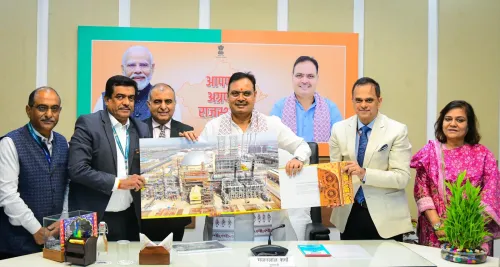
Rajasthan Chief Minister Bhajan Lal Sharma on Saturday, 4 July 2026, participated in the inauguration of a refinery project in Rajasthan, quoting Prime Minister Narendra Modi to underscore how the project — whose MoU was signed in 2017 — was revived after years of stagnation under the previous state government.
Context
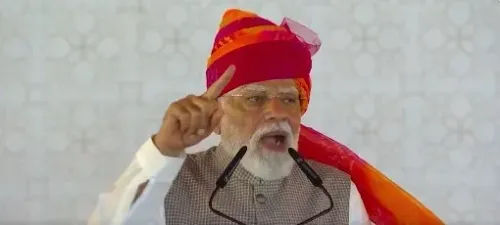
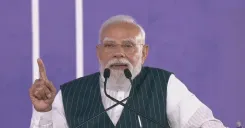
The post shared by CM Sharma carries a direct quote attributed to Prime Minister Narendra Modi, who stated: 'हमने 2017 में रिफाइनरी के लिए MoU साइन किया था' ['We signed the MoU for the refinery in 2017']. Modi noted that from 2018 to 2023, when the Congress government held power in Rajasthan, work on the project 'came to a near-standstill' due to what he described as Congress's non-cooperation. The inauguration, Modi said, was now being conducted on the same day as the 'lokokarpan' — the formal public dedication of the facility.
The MoU for the refinery was originally signed in 2017 during the BJP government led by Vasundhara Raje. The project thus spans nearly a decade from conception to inauguration, crossing two changes of government at the state level.
Policy Backdrop
The Indian National Congress governed Rajasthan from 2018 to 2023 under Chief Minister Ashok Gehlot. The BJP returned to power in December 2023 with Bhajan Lal Sharma as Chief Minister. The refinery project now becomes one of the early flagship infrastructure completions of the current BJP state government.
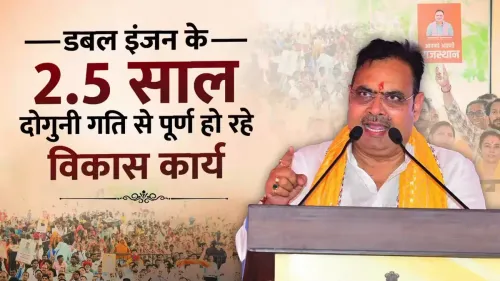
The phrase 'double engine sarkar' — 'double engine government' — is a recurring BJP formulation that describes the advantage of having the same party in power both at the Centre and in a state. Modi's quoted remarks invoke this framing directly, crediting aligned governance at both levels for accelerating the project after the Congress interregnum.
Stakeholders and Impact
Energy sector workers and communities near the refinery site stand to be the most immediate beneficiaries of the project becoming operational. Rajasthan, a state with significant crude oil reserves in its western districts, has long sought downstream refining capacity to add value to its hydrocarbon output and reduce dependence on refineries in other states.
The inauguration also carries political weight ahead of future electoral cycles, allowing the BJP to present a completed infrastructure project as evidence of governance delivery — a contrast it is drawing explicitly with the Congress period of 2018–2023.
What's Next
With the refinery now dedicated to public use, attention will turn to its ramp-up to full operational capacity and the downstream economic activity it is expected to generate in the region. Further state-level energy infrastructure announcements are likely as the BJP government in Rajasthan builds its development record ahead of the next assembly election cycle. Central government updates on broader oil infrastructure investment in Rajasthan will also be closely watched by the energy sector.
Point of View
The BJP frames the 2018–2023 Congress tenure as a governance deficit rather than a policy disagreement. CM Sharma's amplification of PM Modi's words signals a deliberate effort to tie state-level development wins to central leadership, reinforcing the party's unified brand ahead of future elections. The broader pattern — completing projects initiated in earlier BJP tenures after a Congress interregnum — is becoming a consistent electoral asset across multiple BJP-governed states.
NationPress
4 Jul 2026
Frequently Asked Questions
When was the MoU for the Rajasthan refinery signed?
The MoU for the Rajasthan refinery was signed in 2017 during the BJP state government led by Vasundhara Raje .
Why was the Rajasthan refinery project delayed?
PM Modi , as quoted by CM Sharma, attributed the delay to the non-cooperation of the Congress government that ruled Rajasthan from 2018 to 2023 , during which work on the project 'came to a near-standstill'.
Who inaugurated the Rajasthan refinery in 2026?
The refinery was inaugurated on 4 July 2026 with Prime Minister Narendra Modi present, as shared by Rajasthan Chief Minister Bhajan Lal Sharma on X.
What is the 'double engine government' BJP talks about in Rajasthan?
'Double engine government' refers to the BJP's framing that having the same party in power at both the Centre and the state level accelerates development projects, as opposed to periods when different parties control the two levels of government.
What is Bhajan Lal Sharma's role in Rajasthan?
Bhajan Lal Sharma is the Chief Minister of Rajasthan , in office since December 2023 , after the BJP won the state assembly election that year.