CM Bhajan Lal Launches Rajasthan Industrial Policy 2026 and RAMP Portal
Synopsis
Rajasthan CM Bhajan Lal Sharma launched the Rajasthan Industrial Development Policy-2026, a RAMP portal and an ODOP coffee table book on 27 June 2026, signalling a coordinated push to strengthen the state's MSME sector, attract investment and create new employment under the 'Viksit Rajasthan' agenda.
Key Takeaways
Rajasthan Industrial Development Policy-2026 was unveiled by CM Bhajan Lal Sharma on 27 June 2026 .
A dedicated RAMP portal was launched to channel the central World Bank-assisted RAMP scheme's benefits to Rajasthan's MSME entrepreneurs.
A One District One Product coffee table book was released to promote district-specific products for value addition and exports.
The policy targets entrepreneurship promotion, investment attraction and new job creation under the 'Viksit Rajasthan' vision.
Rajasthan's MSME base spans key sectors including textiles, gems and jewellery, and auto components.
District-level ODOP implementation and RAMP portal rollout timelines will be critical markers for the policy's success in 2026-27 .
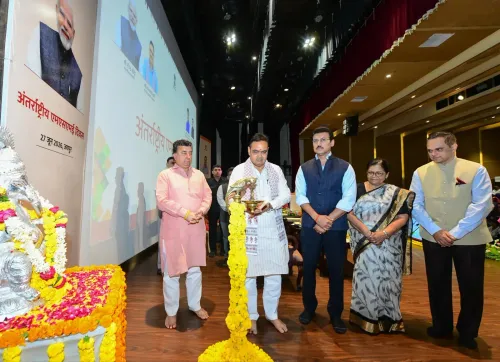
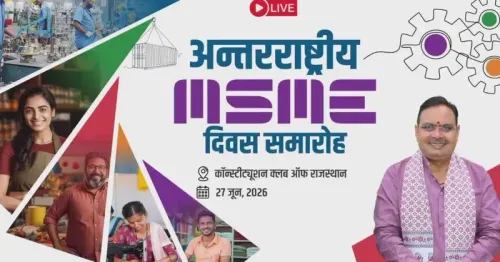
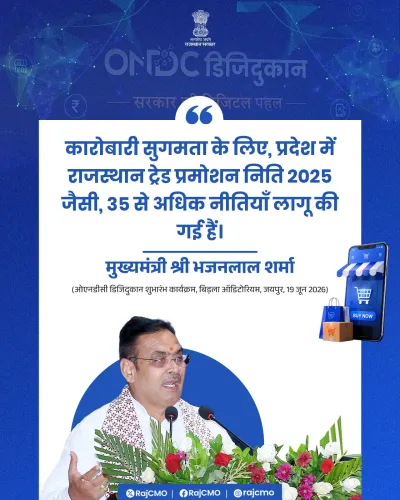
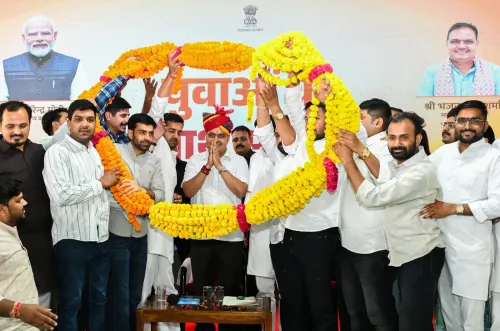
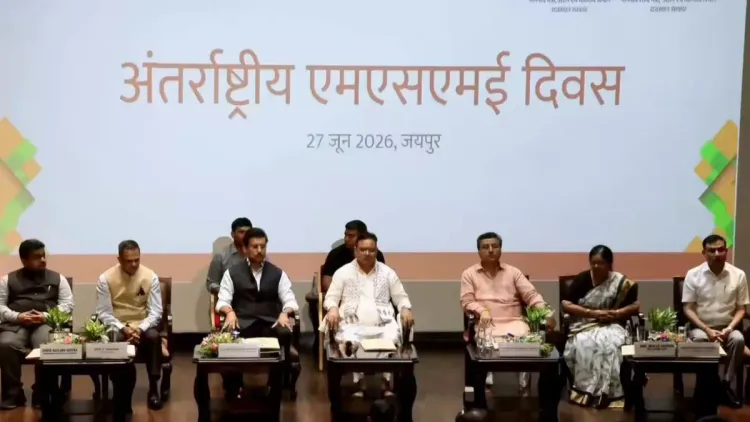
Rajasthan Chief Minister Bhajan Lal Sharma on Saturday, 27 June 2026 unveiled the Rajasthan Industrial Development Policy-2026, launched the RAMP portal, and released a One District One Product coffee table book — a package of measures aimed at accelerating the state's MSME sector and generating new employment opportunities.
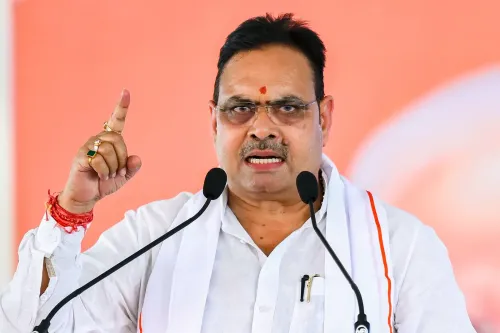
Posting on X, CM Sharma said the initiatives were designed 'MSME क्षेत्र को नई गति और नई शक्ति प्रदान करने के उद्देश्य से' [to give new momentum and new strength to the MSME sector], reaffirming his government's commitment to entrepreneurship, investment and job creation in pursuit of a 'Viksit Rajasthan' [Developed Rajasthan].
Context
Rajasthan has a substantial MSME base spanning textiles, gems and jewellery, and auto components — sectors that collectively employ millions of workers across the state. The new industrial policy replaces earlier frameworks and is intended to formalise and scale MSME operations ahead of the 2026-27 fiscal year. The simultaneous launch of multiple instruments signals a coordinated push rather than a standalone policy revision.
Policy Backdrop
The RAMP (Raising and Accelerating MSME Performance) scheme is a central government programme, assisted by the World Bank and approved in 2022, designed to improve MSME competitiveness, market access and credit linkages in participating states. By launching a dedicated RAMP portal, Rajasthan is creating a state-level digital interface to channel the scheme's benefits to local enterprises. The One District One Product (ODOP) initiative, formally adopted at the national level in 2020 under the Ministry of Commerce, identifies and promotes a distinctive product from each district for value addition and export potential; the coffee table book unveiled today documents Rajasthan's district-wise ODOP products, giving them a promotional platform.
The Rajasthan Industrial Development Policy-2026 follows a pattern of periodic industrial policy refreshes seen across Indian states since 2020, which seek to align state-level clusters with central schemes covering credit, technology upgradation and market linkages. CM Sharma, who assumed office in December 2023, has framed industrial and MSME growth as a central pillar of his administration's 'Viksit Rajasthan' agenda.
Stakeholders and Impact
MSME entrepreneurs across Rajasthan's 50 districts are the primary beneficiaries, with the RAMP portal expected to ease access to government schemes, credit facilities and market linkages. Investors looking at Rajasthan as a manufacturing destination may find the updated policy framework a clearer signal of the state's industrial intent. The ODOP coffee table book also targets export promotion by showcasing district-specific products to domestic and international buyers.
Workers in the textiles, handicrafts and gems sectors — which account for a large share of Rajasthan's MSME employment — stand to gain if the policy translates into improved access to formal credit and technology. District-level implementation bodies and industry associations will be key to determining how quickly the policy's provisions reach ground-level enterprises.
What's Next
Attention will now shift to rollout timelines, budget allocations and the district-level execution of ODOP mandates under the new policy during 2026-27. The effectiveness of the RAMP portal as a single-window interface will depend on how swiftly state departments integrate their services onto the platform. CM Sharma's government will face scrutiny on whether the policy refresh translates into measurable growth in MSME registrations, investment inflows and formal employment in the months ahead.
Point of View
A digital RAMP portal, and an ODOP promotional book — suggests the Sharma government is pursuing a convergence strategy, aligning state industrial ambitions with central schemes to maximise funding and visibility ahead of what is likely a politically significant budget cycle. The 'Viksit Rajasthan' framing mirrors the national 'Viksit Bharat' narrative, indicating a deliberate effort to position Rajasthan as a model BJP-governed state on economic development. However, the real test will lie in implementation: previous state industrial policy relaunches across India have often struggled to move beyond announcements to measurable on-ground change. Investor and MSME community responses in the coming quarters will determine whether this package is a substantive policy shift or a high-profile rebranding of existing programmes.
NationPress
27 Jun 2026
Frequently Asked Questions
What is the Rajasthan Industrial Development Policy 2026?
The Rajasthan Industrial Development Policy-2026 is a new industrial framework launched by Chief Minister Bhajan Lal Sharma on 27 June 2026 to boost the state's MSME sector, attract investment and create employment opportunities under the 'Viksit Rajasthan' vision.
What is the RAMP portal launched in Rajasthan?
The RAMP portal is a state-level digital platform launched by the Rajasthan government to channel benefits of the central Raising and Accelerating MSME Performance (RAMP) scheme — a World Bank-assisted programme approved in 2022 — to local MSME entrepreneurs.
What is One District One Product and how does it relate to Rajasthan?
One District One Product (ODOP) is a national initiative formally adopted in 2020 to identify and promote a distinctive product from each district for value addition and exports. Rajasthan released an ODOP coffee table book on 27 June 2026 to showcase its district-wise products to domestic and international buyers.
Who is Bhajan Lal Sharma and when did he become Rajasthan CM?
Bhajan Lal Sharma is the Chief Minister of Rajasthan and a BJP leader who assumed office in December 2023 following the party's victory in the state assembly elections.
How will the new Rajasthan MSME policy benefit entrepreneurs?
The policy package aims to improve access to formal credit, technology upgradation and market linkages for MSME entrepreneurs across Rajasthan's districts, with the RAMP portal serving as a single-window interface and the ODOP initiative promoting district-specific products for export.