CM Bhajan Lal Launches Yuva Suyog Programme in Rajasthan
Synopsis
Rajasthan Chief Minister Bhajan Lal Sharma launched the Mukhyamantri Yuva Suyog Programme on 21 July 2026, piloting a holistic youth development scheme in Baran district and Bagru constituency, with assembly-level Yuva Clubs planned to link grassroots youth groups across skills, sports, digital literacy and women empowerment.
Key Takeaways
Rajasthan CM Bhajan Lal Sharma launched the Mukhyamantri Yuva Suyog Programme on 21 July 2026 , focused on holistic youth development.
The programme's four pillars are skill development, sports, digital literacy and women empowerment .
The pilot is being implemented in Baran district (southeastern Rajasthan) and Bagru assembly constituency (Jaipur district).
Direct career guidance and skill development support will be provided to youth in the pilot areas under the employment and livelihoods component. 'Kendriya Suyog Yuva Clubs' will be formed at the assembly constituency level to link panchayat and ward-level youth groups.
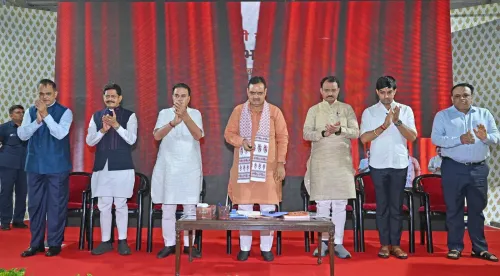
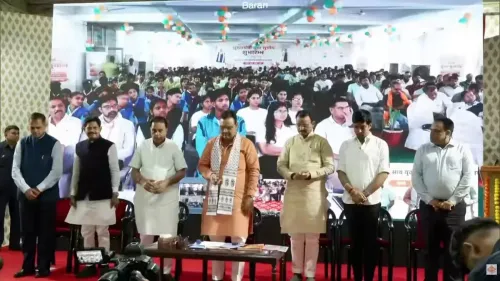
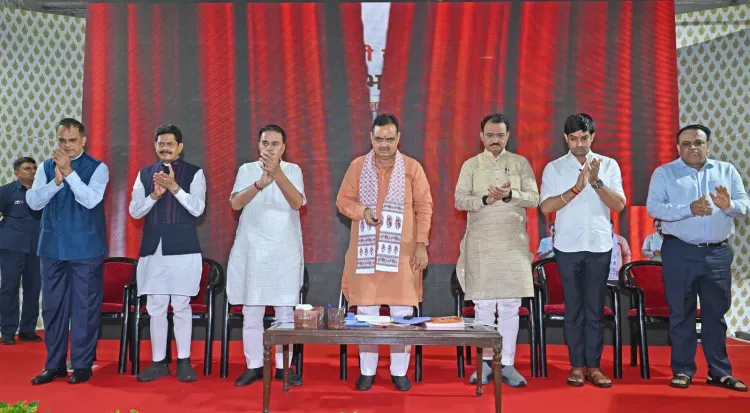
Deputy Chief Minister Dr Prem Bairwa and other elected representatives attended the launch event.
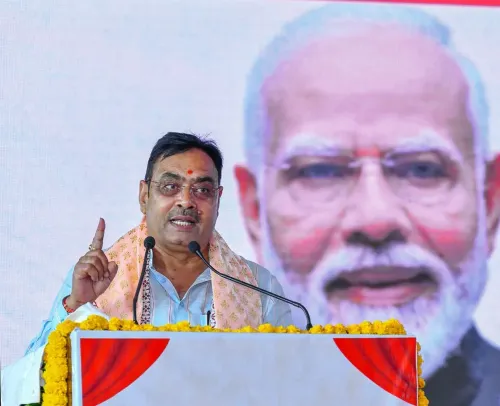
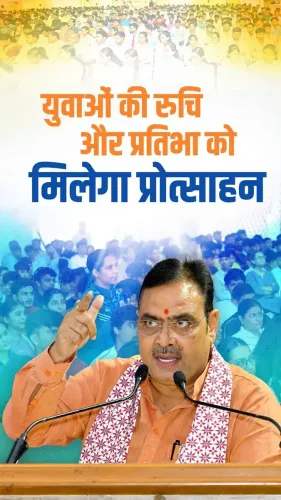
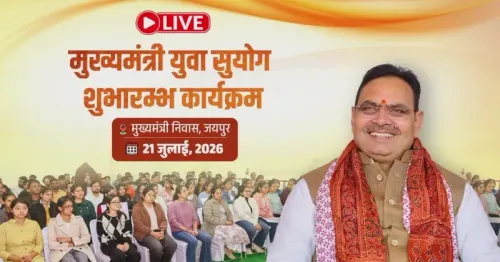
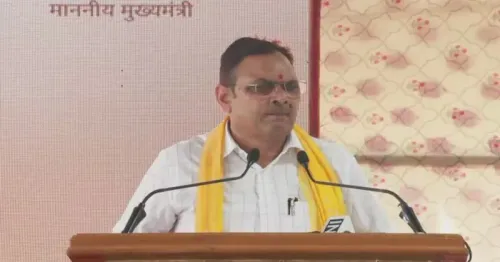
Rajasthan Chief Minister Bhajan Lal Sharma on Tuesday, 21 July 2026 launched the Mukhyamantri Yuva Suyog Programme, a state initiative aimed at the holistic development of youth through skills training, sports, digital literacy and women empowerment. The Chief Minister also held a direct dialogue with young participants at the launch event, where Deputy Chief Minister Dr Prem Bairwa and other elected representatives were present.
Context
Posting on X, CM Sharma described the programme's core aim: 'yuvaon ka sarvangeen vikas' ('the all-round development of youth'), making them self-reliant through platforms spanning sport, art and leadership. He noted that the youth of Rajasthan are already 'making their mark in every field,' framing the scheme as institutional support for talent that already exists in the state.
As a pilot, the programme is being rolled out in Baran district in southeastern Rajasthan and the Bagru assembly constituency in Jaipur district. These two geographically distinct locations — one a rural district, the other a peri-urban assembly segment — appear chosen to test the model across different socio-economic contexts before any statewide expansion.
Policy Backdrop
Rajasthan has a pre-existing institutional framework for skill development through the Rajasthan Skill and Livelihoods Development Corporation (RSLDC), established in 2009, which coordinates district-level training and employment linkages. The National Skill India Mission, launched in 2015, further expanded the infrastructure of career guidance centres at the district level, providing a foundation on which state-specific programmes like Yuva Suyog can be layered.
Under the new programme, direct support in skill development and career guidance will be provided to youth in the employment and livelihoods domain. A key structural feature is the proposed formation of 'Kendriya Suyog Yuva Clubs' at the assembly constituency level, designed to bridge panchayat and ward-level youth groups into a single coordinated network — an approach that mirrors grassroots institutional models seen in other BJP-governed states.
Stakeholders and Impact
The programme's primary beneficiaries are rural and semi-urban youth in the pilot areas, with a stated emphasis on women's empowerment as one of the four pillars alongside skills, sports and digital literacy. The inclusion of women empowerment as a core component signals an intent to address gender gaps in workforce participation and digital access that remain pronounced in Rajasthan's rural districts.
Elected representatives at the panchayat and ward level are also direct stakeholders, as the proposed Yuva Clubs are intended to create formal linkages upward to the assembly constituency level, potentially giving local leaders a structured role in youth programme delivery. Deputy Chief Minister Dr Prem Bairwa, whose presence at the launch underscored the political weight given to the initiative, has been associated with outreach to communities in eastern Rajasthan, a region that includes Baran district.
What's Next
The immediate focus will be on operationalising the pilot in Baran and Bagru, with the formation of Kendriya Suyog Yuva Clubs at the assembly level serving as the first measurable milestone. Evaluation of the pilot's outcomes — particularly in skill certification rates, career placement and women's participation — will likely inform any cabinet-level decision on budget allocation and statewide scaling.
State governments across India have increasingly used targeted, district-level youth pilots as proof-of-concept before committing to full-scale rollout, and Rajasthan's model follows that pattern. Whether the Yuva Suyog Programme achieves statewide reach will depend on the institutional capacity built at the assembly club level and the programme's ability to converge with centrally-funded skill and employment schemes.
Point of View
The proposed Yuva Clubs — to extend welfare delivery to the grassroots while simultaneously building political touchpoints with young voters. The choice of a geographically mixed pilot (a rural district and a peri-urban constituency) suggests the government is stress-testing the model across different implementation contexts before committing state resources to a full rollout. By foregrounding women's empowerment alongside skills and digital literacy, the scheme also aligns with the BJP's national messaging on 'Nari Shakti,' lending it a dual policy-and-optics function. The programme's real test will be whether the Kendriya Suyog Yuva Clubs achieve genuine operational depth or remain largely ceremonial structures.
NationPress
22 Jul 2026
Frequently Asked Questions
What is the Mukhyamantri Yuva Suyog Programme in Rajasthan?
The Mukhyamantri Yuva Suyog Programme is a Rajasthan state government initiative launched by Chief Minister Bhajan Lal Sharma to promote the all-round development of youth through skill training, sports, digital literacy and women empowerment, initially as a pilot in Baran district and Bagru assembly constituency.
Where is the Yuva Suyog Programme being piloted first?
The programme is being piloted in two locations: Baran district in southeastern Rajasthan and Bagru assembly constituency in Jaipur district, chosen to test the model across rural and peri-urban settings.
What is a Kendriya Suyog Yuva Club?
A Kendriya Suyog Yuva Club is an assembly-constituency-level youth body proposed under the Mukhyamantri Yuva Suyog Programme to coordinate and link youth groups operating at the panchayat and ward levels.
Who attended the Mukhyamantri Yuva Suyog Programme launch?
Deputy Chief Minister Dr Prem Bairwa and other elected representatives joined Chief Minister Bhajan Lal Sharma at the launch event, where the CM also held a direct dialogue with youth participants.
How does the Yuva Suyog Programme relate to existing skill development schemes?
The programme builds on existing infrastructure such as the Rajasthan Skill and Livelihoods Development Corporation (RSLDC) and the national Skill India Mission framework, adding an assembly-level institutional layer and broadening the scope to include sports, digital literacy and women empowerment.