CM Bhajan Lal Pays Tribute to Tulsidas on Jayanti
Synopsis
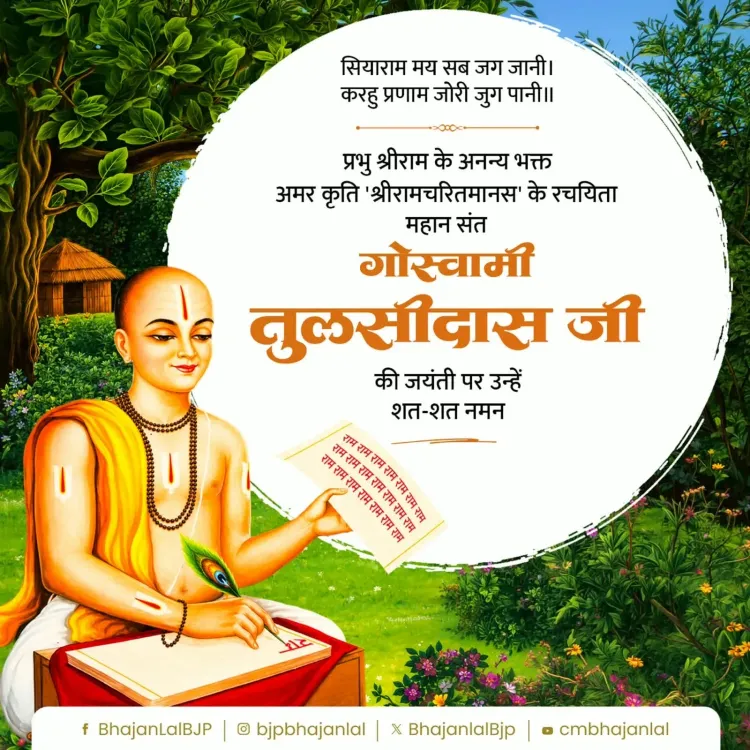
Rajasthan Chief Minister Bhajan Lal Sharma marked Tulsidas Jayanti on 19 August 2026 with a tribute to the 16th-century saint-poet, calling the Ramcharitmanas an enduring heritage of Indian faith and culture and invoking its message of truth, duty, and righteousness.
Key Takeaways
Rajasthan CM Bhajan Lal Sharma paid tribute to Goswami Tulsidas on his Jayanti, 19 August 2026 .
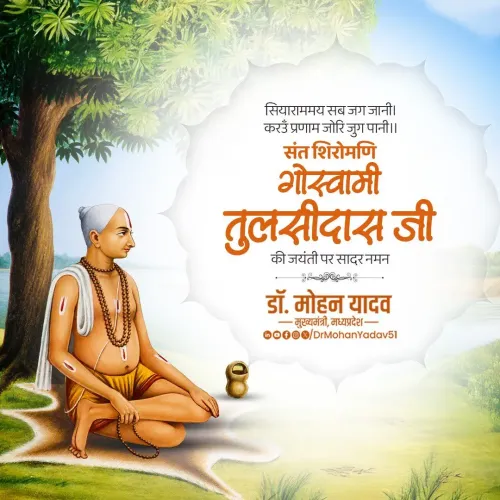
He opened with the couplet 'Siyaram may sab jag jaani' , a verse central to Ram devotion in India.
The CM called the Shri Ramcharitmanas an 'incomparable heritage of Indian culture, faith, and life values' .
He highlighted Tulsidas's message of Ram's ideals, maryada, dharma, and lokmangal as eternally relevant.
Tulsidas composed the Manas in Awadhi , making the Ramayana tradition accessible to ordinary people across northern India.
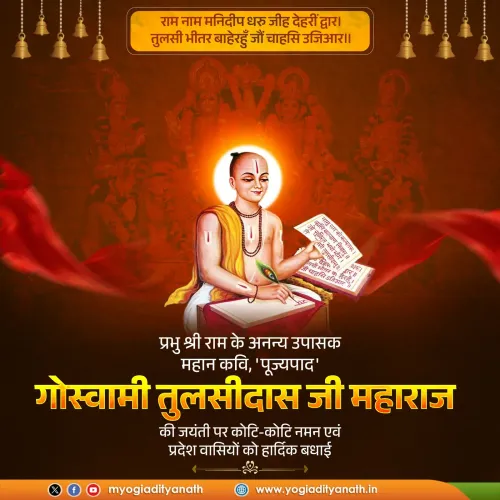
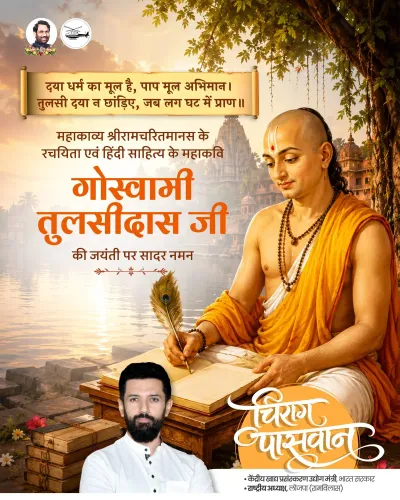
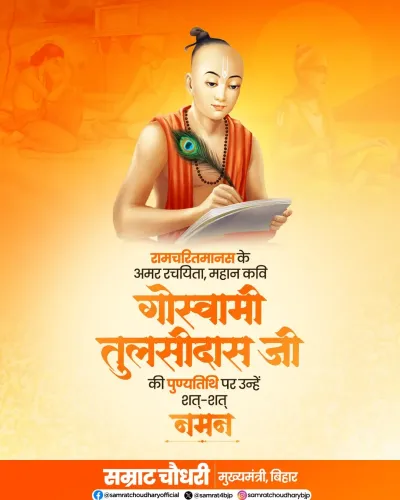
On the birth anniversary of one of India's most revered poet-saints, Rajasthan Chief Minister Bhajan Lal Sharma offered homage to Goswami Tulsidas on Wednesday, 19 August 2026, honouring the creator of the Shri Ramcharitmanas — a work that has shaped the spiritual and cultural life of the subcontinent for centuries.
Opening with the immortal couplet 'Siyaram may sab jag jaani, karahu pranaam jori jug paani' — 'Seeing all the world as suffused with Sita and Ram, I bow with both hands joined' — CM Sharma's tribute captured the devotional register that Tulsidas himself pioneered. The Chief Minister described Tulsidas as an unparalleled devotee of Lord Shri Ram, a great saint, and a poet whose legacy is eternal.
The Ramcharitmanas and Its Place in Indian Culture
The Shri Ramcharitmanas, composed in the 16th century in Awadhi — a dialect accessible to common people rather than the scholarly Sanskrit elite — democratised the Ramayana tradition across northern India. CM Sharma called it an 'incomparable heritage of Indian culture, faith, and life values', a description that resonates across millions of households where the text is recited daily, sung in temples, and performed in the Ramleela tradition every year. Tulsidas is believed to have composed the Manas beginning in Ayodhya, completing much of it in Varanasi (Kashi) — cities that remain the twin poles of Ram devotion in India. His other celebrated works, including the Hanuman Chalisa, continue to be among the most recited devotional texts in the country.The Ideals Tulsidas Enshrined
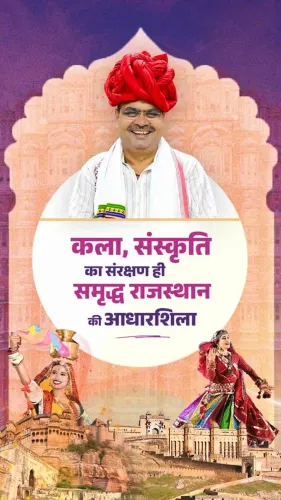
CM Sharma emphasised that Tulsidas's divine message — centred on Lord Ram's ideals, dignity (maryada), dharma, and public welfare (lokmangal) — will continue to inspire humanity toward truth, duty, and righteous conduct across ages. The phrase 'yugo-yugo tak' (for ages upon ages) in his tribute underlines the timeless relevance the Chief Minister ascribes to the poet's vision. For a state like Rajasthan, where Ram devotion runs deep in folk culture and where the Ramcharitmanas is woven into the fabric of community life, the tribute carries both cultural and political resonance — a reminder that the BJP's civilisational discourse draws heavily from this tradition of bhakti poetry and its egalitarian spiritual message. Four and a half centuries after Tulsidas set down his pen, his words still open morning prayers and close evening ones — and on his Jayanti, India's political leaders pause to acknowledge a poet who gave an entire civilisation its most beloved language for faith.Point of View
Composed in a vernacular dialect to reach the masses, offers the party a civilisational narrative that transcends caste and region. For a Chief Minister governing Rajasthan, where Ram devotion is embedded in folk culture, such tributes reinforce both cultural continuity and electoral messaging. The emphasis on 'lokmangal' — public welfare — also allows the party to frame classical devotional values as consonant with modern governance ideals.
NationPress
19 Aug 2026
Frequently Asked Questions
When is Tulsidas Jayanti celebrated?
Tulsidas Jayanti is observed on the Saptami tithi of the Shukla Paksha in the month of Shravan according to the Hindu calendar, which fell on 19 August 2026 this year.
Who was Goswami Tulsidas?
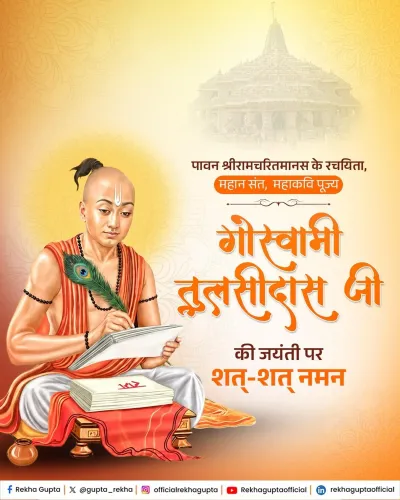
Goswami Tulsidas was a 16th-century Hindu saint-poet and devotee of Lord Ram, best known for composing the Shri Ramcharitmanas in Awadhi — a vernacular retelling of the Ramayana that became one of the most widely read and recited texts in India.
What is the Shri Ramcharitmanas?
The Shri Ramcharitmanas is an epic devotional poem composed by Tulsidas, narrating the life of Lord Ram. Written in Awadhi rather than Sanskrit, it made the Ramayana accessible to ordinary people and remains central to North Indian religious and cultural life.
What did Rajasthan CM Bhajan Lal Sharma say about Tulsidas?
CM Bhajan Lal Sharma called Tulsidas an unparalleled devotee of Lord Ram, a great saint, and a poet whose work — the Ramcharitmanas — is an incomparable heritage of Indian culture, faith, and life values, and whose message will inspire humanity for ages.
What is the significance of the verse CM Sharma quoted?
The couplet 'Siyaram may sab jag jaani, karahu pranaam jori jug paani' is from Tulsidas's own writings and means 'Seeing all the world as suffused with Sita and Ram, I bow with both hands joined' — it expresses the universalist devotional vision at the heart of Tulsidas's philosophy.