CM Bhajan Lal Pushes to Fix Rajasthan's Unpatchable Roads
Synopsis
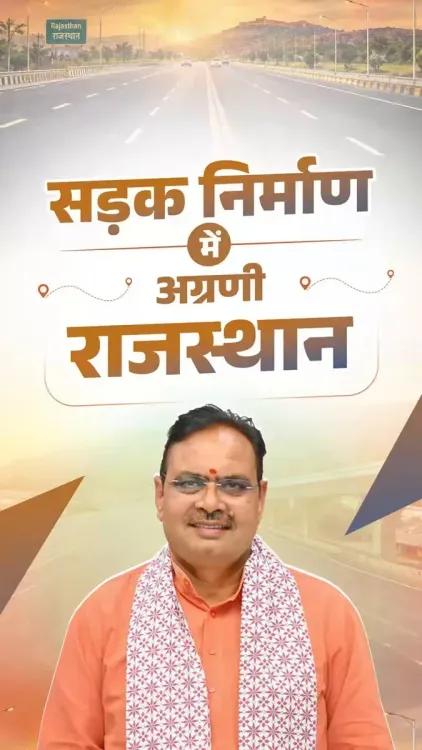
Rajasthan Chief Minister Bhajan Lal Sharma on 6 October 2026 announced a targeted state programme to reconstruct severely degraded 'non-patchable' roads and fill 'missing link' gaps, aiming to make travel safer and extend development to every part of India's largest state.
Key Takeaways
CM Bhajan Lal Sharma announced on 6 October 2026 that Rajasthan is accelerating its road-strengthening drive.
The initiative specifically targets two problem categories: non-patchable roads (too degraded for routine patching) and missing link roads (absent connectors between existing stretches).
The CM framed improved roads as an economic tool to connect villages, markets, and cities at a 'new pace of development.' Safety is an explicit goal — the programme aims to make travel both safer ( surakshit ) and more convenient across the state.
The drive is designed to reach underserved areas, with the CM emphasising connectivity for 'every corner' of Rajasthan .
The initiative complements central schemes such as Pradhan Mantri Gram Sadak Yojana (PMGSY) by covering roads outside their eligibility criteria.
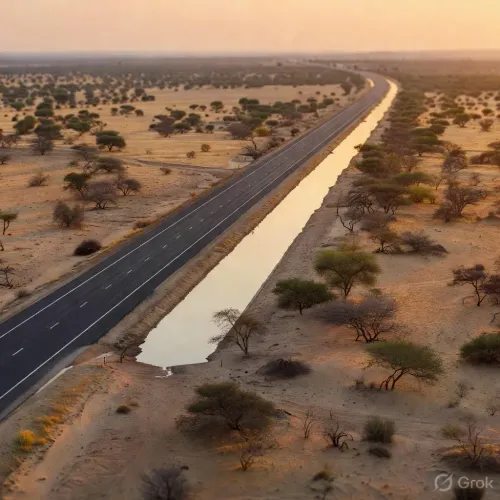
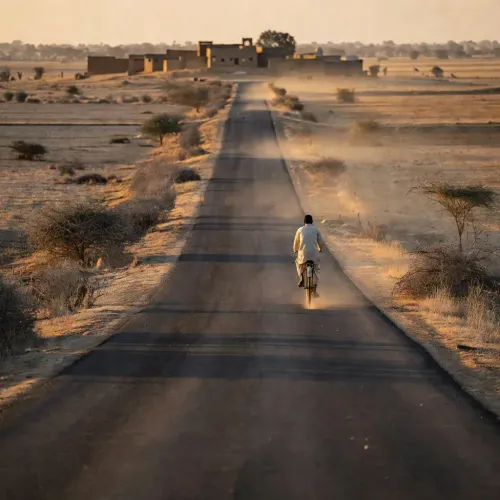
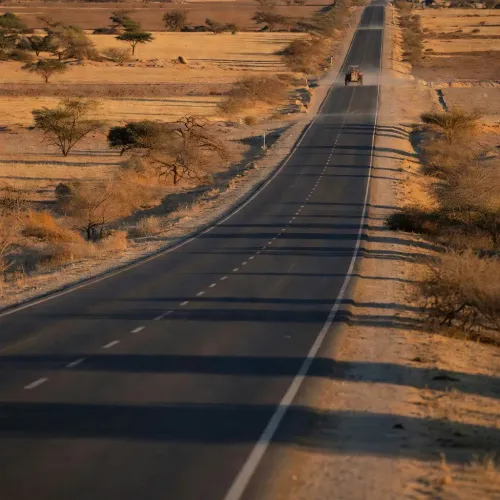
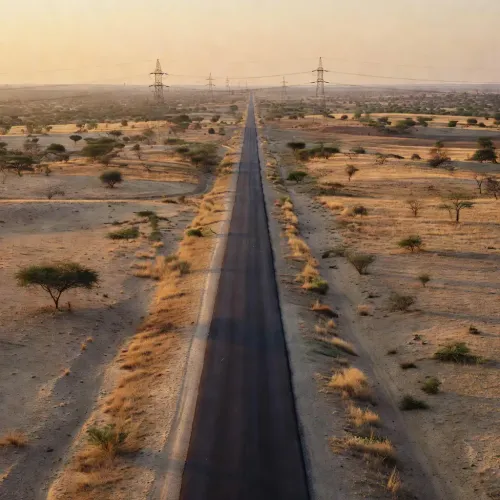
Roads that cannot be patched and routes that simply do not exist yet — these are the two quiet obstacles strangling connectivity across Rajasthan's villages and market towns. On Tuesday, 6 October 2026, Rajasthan Chief Minister Bhajan Lal Sharma announced that the state government is moving decisively to tackle both, framing the push as more than a public-works exercise — it is, in his words, a strategy to carry the momentum of development to every corner of the state.
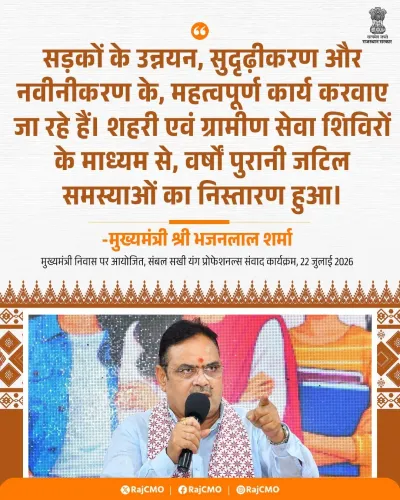
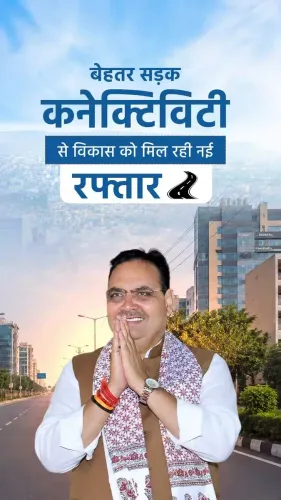
In his post, CM Sharma wrote: 'सुदृढ़ सड़कें केवल आवागमन को आसान नहीं बनातीं, वे गांवों, बाजारों और शहरों को विकास की नई गति से जोड़ती हैं' — 'Strong roads do not merely ease movement; they connect villages, markets, and cities with a new pace of development.' The state government, he said, is working at speed to strengthen Rajasthan's road network, with a specific focus on what officials classify as 'non-patchable' roads and 'missing link' roads.
What 'Non-Patchable' and 'Missing Link' Actually Mean
'Non-patchable' roads are stretches whose surface has deteriorated so severely that routine pothole-filling is no longer a viable fix — they require full reconstruction. 'Missing link' roads are the absent connectors between existing stretches: short gaps that, when they do not exist, force commuters and goods vehicles onto long, costly detours. Together, these two categories represent the most stubborn bottlenecks in any state's rural road grid.
In a state as geographically expansive as Rajasthan — India's largest state by area — the stakes are particularly high. A missing link in a remote district can mean a farmer's produce travels an extra hour to reach a mandi (agricultural market), or an ambulance loses critical minutes reaching a hospital. Fixing these is not cosmetic; it is structural.
The Development Logic Behind the Road Drive
CM Sharma framed the initiative explicitly in economic terms, arguing that upgraded road infrastructure will make travel safer and more convenient while ensuring that the pace of development reaches every part of the state. The emphasis on 'every corner' signals that the programme is intended to prioritise connectivity in underserved or geographically difficult areas, not just state and national highways that already carry heavy traffic.
The initiative aligns with the broader national push under programmes such as Pradhan Mantri Gram Sadak Yojana (PMGSY), which has for over two decades targeted all-weather road access for unconnected rural habitations. State-level complementary drives typically cover roads that fall outside PMGSY's eligibility criteria — including intra-town missing links and heavily degraded district roads. Rajasthan, with its vast semi-arid interior, has long faced the twin challenges of heat-driven road deterioration and sparse connectivity in its western and southern districts.
Safety and Connectivity as Twin Priorities
The CM specifically used the word 'surakshit' — safe — alongside convenient, a pointed acknowledgement that road quality is a road-safety issue. Degraded surfaces contribute directly to accidents, particularly for two-wheelers that dominate rural mobility in Rajasthan. By coupling the reconstruction drive with the missing-link programme, the state is attempting to address both the quality and the geography of its network in one push.
If execution matches ambition, the villages and market towns of Rajasthan's interior could see the kind of connectivity upgrade that typically unlocks faster economic activity, better school and hospital access, and tighter integration with district headquarters. Roads, as the CM put it, do not just carry people — they carry the pace of development itself.
Point of View
' 'missing link'), the CM moves beyond the optics of routine road announcements and signals departmental-level planning. For a state that spans over 342,000 sq km with large tribal and desert interiors, plugging missing links can have outsized economic multiplier effects. The question the opposition will press is whether timelines and budgets accompany the vision.
NationPress
6 Oct 2026
Frequently Asked Questions
What are non-patchable roads in Rajasthan?
Non-patchable roads are stretches so severely deteriorated that routine pothole-patching is ineffective; they require complete reconstruction of the road surface.
What is a missing link road?
A missing link road is a short, absent connector between two existing road stretches; without it, commuters and vehicles must take long, costly detours to reach their destination.
What did CM Bhajan Lal Sharma announce about Rajasthan roads on 6 October 2026?
CM Bhajan Lal Sharma announced that the Rajasthan state government is working at speed to reconstruct non-patchable roads and build missing-link connectors to improve safety and extend development to every part of the state.
How does Rajasthan's road drive relate to PMGSY?
The state-level initiative is designed to complement the central government's Pradhan Mantri Gram Sadak Yojana by covering degraded and missing-link roads that fall outside PMGSY's eligibility criteria.
Why is road connectivity especially important in Rajasthan?
Rajasthan is India's largest state by area, with vast semi-arid and desert interiors; poor road links mean longer travel times for farmers, goods, and emergency services, making upgrades economically and socially critical.