CM Bhajan Lal Reviews Pachpadra Refinery Progress with HPCL
Synopsis
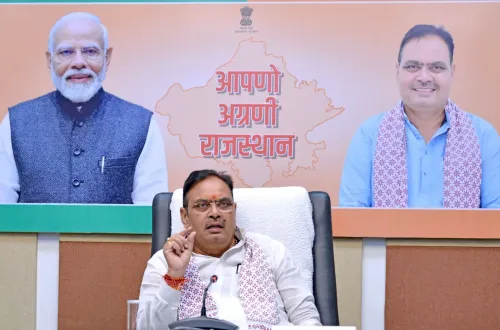
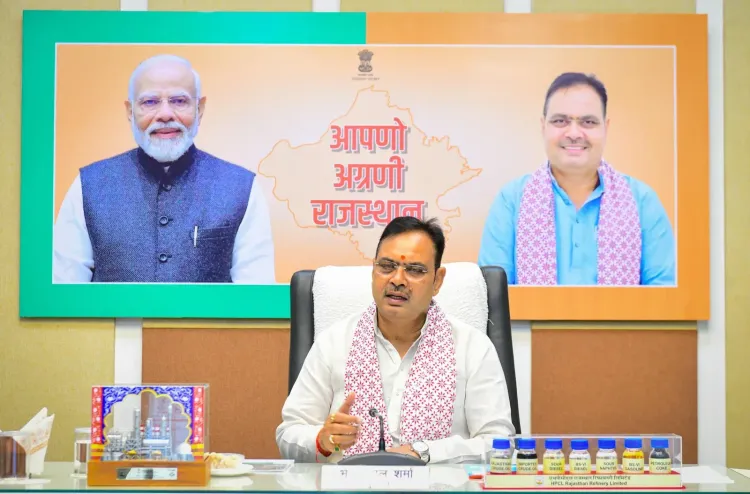
Rajasthan CM Bhajan Lal Sharma on 24 June 2026 reviewed the Pachpadra Refinery and Petrochemical Project with HPCL officials, who presented product samples. The 9 MMTPA project in Barmer is set to anchor downstream industries and advance PM Modi's Atmanirbhar Bharat energy vision.
Key Takeaways
CM Bhajan Lal Sharma held a progress review of the Pachpadra Refinery and Petrochemical Project with HPCL officials on 24 June 2026 .
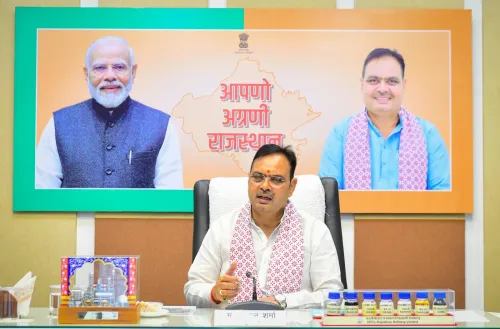
Officials presented samples of petroleum and petrochemical products produced at the refinery, indicating significant construction progress.
The Pachpadra Refinery in Barmer district is a 9 MMTPA complex; its foundation stone was laid by PM Narendra Modi in January 2018 .
The project is expected to spur growth in petrochemical, plastic, textile and chemical downstream industries across Rajasthan .
CM Sharma framed the project as central to PM Modi's Atmanirbhar Bharat energy vision and Rajasthan's industrial transformation.
Formal commissioning timelines and mechanical completion milestones remain the next key markers to watch.
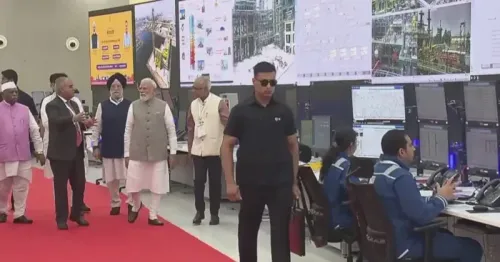
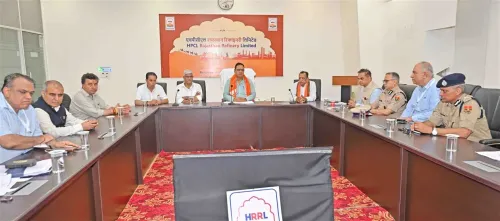
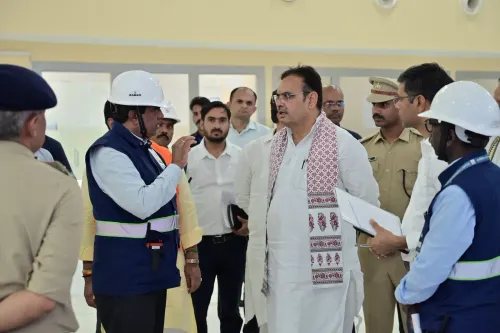
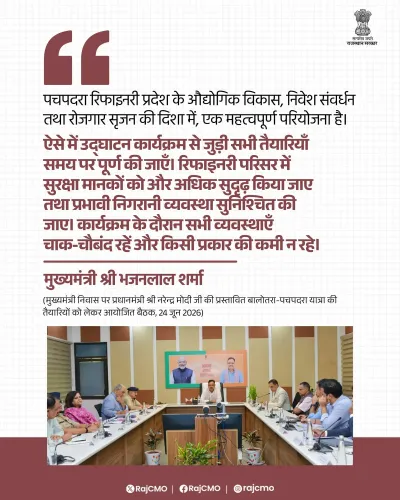
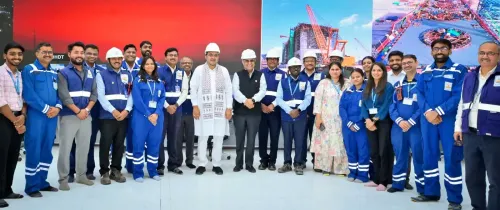
Rajasthan Chief Minister Bhajan Lal Sharma chaired a high-level review meeting at the Chief Minister's residence on Wednesday, 24 June 2026, assessing the progress of the Pachpadra Refinery and Petrochemical Project alongside officials from Hindustan Petroleum Corporation Limited (HPCL). During the meeting, officials presented samples of various petroleum and petrochemical products already produced at the refinery, signalling tangible advancement in the long-pending mega project.
Context
In his post on X, CM Sharma described the project as one that realises Prime Minister Narendra Modi's vision of an Urja Atmanirbhar Bharat (Energy Self-Reliant India), stating that the ambitious project 'is ready to write a new chapter in Rajasthan's industrial development.' He added that it would 'open doors to new possibilities of development by providing fresh momentum to investment, employment and economic activity in the state.'
The Chief Minister further noted that the complex would encourage growth in petrochemical, plastic, textile, chemical and other downstream industries, positioning Rajasthan as a leading centre for manufacturing and industrial investment. He also underlined the project's role in strengthening the state's energy security.
Policy Backdrop
The Pachpadra Refinery in Barmer district is a 9 million metric tonnes per annum (MMTPA) refinery and petrochemical complex being executed by HPCL. Cabinet approval for the project was granted in 2013, and the foundation stone was laid by Prime Minister Narendra Modi in January 2018.
The project is part of India's broader push since 2014 to expand domestic refining and petrochemical capacity, reduce import dependence, and create inland industrial clusters away from the traditional hubs of Gujarat and Maharashtra. Rajasthan has actively sought to leverage the project to diversify its economic base.
Stakeholders and Impact
Residents of Barmer district and the surrounding region stand to be among the most direct beneficiaries, with the project expected to generate significant local employment and ancillary business opportunities. Downstream industries — including plastics, chemicals and textiles — are anticipated to cluster around the refinery, creating an integrated industrial ecosystem.
Rajasthan's youth, long dependent on agriculture and public-sector employment, represent a key stakeholder group for whom the project carries significant economic promise. The state government has framed the refinery as a cornerstone of its industrial investment strategy.
What's Next
The presentation of product samples at the review meeting indicates that certain production processes at Pachpadra have reached an advanced stage, though formal commissioning timelines and mechanical completion targets remain closely watched milestones. CM Sharma's direct engagement with HPCL officials suggests the state government is actively monitoring delivery schedules.
If the refinery reaches full operational capacity, it would mark a structural shift in Rajasthan's industrial profile — transforming the state from a predominantly agrarian and tourism-dependent economy into a significant node in India's national energy and manufacturing network, aligned with the Atmanirbhar Bharat agenda.
Point of View
Giving the BJP-led state government a concrete industrial achievement to showcase ahead of future electoral cycles. The framing around PM Modi's Atmanirbhar Bharat vision is deliberate, tying a state-level infrastructure win to the national party narrative on energy self-reliance. For Rajasthan, which has historically lagged Gujarat and Maharashtra in attracting large-scale industrial investment, a fully operational refinery-petrochemical complex would represent a genuine structural economic shift. The broader pattern of inland refinery investments reflects New Delhi's strategic intent to decentralise energy infrastructure and reduce coastal concentration of refining capacity.
NationPress
22 Sept 2026
Frequently Asked Questions
What is the Pachpadra Refinery project in Rajasthan?
The Pachpadra Refinery is a 9 MMTPA refinery and petrochemical complex being built by HPCL in Barmer district, Rajasthan. Cabinet approval was granted in 2013 and the foundation stone was laid by PM Narendra Modi in January 2018.
What did CM Bhajan Lal Sharma do at the Pachpadra refinery review meeting?
On 24 June 2026, CM Bhajan Lal Sharma chaired a progress review of the Pachpadra Refinery and Petrochemical Project at the Chief Minister's residence, where HPCL officials presented samples of petroleum and petrochemical products produced at the facility.
When will the Pachpadra Refinery be commissioned?
Formal commissioning timelines and mechanical completion targets have not been officially confirmed in the latest review. The presentation of product samples suggests the project is at an advanced stage, with next milestones closely watched.
How will the Pachpadra Refinery benefit Rajasthan?
The project is expected to attract investment, generate employment, and spur downstream industries including petrochemicals, plastics, textiles and chemicals, positioning Rajasthan as a major manufacturing and industrial hub.
What is HPCL's role in the Pachpadra Refinery?
Hindustan Petroleum Corporation Limited (HPCL), a public sector oil company, is the primary executing agency for the Pachpadra Refinery and Petrochemical Project in Barmer district, Rajasthan.