CM Bhajan Lal Sharma fires back at Rahul Gandhi over EC allegations

Synopsis
Rajasthan Chief Minister Bhajan Lal Sharma publicly rebuked Rahul Gandhi on September 26, 2026, saying it is 'deeply irresponsible' for the Leader of the Opposition to question the Election Commission without facts, noting official records confirm unanimous EC approval on the SIR decision.
Key Takeaways
Rajasthan CM Bhajan Lal Sharma publicly attacked Rahul Gandhi on September 26, 2026 over allegations against the Election Commission of India .
Sharma cited official EC records claiming the SIR (Special Intensive Revision) decisions were passed with unanimous approval of the full Commission.
He attributed Congress's electoral losses to dynastic politics and baseless rhetoric rather than genuine policy failures.
Sharma argued that as Leader of the Opposition in the Lok Sabha , Rahul Gandhi has a special responsibility to base democratic discourse on verified facts.
The post used the hashtag #RahulExposedByEC , indicating a coordinated BJP messaging push against the opposition narrative.
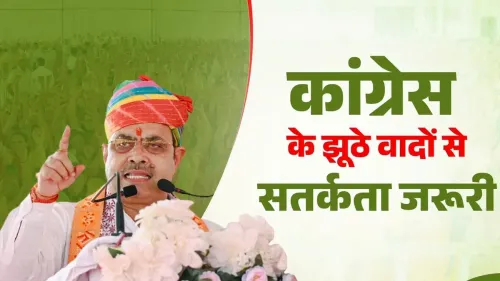
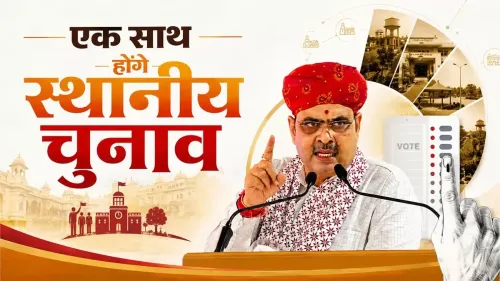
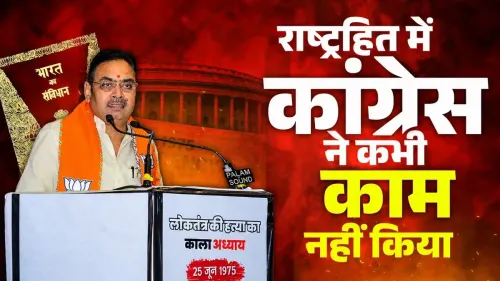
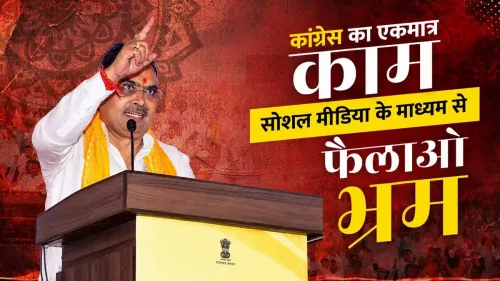
When the opposition leader questions a constitutional institution, the ruling establishment rarely stays silent for long. Rajasthan Chief Minister Bhajan Lal Sharma launched a sharp public rebuttal on Saturday, September 26, 2026, accusing Rahul Gandhi of irresponsibility for raising what he called fact-free allegations against the Election Commission of India, and demanding that democratic discourse be built on verified evidence rather than political rhetoric.
The SIR controversy and the Commission's defence
At the centre of the dispute is a decision linked to the Special Intensive Revision (SIR) of electoral rolls — a process Rahul Gandhi had questioned publicly. CM Sharma, citing official Election Commission records, asserted that the decisions surrounding SIR were taken with the sarvasammati swikrti (unanimous approval) of the full Commission, leaving no room for allegations of partisan intent.
The Commission's unanimous-consensus defence is not new to Indian political battles. After both the 2019 and 2024 general elections, opposition figures raised concerns about the neutrality of electoral administration, and government voices repeatedly countered by pointing to the institutional record. Saturday's broadside follows that well-worn pattern — but with a pointed personal target.
Sharma's charge: dynastyism and rhetoric over substance
CM Sharma went beyond the SIR specific, framing Congress's repeated electoral losses as a product of parivaarvaad (dynastic politics) and anargal bayaanbaazi (baseless rhetoric). His argument: instead of honest self-examination, Congress deflects responsibility by casting doubt on institutions. 'Democracy does not run on rhetoric, it runs on verified facts,' he wrote, in a line aimed squarely at the Leader of the Opposition.
The dig at Rahul Gandhi's constitutional post carries its own weight. As Leader of the Opposition in the Lok Sabha — a formal, senior constitutional role — Gandhi bears, in Sharma's framing, a higher duty of factual rigour. It is a rhetorical move the BJP has deployed before: holding the opposition to the standard of a position it fought hard to reclaim.
Why the Election Commission is the recurring battlefield
India's Election Commission is a constitutionally independent body, but that has never shielded it from political fire. Accusations of institutional capture — floated periodically by whichever party is in opposition — and counter-accusations of irresponsibility from the ruling side have become a durable feature of the democratic landscape. The hashtag #RahulExposedByEC that Sharma appended to his post signals a coordinated messaging effort, not just a spontaneous reaction.
What makes this moment worth watching is the parliamentary calendar ahead. Any formal clarification from the Commission on the SIR process, or Gandhi's response during the next session, could sharpen or defuse the controversy. For now, CM Sharma has drawn the line clearly: bring facts, or stop talking about institutions.
Point of View
Sharma attempts to raise the credibility bar the Congress leader must clear, effectively weaponising a constitutional achievement against him. The SIR row is a skirmish in a longer war over who controls the legitimacy narrative around India's electoral institutions. With a parliamentary session on the horizon, both sides are likely to escalate rather than de-escalate.
NationPress
26 Sept 2026
Frequently Asked Questions
What is the SIR dispute that Bhajan Lal Sharma mentioned?
SIR stands for Special Intensive Revision of electoral rolls. Rahul Gandhi had questioned Election Commission decisions related to this process; Sharma countered by citing official EC records showing the decisions were taken with unanimous Commission approval.
Why is Bhajan Lal Sharma criticising Rahul Gandhi?
Sharma accused Rahul Gandhi of raising baseless allegations against the Election Commission without factual backing, calling it irresponsible behaviour for someone holding the constitutional post of Leader of the Opposition.
What did the Election Commission say about the SIR decision?
According to Sharma, official Election Commission records confirm that decisions related to SIR were taken with the unanimous approval of the full Commission, countering claims of any partisan or arbitrary action.
What is Rahul Gandhi's current role in Parliament?
Rahul Gandhi is the Leader of the Opposition in the Lok Sabha, a senior constitutional position he has held since the Indian National Congress improved its seat tally in the 2024 general elections.
What is BJP's broader argument against Congress on Election Commission criticism?
The BJP consistently argues that Congress deflects from its own internal problems — particularly dynastic politics — by casting doubt on independent constitutional institutions like the Election Commission, instead of engaging with verifiable facts.