Smriti Irani demands Congress apology after EC clarifies SIR order

Synopsis
BJP leader Smriti Irani has demanded an unconditional public apology from Rahul Gandhi and Congress after the Election Commission formally clarified that its Special Intensive Revision order of 24 June 2025 was approved unanimously by the full Commission, calling the opposition's campaign against the body 'malicious' and 'peak narcissism.'
Key Takeaways
BJP leader Smriti Irani posted on 26 September 2026 demanding a public apology from Rahul Gandhi and Congress .
She cited an Election Commission clarification that its SIR order of 24 June 2025 and subsequent schedules had the unanimous approval of the full Commission.
Irani called the Congress campaign against the EC 'malicious' and labelled it 'peak narcissism and an inflated sense of self-importance.' She argued democracy requires respecting the people's mandate regardless of the electoral outcome.
The post used the hashtag #RahulExposedByEC , signalling a broader BJP messaging push on the issue.
No formal response from Congress or additional EC statement had been issued at the time of the post.
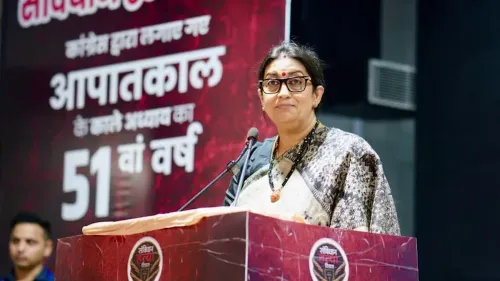
When an institution publishes its own record to correct a political narrative, the burden of accountability shifts — fast. BJP leader Smriti Irani on Saturday, 26 September 2026, turned that shift into a direct public challenge, demanding that Rahul Gandhi and the Indian National Congress apologise for what she called a 'malicious campaign' against the Election Commission of India after the Commission clarified that its Special Intensive Revision (SIR) order of 24 June 2025 carried the unanimous approval of the full Commission.
The EC clarification that changed the terms of the debate
Irani's post centres on a specific factual claim: that the Election Commission has placed 'the facts on record' — stating that the SIR order dated 24 June 2025 and its subsequent schedules were approved unanimously by all Commissioners. If accurate, that detail directly undercuts any narrative of a divided or coerced Commission. Irani framed it as a simple question: 'Now that the official record has made the facts clear, will Rahul Gandhi and the Congress have the courage to admit that they misled the people?'
The Election Commission of India is a constitutional body vested with full superintendence over elections. Its internal unanimity on an electoral-roll revision order, when formally documented, carries significant institutional weight — making a public challenge to that record politically risky for any party that had staked credibility on contesting it.
A pattern older than any single election
The broader dynamic is not new. Indian opposition parties have periodically challenged Election Commission orders on electoral rolls and processes following adverse results — a cycle that has played out across multiple state and national elections. What shifts the stakes here is that the dispute now rests on a documented institutional record rather than contested interpretation. The Commission has, in Irani's telling, moved the argument from opinion to fact.
Rahul Gandhi, as the most prominent face of the Congress's institutional critique, becomes the direct target of her challenge. The Congress has made trust in electoral institutions a recurring theme in its political messaging, which is precisely why Irani frames the clarification as a moment of reckoning rather than a procedural footnote.
Irani's verdict: 'peak narcissism'
Irani's language was pointed and deliberate. She described the Congress campaign against the Commission as 'peak narcissism and an inflated sense of self-importance,' and closed with an unambiguous demand: 'Congress owes this nation an honest, unconditional apology.' The hashtag #RahulExposedByEC signals a coordinated BJP messaging effort to amplify the moment beyond a single post.
Democracy, she argued, means respecting the people's mandate regardless of the result — a principle she positioned as the thing the Congress has violated by selectively trusting institutions only when verdicts favour them.
Whether the Congress responds — and how — will determine whether this becomes a fleeting social-media skirmish or a sustained pressure campaign that forces the opposition to publicly defend or retract its earlier position on the Commission's conduct.
Point of View
She forces the Congress into an uncomfortable binary — either publicly retract its earlier critique or appear to reject documentary evidence from a constitutional body. This follows a well-worn BJP playbook of using EC and judicial processes to reframe opposition accountability as an institutional, not merely political, question. The Congress's credibility on electoral integrity — a plank it has cultivated carefully — is precisely what makes the demand sting. How the party responds, or chooses to stay silent, will signal how confident it is that its original narrative can survive scrutiny.
NationPress
27 Sept 2026
Frequently Asked Questions
What did the Election Commission clarify about the SIR order?
According to Smriti Irani's post, the Election Commission placed on record that its Special Intensive Revision order of 24 June 2025 and subsequent schedules received the unanimous approval of the full Commission — directly countering claims of institutional irregularity.
Why is Smriti Irani demanding an apology from Rahul Gandhi?
Irani argues that Congress, led publicly by Rahul Gandhi, ran a 'malicious campaign' against the Election Commission's credibility over the SIR order. Now that the Commission has documented unanimous approval, she contends the party owes the nation an unconditional apology for misleading the public.
What is a Special Intensive Revision (SIR) order?
A Special Intensive Revision is a targeted exercise conducted by the Election Commission to update and verify electoral rolls — adding eligible voters, removing duplicates, and correcting errors — in a specific area or across the country before elections.
Has Congress responded to Smriti Irani's demand?
No formal response from Congress had been issued at the time of Irani's post on 26 September 2026.
What is the BJP's broader argument about opposition parties and the Election Commission?
The BJP has consistently argued that opposition parties, including Congress, selectively trust the Election Commission only when results favour them and resort to questioning its integrity after electoral losses — a pattern Irani described as 'not respecting the people's mandate.'