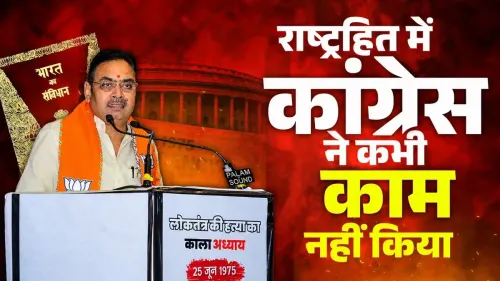
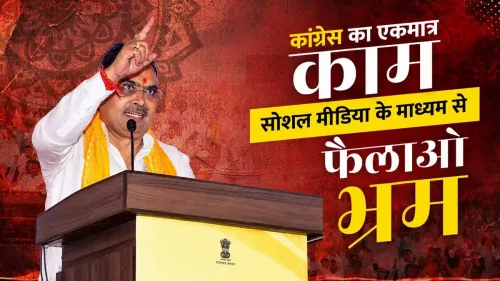
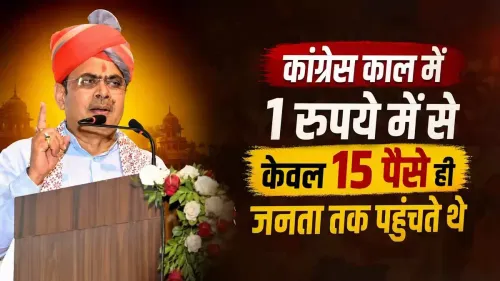
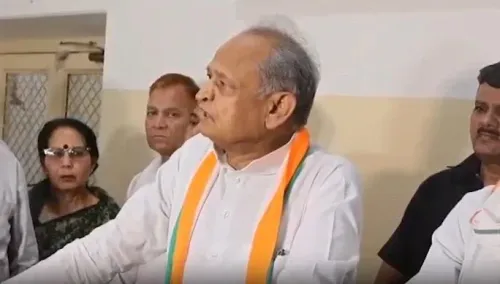
CM Bhajan Lal Sharma hits out at Gehlot era, cites salary reforms
Synopsis
Rajasthan CM Bhajan Lal Sharma attacked the previous Congress government of Ashok Gehlot, alleging corruption and employee exploitation, while asserting his BJP administration delivers salaries and pensions on time and upholds transparency.
Key Takeaways
CM Bhajan Lal Sharma posted a sharp attack on the previous Rajasthan government on 1 August 2026 .
He alleged the prior administration was marked by 'manipulation, corruption, and exploitation of employees' — an implicit reference to Congress leader Ashok Gehlot 's tenure ( 2018–2023 ).
Sharma claimed his government ensures all sections of society receive their rights and that employees get salaries and pensions on time, without obstruction .
The BJP returned to power in Rajasthan after the December 2023 assembly elections , with Sharma as Chief Minister.
The post frames transparency and good governance as the foundation of development — continuing a contrast narrative the BJP has maintained since taking office.
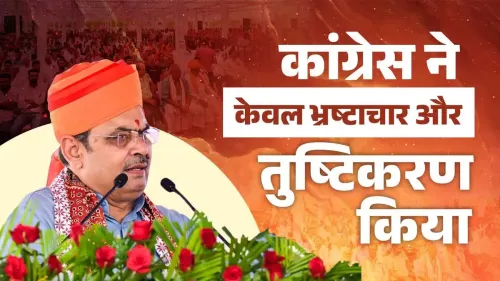
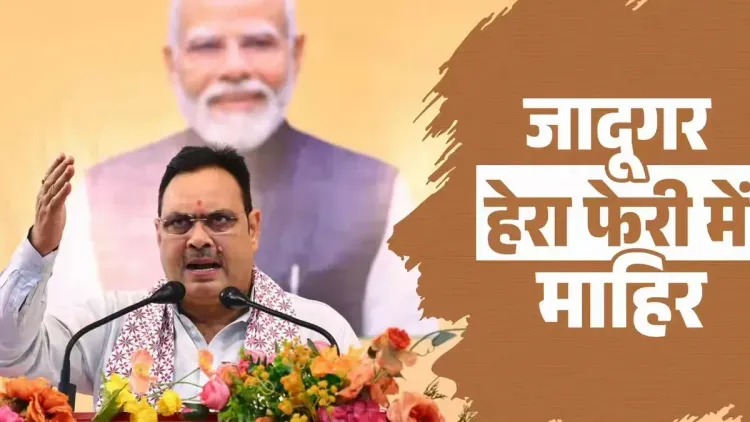
A sharp political charge from Jaipur on Saturday, 1 August 2026: Rajasthan Chief Minister Bhajan Lal Sharma took direct aim at the previous Congress government, accusing it of corruption and exploitation of state employees — and holding up his own administration's salary and pension record as the rebuttal.
Posting on X, CM Sharma declared: 'During the tenure of the former Chief Minister, there was only manipulation, corruption, and exploitation of employees. Today, under our government, every section of society is getting its rights, and employees are receiving salaries and pensions on time, without any obstruction.' He added that the people of Rajasthan 'see and understand everything,' and that transparency and good governance are the true foundation of real development.
The Gehlot era in the crosshairs
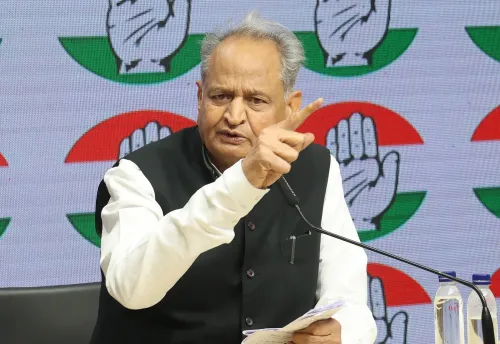
The 'former Chief Minister' Sharma targets without naming is widely understood to be Congress leader Ashok Gehlot, who governed Rajasthan from 2018 to 2023. The BJP wrested the state back in the December 2023 assembly elections, after which Sharma was sworn in as Chief Minister — the party's first term at the helm in Rajasthan in five years. Allegations of financial irregularities and employee grievances formed a central plank of the BJP's campaign pitch, and Sharma's post signals that contrast remains live political currency well into the government's tenure.
Salaries, pensions, and the governance scorecard
At the heart of Sharma's claim is a pointed one: that government employees — a large and politically significant constituency in Rajasthan — are now receiving wages and pensions samay par, bina kisi rukawat ke (on time, without any obstruction). State government employees in India have historically been a bellwether of administrative health; delayed salaries are both a welfare issue and a political liability. By foregrounding this metric, Sharma is framing his government's credibility around a concrete, verifiable promise rather than abstract rhetoric.
Rajasthan has seen this Congress-BJP alternation — and the accompanying governance critique — repeat in cycles since the early 2000s. Each incoming government tends to open with an audit of its predecessor's record; what is notable here is that Sharma is sustaining that contrast narrative nearly two years into office, suggesting it remains electorally useful as the state's political calendar ticks forward.
The people of Rajasthan, Sharma insists, are watching. Whether the government's own record on employee welfare bears out that confidence will be tested in the assembly sessions ahead — particularly on budget allocations and any pending wage revision announcements.
Point of View
Particularly with state employees who are a decisive vote bloc. The explicit invocation of salary and pension delivery is strategically precise: it is a metric citizens can personally verify, giving the claim more grip than abstract transparency pledges. If upcoming assembly sessions surface any employee welfare shortfalls, however, the sharpness of this contrast could cut both ways.
NationPress
1 Aug 2026
Frequently Asked Questions
What did Rajasthan CM Bhajan Lal Sharma say about the previous government?
CM Sharma accused the previous Rajasthan government — led by Congress's Ashok Gehlot — of corruption, manipulation, and exploitation of state employees, contrasting it with his administration's record of timely salary and pension payments.
Who was the Chief Minister of Rajasthan before Bhajan Lal Sharma?
Ashok Gehlot of the Indian National Congress served as Chief Minister of Rajasthan from 2018 to 2023, before the BJP won the December 2023 assembly elections and Bhajan Lal Sharma took office.
When did Bhajan Lal Sharma become Chief Minister of Rajasthan?
Bhajan Lal Sharma became Chief Minister of Rajasthan in December 2023 after the BJP's victory in the state assembly elections.
What is Bhajan Lal Sharma's claim about government employee salaries in Rajasthan?
Sharma claims that under his government, state employees are receiving salaries and pensions on time and without any obstruction — a direct contrast to what he alleges was exploitation of employees under the previous Congress administration.
What is the BJP's governance record in Rajasthan being compared to?
The BJP under CM Sharma is comparing its governance — citing transparency, timely employee payments, and rights for all sections of society — against the Congress government of Ashok Gehlot, which the BJP alleges was marked by corruption and financial irregularities.