CM Bhajan Lal Slams Congress, Cites BJP's Direct Welfare Push
Synopsis
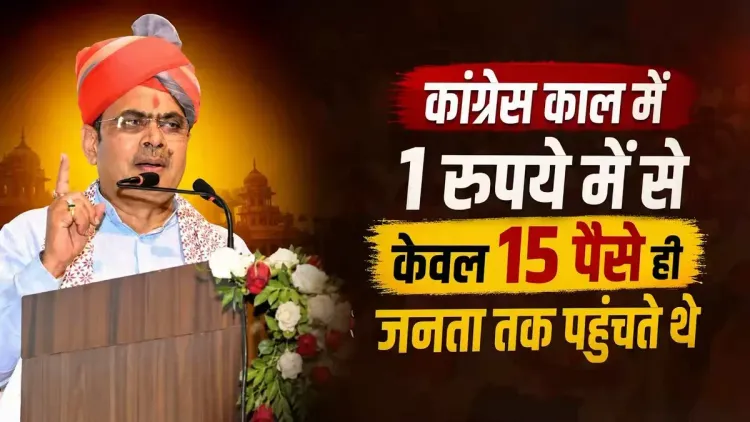
Rajasthan Chief Minister Bhajan Lal Sharma on 20 June 2026 attacked Congress for decades of alleged public deception in the name of development, contrasting it with the BJP government's stated record of transparent, direct welfare delivery in the state.
Key Takeaways
Rajasthan Chief Minister Bhajan Lal Sharma posted a sharp attack on Congress on 20 June 2026 , accusing the party of misleading the public for decades.
Sharma alleged Congress prioritised 'the politics of power' over public interest during its tenures in Rajasthan .
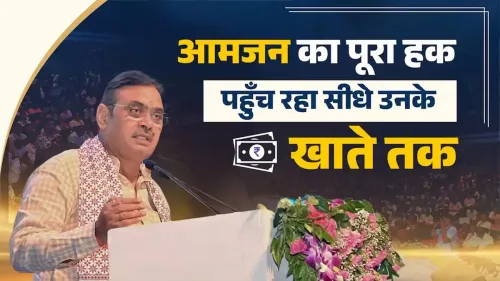
The CM claimed that under the current BJP government, scheme benefits are now reaching people directly due to good governance and transparency.
The post aligns with the BJP's broader national narrative of using Direct Benefit Transfer (DBT) to reduce welfare leakages since 2014 .
The BJP won the Rajasthan assembly elections in December 2023 , with Sharma assuming office as Chief Minister thereafter.
Specific scheme statistics or data from the linked video could not be independently verified.
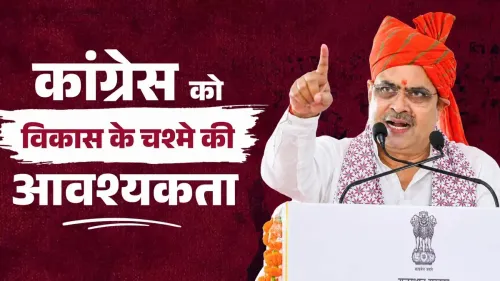
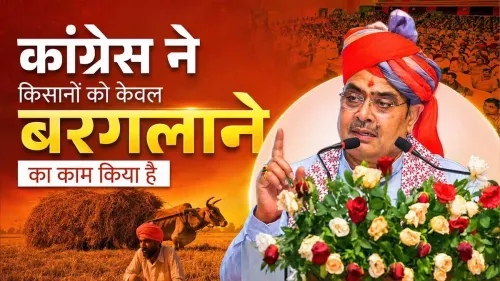
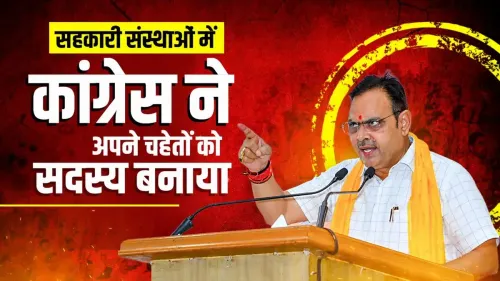
Rajasthan Chief Minister Bhajan Lal Sharma on Saturday, 20 June 2026, sharply criticised the Indian National Congress, accusing it of misleading the public in the name of development for decades while prioritising political power over public welfare. The Chief Minister asserted that under the current government, the benefits of schemes are now reaching people directly, owing to good governance and transparency.
In his post on X, Sharma wrote: 'कांग्रेस ने दशकों तक विकास के नाम पर जनता को भ्रमित किया और जनहित से अधिक सत्ता की राजनीति को प्राथमिकता दी।' ('Congress misled the public for decades in the name of development and prioritised the politics of power over public interest.') He added that today, due to good governance and transparency, the benefits of schemes are reaching people directly.
Context
The post is a pointed political broadside against Congress, which governed Rajasthan for multiple terms before losing the December 2023 assembly elections to the Bharatiya Janata Party. Sharma, who assumed office as Chief Minister after that victory, has consistently framed his administration's approach as a departure from what the BJP describes as opaque and patronage-driven welfare delivery under previous governments. The remark about 'politics of power over public interest' echoes a recurring BJP line that Congress-era welfare was designed to build vote banks rather than deliver outcomes.
Policy Backdrop
Since 2014, the BJP at the national level has championed Direct Benefit Transfer (DBT) and e-governance platforms as tools to eliminate leakages in welfare delivery, bypassing intermediaries and depositing funds or entitlements directly into beneficiaries' accounts. State governments under BJP, including Rajasthan since late 2023, have sought to extend this model to state-run schemes. Sharma's government has stated anti-corruption measures and transparent scheme implementation as core governance priorities since taking office. The post, accompanied by a video, appears to reinforce this narrative visually, though the specific content of the linked material could not be independently verified.
Stakeholders and Impact
The primary stakeholders in this political messaging are Rajasthan's welfare scheme beneficiaries — a large population that includes farmers, women, and economically weaker sections who depend on state-administered programmes. For this constituency, the question of whether scheme benefits arrive without diversion or delay is material, not merely rhetorical. The Congress, as the principal opposition in the state, is the target of Sharma's criticism and is likely to contest the characterisation of its governance record.
What's Next
The BJP government's claims about improved direct delivery will face scrutiny in upcoming state budget sessions and any independent audits of Rajasthan's welfare expenditure and DBT penetration. Opposition responses from the Congress are expected, particularly as the party looks to rebuild its presence in the state ahead of future electoral cycles. How the government substantiates its transparency claims with verifiable data will determine whether this narrative gains durable traction among voters.
Point of View
Citizen-first alternative. The framing borrows directly from the national DBT narrative that has served the party well since 2014, now being localised for Rajasthan's political landscape. With no immediate election on the horizon, the messaging appears aimed at consolidating the government's reform identity and keeping the opposition on the defensive over its governance record. Whether this narrative holds will depend on auditable outcomes — scheme coverage data and leakage reduction figures — that the government has yet to put on the public record.
NationPress
19 Sept 2026
Frequently Asked Questions
What did Rajasthan CM Bhajan Lal Sharma say about Congress?
Sharma accused Congress of misleading the public for decades in the name of development and of prioritising the politics of power over public interest, contrasting it with the BJP government's focus on transparent, direct welfare delivery.
What is Direct Benefit Transfer and how does it relate to Sharma's post?
Direct Benefit Transfer (DBT) is a system that deposits welfare entitlements directly into beneficiaries' bank accounts, bypassing intermediaries. Sharma's claim that scheme benefits are now reaching people directly references this approach, which the BJP has promoted at both national and state levels since 2014.
When did the BJP come to power in Rajasthan?
The BJP won the Rajasthan assembly elections in December 2023, after which Bhajan Lal Sharma was sworn in as Chief Minister.
How long did Congress govern Rajasthan before 2023?
Congress held power in Rajasthan for multiple terms before the December 2023 elections, alternating with the BJP over several electoral cycles.
What is the BJP government's stated governance priority in Rajasthan?
Since taking office in December 2023, the BJP government under Bhajan Lal Sharma has stated anti-corruption measures, transparency, and direct delivery of welfare scheme benefits as its core governance priorities.