CM Bhajan Lal Accuses Congress of Treating Farmers, Women as Vote Banks
Synopsis
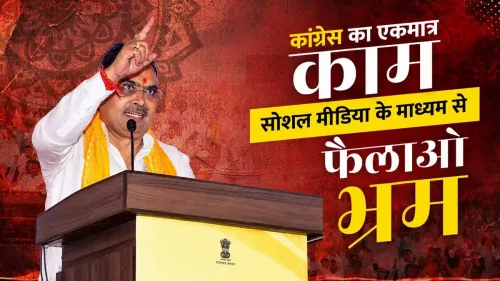
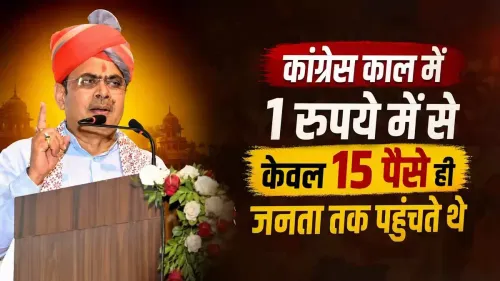
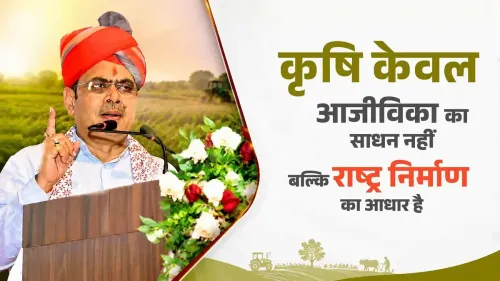
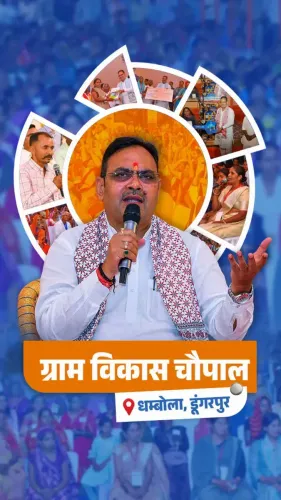
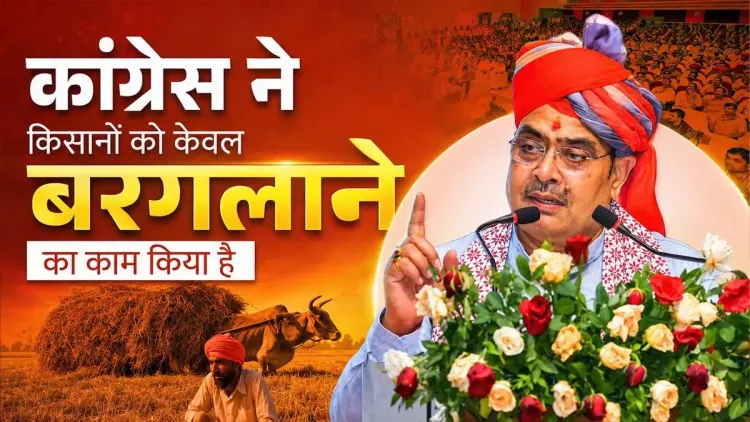
Rajasthan Chief Minister Bhajan Lal Sharma accused Congress of decades of vote-bank politics, claiming the party made promises to farmers, labourers, youth, and women without ever undertaking concrete steps for their genuine empowerment or development.
Key Takeaways
Rajasthan Chief Minister Bhajan Lal Sharma posted on June 20, 2026 , accusing Congress of decades of vote-bank politics targeting farmers, labourers, youth, and women.
He stated that Congress made promises to these groups but never undertook concrete efforts for their 'real empowerment and development.' The charge fits the BJP's established national narrative of contrasting its direct-benefit approach with what it calls Congress's electoral instrumentalisation of welfare.
The BJP government in Rajasthan has, since December 2023 , promoted farmer- and women-centric schemes as evidence of a different governance model.
The four groups named — farmers, labourers, youth, and women — represent the core of Rajasthan's electorate, giving the statement clear pre-electoral political significance.
Independent evaluation of the BJP government's own delivery on these schemes will be a key benchmark ahead of the next assembly elections.
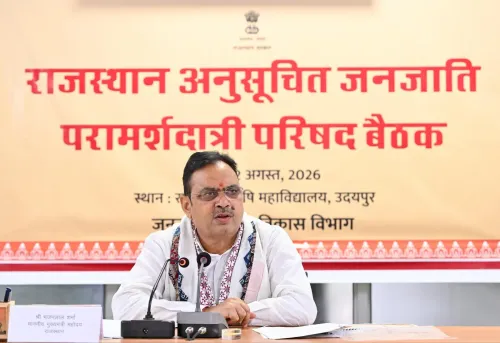
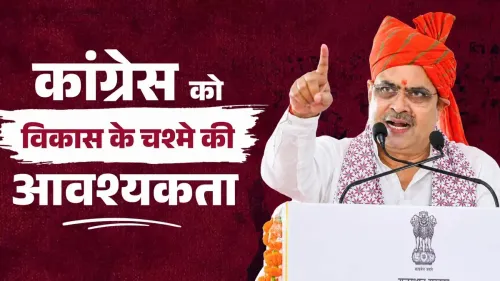
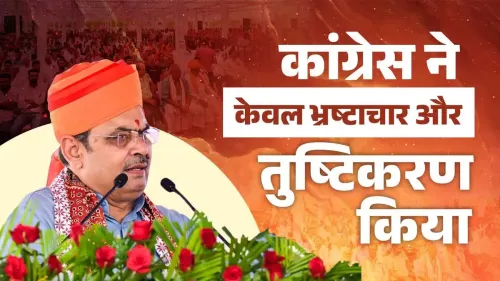
Rajasthan Chief Minister Bhajan Lal Sharma on Saturday, June 20, 2026, sharply attacked the Indian National Congress, accusing the party of spending decades treating farmers, labourers, youth, and women purely as vote banks while making promises that were never backed by concrete action for their genuine empowerment.
Posting in Hindi on X, CM Sharma wrote: 'कांग्रेस ने दशकों तक किसान, मजदूर, युवा और महिलाओं को केवल वोट बैंक समझकर राजनीति की' — 'Congress, for decades, practised politics by treating farmers, labourers, youth, and women merely as a vote bank. Promises were made in the name of these sections, but concrete efforts for their real empowerment and development were never undertaken.'
Context
Rajasthan has historically alternated between Congress and BJP governments, with welfare delivery and rural development forming the backbone of electoral competition in the state. Sharma was sworn in as Chief Minister in December 2023 after the BJP's decisive victory in the assembly elections, ending a five-year Congress government under Ashok Gehlot.
The post continues a well-established BJP line of attack: that Congress governments, at both the state and national level, used large social groups as electoral instruments rather than as beneficiaries of structural, long-term policy change. The charge of 'vote bank politics' is a recurring frame in BJP political communication across Hindi-belt states.
Policy Backdrop
Since taking charge, the BJP government in Rajasthan has prioritised direct-benefit schemes targeting farmers and women as a deliberate contrast to the preceding Congress administration's record. Nationally, since 2014, the BJP has expanded programmes such as PM-KISAN, Mudra loans, and skill-development initiatives aimed at the same demographic categories — farmers, labourers, youth, and women — that CM Sharma referenced in his post.
The argument being made is one of policy delivery versus political rhetoric: the BJP positions cash transfers, subsidised credit, and targeted employment schemes as evidence of a fundamentally different approach to constituencies that Congress, it claims, only mobilised at election time.
Stakeholders and Impact
The four groups named — farmers, labourers, youth, and women — together constitute the overwhelming majority of Rajasthan's electorate. Any political narrative that successfully frames one party as having failed these groups, while positioning the other as their genuine champion, carries significant electoral weight in a state where rural and semi-urban voters are decisive.
For Congress, the charge renews pressure to articulate a concrete welfare record, particularly given that its 2018–2023 government in Rajasthan launched several social schemes of its own. The BJP's framing, however, contests the depth and intent behind those initiatives rather than their existence.
What's Next
The rollout and independent evaluation of Rajasthan's post-2023 farmer- and women-centric schemes will be closely watched as the state moves toward its next assembly election cycle. Whether the BJP government's own delivery record on these four constituencies matches its political rhetoric will be a central test of credibility for CM Sharma's administration.
Statements of this nature, made on social media by sitting chief ministers, also signal the opening of a broader political narrative — one that is likely to intensify as the next electoral cycle approaches and both parties compete for the same demographic ground.
Point of View
CM Sharma is laying an early narrative foundation ahead of the next assembly cycle. The charge is structurally difficult for Congress to rebut without drawing attention to its own governance record, which is precisely the political trap the statement is designed to set. Whether the BJP's own delivery on these constituencies in Rajasthan since 2023 can sustain this contrast will ultimately determine the frame's durability.
NationPress
19 Sept 2026
Frequently Asked Questions
What did Rajasthan CM Bhajan Lal Sharma say about Congress?
CM Bhajan Lal Sharma accused Congress of treating farmers, labourers, youth, and women as mere vote banks for decades, making promises in their name without taking concrete steps for their real empowerment or development.
What is vote bank politics in India?
Vote bank politics refers to the practice of targeting specific communities or social groups with promises or symbolic gestures to secure their votes, without necessarily delivering substantive policy change or long-term welfare for those groups.
What welfare schemes has the BJP government in Rajasthan launched for farmers and women?
Since taking office in December 2023, the BJP government in Rajasthan has prioritised direct-benefit schemes for farmers and women, positioning them as a contrast to the previous Congress administration. Nationally, programmes like PM-KISAN, Mudra loans, and skill-development schemes target similar groups.
When did Bhajan Lal Sharma become Chief Minister of Rajasthan?
Bhajan Lal Sharma was sworn in as Chief Minister of Rajasthan in December 2023 after the BJP won the state assembly elections, ending five years of Congress rule.
How has Congress responded to BJP's vote bank politics charge?
Congress has historically countered this charge by pointing to its own welfare schemes during its tenures in government, including during the 2018–2023 Rajasthan administration under Ashok Gehlot, though the BJP contests the depth and intent of those initiatives.